Black Friday: the specs to check before you buy
Comparison
Updated November 5, 2026Anker Zolo 10K Power Bank Review: A1688 vs the Nano 10K
Short answer
For a power bank with a built-in USB-C cable, buy the Anker Zolo 10K (A1688): it matches the Anker Nano 10K (A1259) on the numbers that matter most — 10,000mAh, up to 30W to a single USB-C device, and a built-in cable that both charges your phone and recharges the bank — at a lower price. Pay the Nano's premium only for what its spec sheet adds: a 24W shared total output instead of the Zolo's documented 15W, a 30W refill input instead of 20W, a color display and a carrying handle. This is a specification-based comparison from Anker's own US pages and manuals, not a physical test.
Our picks at a glance
Best premium built-in-cable pickAnker
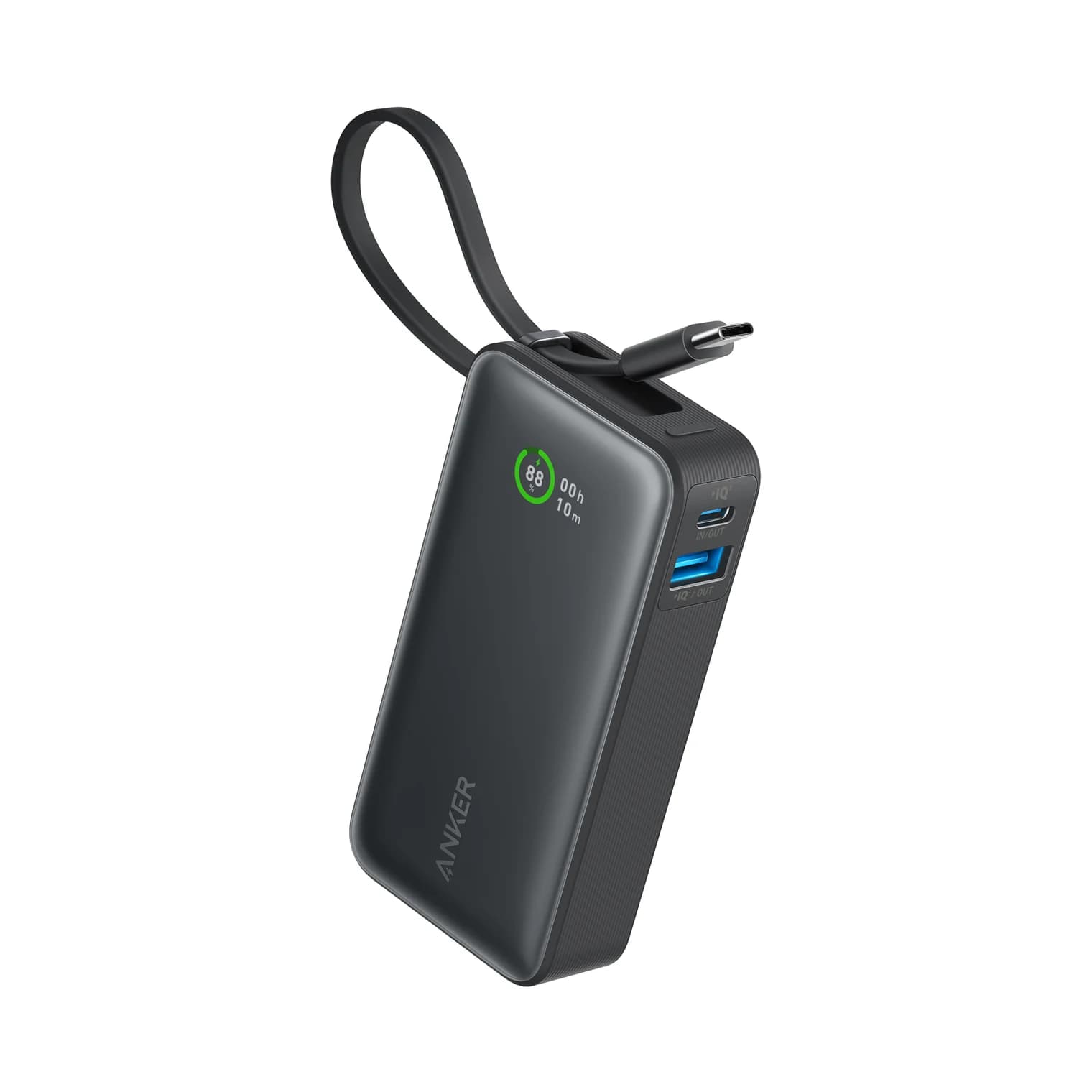
Anker Nano Power Bank (10,000mAh, 30W, Built-In USB-C Cable)
- max output
- 30W
- ports
- 3
- Choose
- Up to 30W single-device output, a 24W shared total, 30W recharge input, a color display and a built-in carrying handle in a documented 215g body.
- Limit
- Anker lists a lower total output figure, so expect slower speeds when charging two devices at once
- 30WSingle-device USB-C output both banks share, through the built-in cable or the port
- 24WThe Nano's total shared output; the Zolo's manual lists 15W
- 5.4 inchesThe Zolo's built-in USB-C cable, per Anker's US page
Quick picks
| Pick | Best for | Why |
|---|---|---|
| Anker Zolo 10K (A1688) | One phone, best value | Same 30W single-device ceiling and capacity as the Nano; built-in 5.4-inch USB-C cable; costs less |
| Anker Nano 10K (A1259) | Charging two devices, faster refills | 24W shared total, 30W recharge input, color display, handle |
The exact models, and what each box contains
Zolo and Nano are family names, not exact models — buy by model number. This comparison covers the Zolo A1688 (not the A110J variant documented for the EU, and not the recalled 20K A1681/A1689 models) and the Nano A1259 (not the 45W retractable-cable Nano). If a listing does not name one of those model numbers, check it against our Anker Zolo versions guide and the Nano 30W vs 45W comparison before buying.
| What the maker documents | Anker Zolo 10K (A1688) | Anker Nano 10K (A1259) |
|---|---|---|
| Capacity | 10,000mAh | 10,000mAh |
| Built-in USB-C cable | 5.4-inch (13.7 cm); charges devices and recharges the bank | Built-in; charges devices and recharges the bank; Anker's US page gives no length |
| Single-device USB-C output | 30W max (cable or socket) | 30W max (cable or port) |
| USB-A output | 22.5W max | 22.5W max |
| Total shared output | 15W max, per the manual | 24W max |
| Recharge input | 20W max | 30W max |
| Display | A display showing battery level | Color display |
| Size / weight | Not stated on the US page | 4.09 × 2.06 × 1.02 inches; 7.58 oz (215g) |
| US box list | The power bank | The power bank with its attached cable |
Sources: Anker's US A1688 page, its A1688 manual, Anker's US A1259 page and its A1259 user guide.
Source: Anker's A1688 manual and A1259 page
Best value: Anker Zolo 10K, A1688
The Zolo is the pick for a phone-first kit. Its US page specifies a 5.4-inch (13.7 cm) built-in USB-C cable tested for over 10,000 bends, and the manual confirms the attached lead works in both directions: it charges your devices, and it recharges the bank. There is also a separate USB-C socket and a USB-A socket, so you are not locked to the attached lead.
Read past the "30W Bi-Directional Charging" heading: Anker's own detailed copy says 30W output and 20W input, and the manual agrees — the same page's FAQ even says a 20W charger refills the bank in about 2.5 hours. The number that matters most for multi-device buyers is the manual's 15W total shared output: when two ports are in use, everything slows down. Use one USB-C connection when fast charging your main device is the priority.
The US FAQ documents two useful extras: pass-through charging with a 5V/3A limit (not for laptops, and Anker advises against charging a phone while recharging the bank), and a trickle-charging mode — double-press the power button for earbuds over USB-A.
Check the A1688 version at Anker US
Best premium: Anker Nano 10K, A1259
Anker
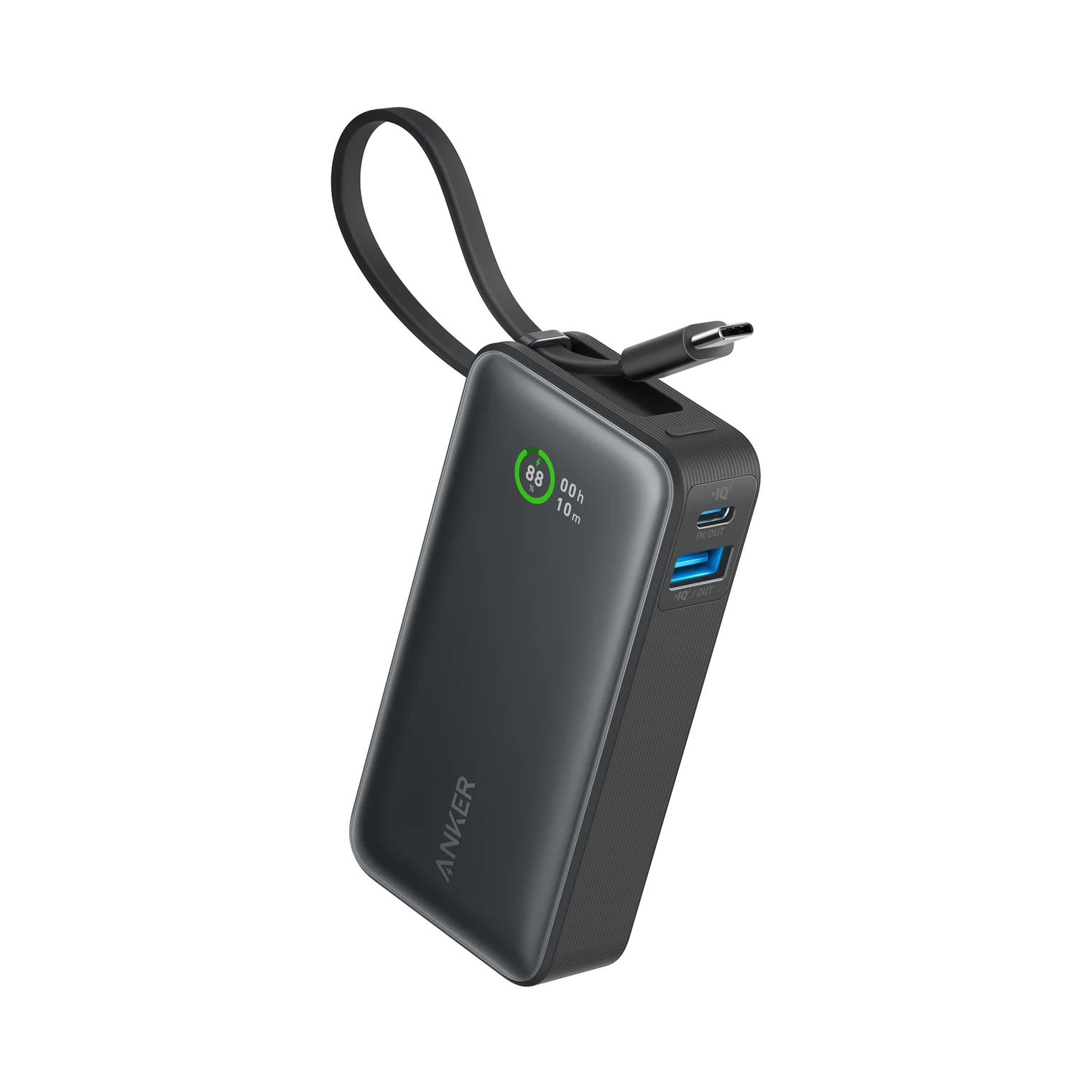
Anker Nano Power Bank (10,000mAh, 30W, Built-In USB-C Cable)
A 10,000mAh power bank with a built-in USB-C cable plus separate USB-C and USB-A ports, rated up to 30W.
- 30W max output
- 3 ports
The Nano earns its premium only if you use what it adds. Its shared total is 24W rather than the Zolo's 15W, so two devices at once still get meaningful power. Its input is 30W rather than 20W — Anker's page claims a 50% refill in 45 minutes — and its USB-C port supports PPS (3V-11V, 30W max), which matters for phones that negotiate PPS fast charging. The color display shows charge status, and the page highlights a built-in handle for carrying.
The same discipline applies: 30W is the single-port ceiling, and the 24W figure is the total when multiple ports are active. Anker's US page documents the size at 4.09 × 2.06 × 1.02 inches and 7.58 oz (215g) — the Zolo's US page states neither, so we make no pocket-fit claim for it. Anker's EU page for the same A1688 handle lists a compact size of 109.9 × 65.5 × 25, but that regional text omits the unit and we do not treat it as a US spec.
Check the Anker Nano 10K price on Amazon
Built-in cable, ports and pocket fit
The Zolo's attached lead is 5.4 inches long — enough for the bank to hang beside a phone in a bag, short for using the phone comfortably while it charges at a distance. Anker does not publish a length for the Nano's cable on its US page, so buy on the other differences, not on assumed reach. Both banks also give you a separate USB-C socket, so a longer cable of your own solves reach when it matters.
- Yes: Both banks charge a phone through their built-in USB-C cables
- Yes: Both banks recharge themselves through the same built-in cable
- Yes: Both include a separate USB-C socket for your own cable
- Yes: Both include a USB-A socket rated up to 22.5W
- No: Neither US box includes a wall charger
- No: The Zolo's US page states no size or weight
- Partly: The Nano's attached cable length is not stated officially
Phone charging, sharing and refill
For a single phone, the two banks are equivalent on paper: up to 30W over the built-in USB-C cable or the USB-C socket, 22.5W max over USB-A, and USB PD on the USB-C side. Both are listed as compatible with iPhones, Android phones, iPads and similar USB-C devices.
The split appears with a second device, or when the bank itself is empty:
- Two devices at once: the Nano keeps up to 24W total; the Zolo's manual caps the total at 15W. Neither figure is per-port speed.
- Refilling the bank: the Nano takes up to 30W, the Zolo up to 20W. Anker's Zolo FAQ says a 20W fast charger fully refills the bank in about 2.5 hours; the Nano page's claim is 50% in 45 minutes. Different measures, both maker figures — do not compare them directly.
A 20W-or-better USB-C Power Delivery wall charger is the practical refill accessory for both (the Nano's 30W input wants a 30W-class charger to hit its ceiling).
Capacity claims versus useful energy
Both banks are labeled 10,000mAh, and neither number is what reaches your phone. Anker's own Zolo FAQ is unusually direct about this: energy lost in the battery cells and circuitry causes a 30% to 45% capacity reduction, so a fully charged Zolo 10,000mAh bank "typically provides about 5,500mAh to 7,000mAh," and Anker's estimating formula — capacity × 0.65 ÷ device battery — puts an iPhone 15's 3,877mAh battery at roughly 1.67 refills. Anker's marketing copy for the Zolo rounds that up to "up to 2 full charges" for an iPhone 15 and 1.94 charges for a Samsung S24; treat those as the maker's best case. The same physics applies to the Nano: expect a bit over one full phone refill from either bank, not two.
The premium and a complete holiday kit
Because prices change constantly, we do not quote them: check the current Amazon price of the Nano A1259 against Anker's direct price for the Zolo A1688, and decide whether the gap is worth 24W instead of 15W of shared output, 30W instead of 20W of refill, the display and the handle. If you charge one device at a time, the honest answer is usually no.
A complete gift needs one extra item, since neither US box includes an adapter: a USB-C wall charger of at least 20W. Add it to the checkout total when comparing the two banks as Christmas gifts for a phone owner.
Confirm the model number
A1688 for the Zolo, A1259 for the Nano — not A110J, not the recalled 20K models.
Match the recipient's phone
USB-C phones work from the attached cable; an older Lightning phone needs a separate cable instead.
Add a wall charger
Neither box includes one; 20W covers the Zolo's full input, 30W covers the Nano's.
Compare complete totals
Price the bank plus any accessories together, not the bank alone.
Black Friday and Cyber Monday: compare the same two SKUs
Sale season is when value inversions happen: a discounted Nano at the Zolo's usual price is a genuinely better deal, and a discounted Zolo is close to a no-brainer for a stocking stuffer. The rule is to compare the same two model numbers — A1688 and A1259 — at their complete checkout totals, including the wall charger neither box includes. Nothing in the makers' documents changes on a sale: the Zolo's 15W shared limit and 20W input are fixed, so a "deal" on the Zolo does not close the two-device gap if that is your use case.
When a different bank is the right purchase
Neither of these is a laptop bank: 30W is a phone-and-tablet tier, and both are documented as one-phone-capacity banks. If the job is charging a MacBook or a gaming handheld away from an outlet, see our laptop power-bank comparison. If the appeal is magnetic attachment to an iPhone instead of any cable, our general power-bank selector covers MagSafe-class picks — the 10K comparisons there are current. And if the search that brought you here was really about INIU, note that this page compares only the two Anker models; we look at INIU's cables in our Anker vs INIU cable comparison.
How we choose
This is a specification-based comparison. Every figure comes from Anker's US product pages, the A1688's official manual and the A1259's US documentation, all linked above; we have not physically tested either bank. We separate single-port ceilings from shared totals, treat marketing charge-time claims as maker figures rather than measurements, and flag what Anker does not state (the Zolo's size and weight, the Nano's cable length) instead of guessing from other regions' pages.
Verdict
Buy the Zolo A1688 if you charge one phone and want the cheapest complete Anker kit with a built-in USB-C cable: same 30W ceiling, same capacity, attached cable, less money. Buy the Nano A1259 if you regularly charge two devices at once (24W versus 15W shared), want the fastest refill (30W input), or simply value the display and handle. If you own any working 10K bank already, keep it — neither model adds a capability that justifies replacing a bank that already covers your day.
Frequently asked questions
Which is better for a phone: the Anker Zolo 10K or the Nano 10K?
For charging one phone, they tie on paper: both list up to 30W through a built-in USB-C cable. The Zolo A1688 is the value pick, while the Nano A1259 justifies its premium with a 24W shared total output (the Zolo's manual lists 15W), a 30W recharge input (the Zolo takes 20W), a color display and a carrying handle. Buy the Zolo if one device is the job; buy the Nano if you often charge two things at once or refill in a hurry.
Does the Anker Zolo 10K really charge an iPhone 15 to 57% in 30 minutes?
That is Anker's own claim on its US product page for the A1688: 0 to 57% for an iPhone 15 within 30 minutes. The Nano's page makes a different claim for a different phone: 50% for an iPhone 14 within 30 minutes. The same page also states the Nano recharges to 50% in 45 minutes. These are maker figures, not measurements we took, and they are not like-for-like, so do not use either number to declare a speed winner. Both banks share the same 30W single-device USB-C ceiling.
What is the difference between Anker Zolo and Anker Nano power banks?
Zolo is Anker's budget line and Nano is its compact premium line, and the documents show where the money goes. A1688 (Zolo) and A1259 (Nano) are both 10,000mAh banks with a built-in USB-C cable, a USB-C socket, a USB-A socket and up to 30W to one device. The Nano's documented advantages are the 24W shared total, the 30W input, the color display and the smaller listed footprint; the Zolo wins on price.
Do the Zolo 10K or Nano 10K come with a wall charger?
No. The Zolo's US What You Get list names only the power bank itself, and the Nano's box list likewise supplies the bank and its attached cable rather than an adapter. To refill the Zolo at its full 20W input, or the Nano at its full 30W input, add a USB-C Power Delivery wall charger; any standard USB-C charger will work, just more slowly. See our USB-C charger picks for options.
Is an Anker 10K power bank with a built-in cable a good Christmas gift?
Yes, for anyone with a USB-C phone, tablet or earbuds case: the attached cable means the gift works with nothing else in the pocket, and 10,000mAh covers a day out. Check that the recipient's phone charges over USB-C (iPhones from recent generations and virtually all Android phones do), and consider adding a USB-C wall charger, since neither US box includes one. For bigger gifts, our power-bank selector covers laptop-sized banks.
Best premium built-in-cable pick
Anker Nano Power Bank (10,000mAh, 30W, Built-In USB-C Cable)
Related guides
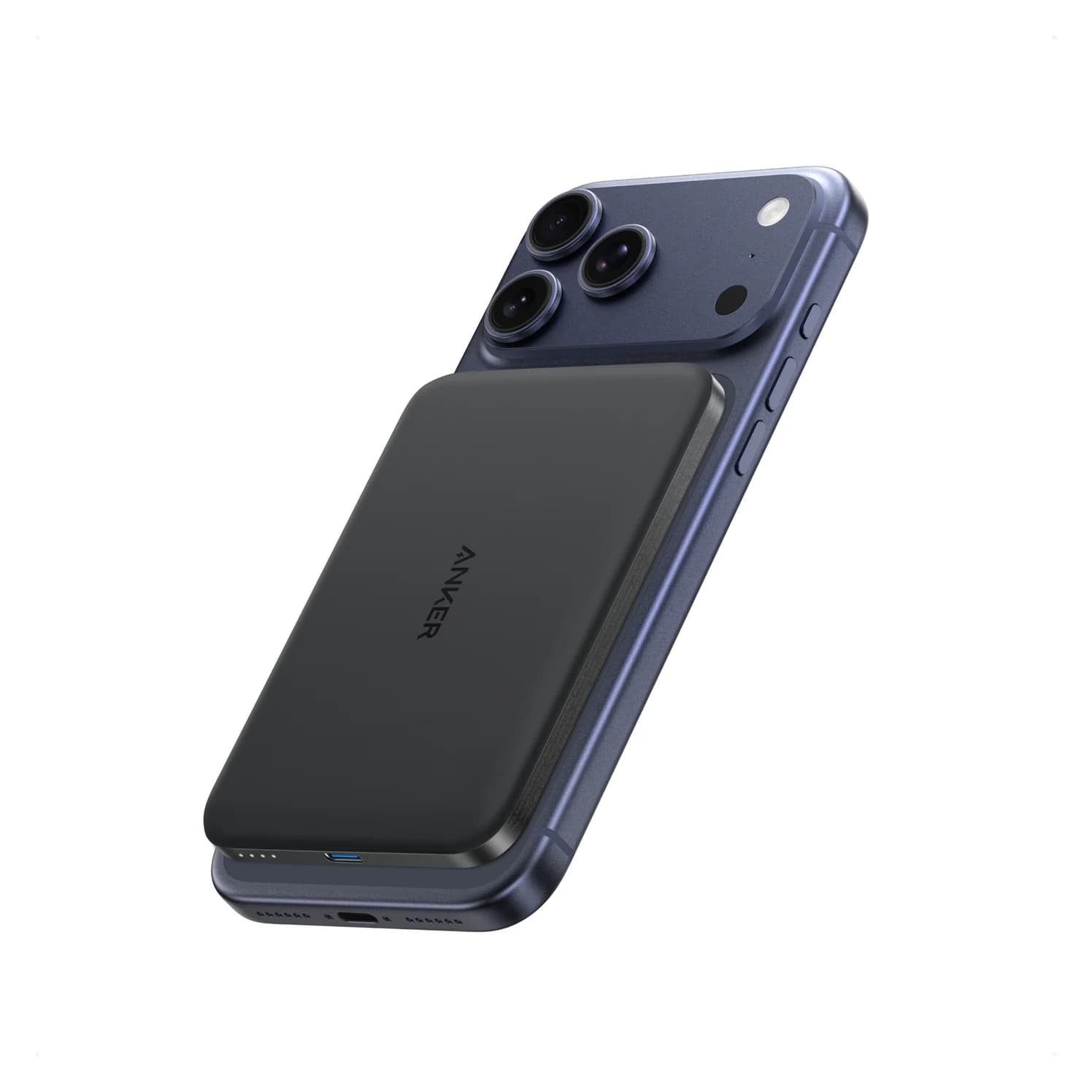
Baseus PicoGo Qi2 5K vs UGREEN MagFlow 5K: The Honest Answer in 2026
No UGREEN MagFlow 5K exists — the real Qi2 5K showdown is Baseus PicoGo vs Belkin BoostCharge Pro 10K. Here are the picks, specs, and gotchas.
Updated November 5, 2026Read
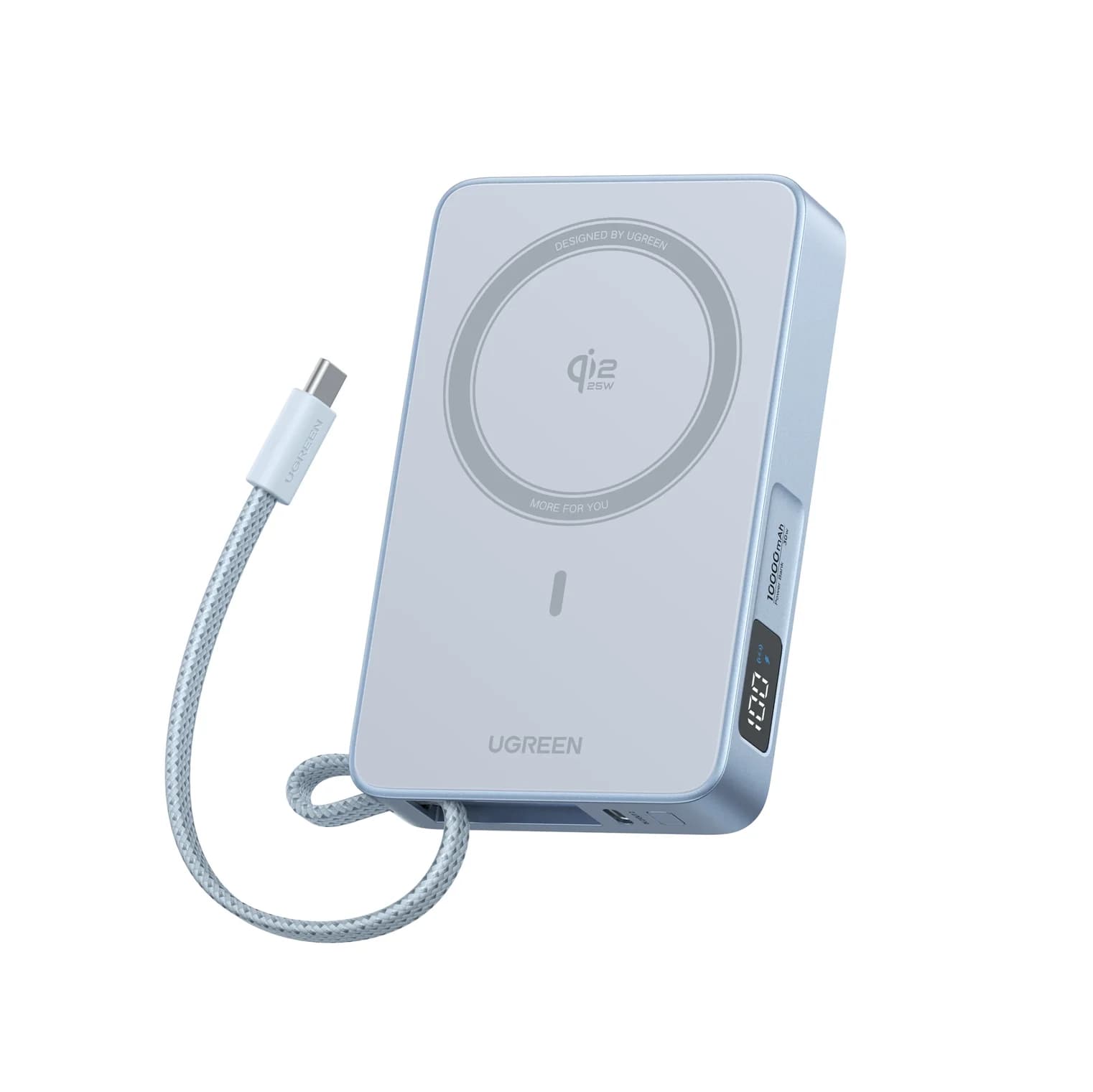
Anker Nano MagGo Slim 5K vs UGREEN MagFlow 10K: Which Magnetic Power Bank?
The Anker MagGo Slim 5K is the 8.6 mm pocket card; the UGREEN MagFlow 10K adds Qi2 25W and a built-in cable. Exact specs, phone fit and honest capacity.
Updated November 5, 2026Read
UGREEN 145W 25,000mAh vs Anker Prime 27K 250W Power Bank: Which to Buy
UGREEN's 145W 25,000mAh power bank vs Anker Prime 27K 250W: ports, charging speed, weight, flight rules and which laptop travelers should pick.
Updated November 5, 2026Read