Black Friday: the specs to check before you buy
Comparison
Updated November 5, 2026Anker Nano MagGo Slim 5K vs UGREEN MagFlow 10K: Which Magnetic Power Bank?
Short answer
If you want the least bulk that still gets a MagSafe iPhone through the afternoon, buy the Anker Nano MagGo Slim 5K (A1665): an 8.6 mm, 122 g Qi2 card that snaps on and disappears into a pocket. If your day regularly runs from morning to midnight away from an outlet, buy the UGREEN MagFlow 10,000mAh (SKU 65958): it holds roughly twice the energy, advertises Qi2 25W for phones that support it, and its built-in USB-C cable doubles as a carry strap so there is no separate lead to forget. The Slim 5K is the better pocket; the MagFlow is the better travel day.
Our picks at a glance
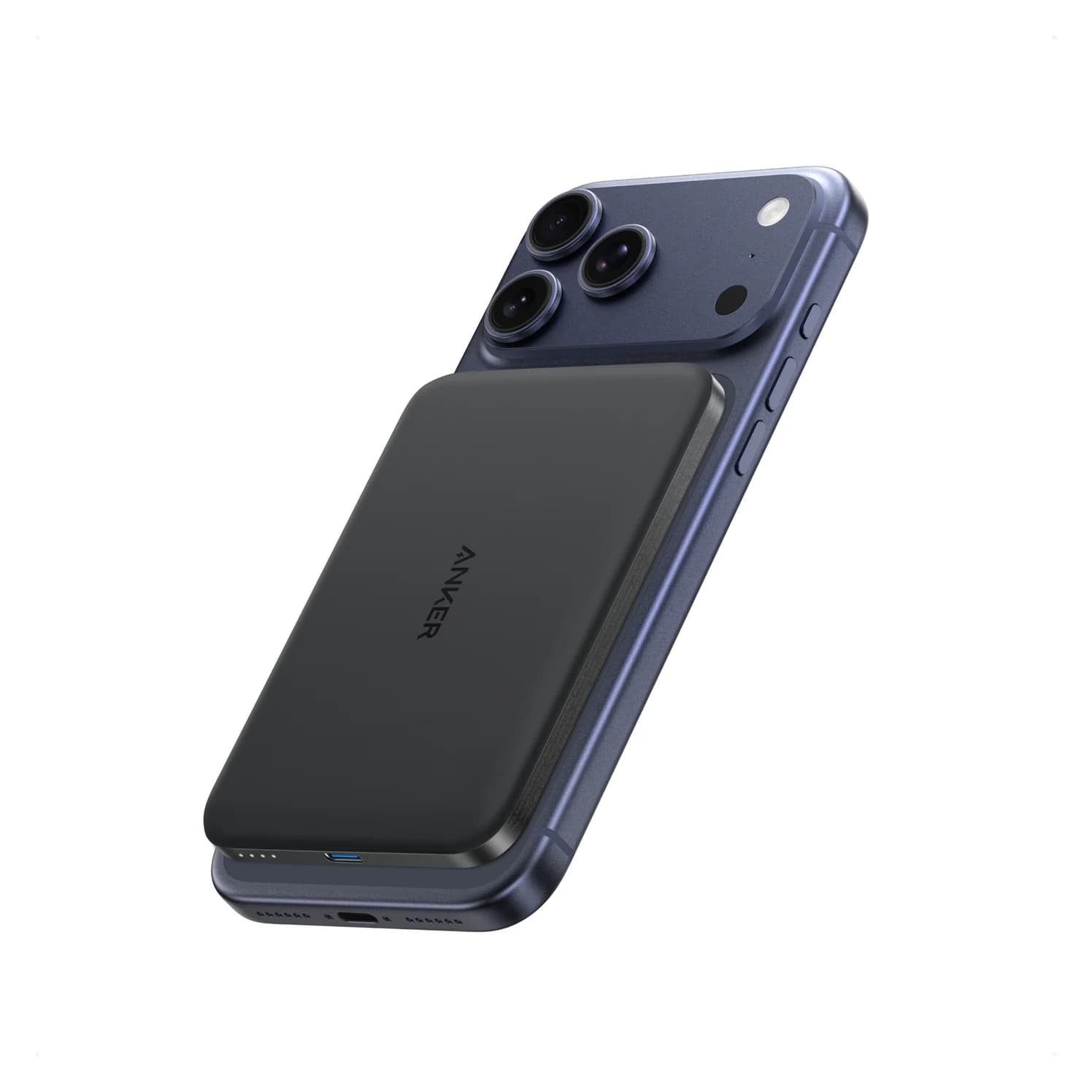
Best slim pocket pickAnker
Anker Nano Power Bank (5K, MagGo, Slim)
- max output
- 20W
- port
- 1
- Choose
- An 8.6 mm, 122 g Qi2 card that tops up a MagSafe iPhone without adding bulk, with 20W USB-C in both directions.
- Limit
- 5,000mAh is a top-up, not a full recharge for large phones
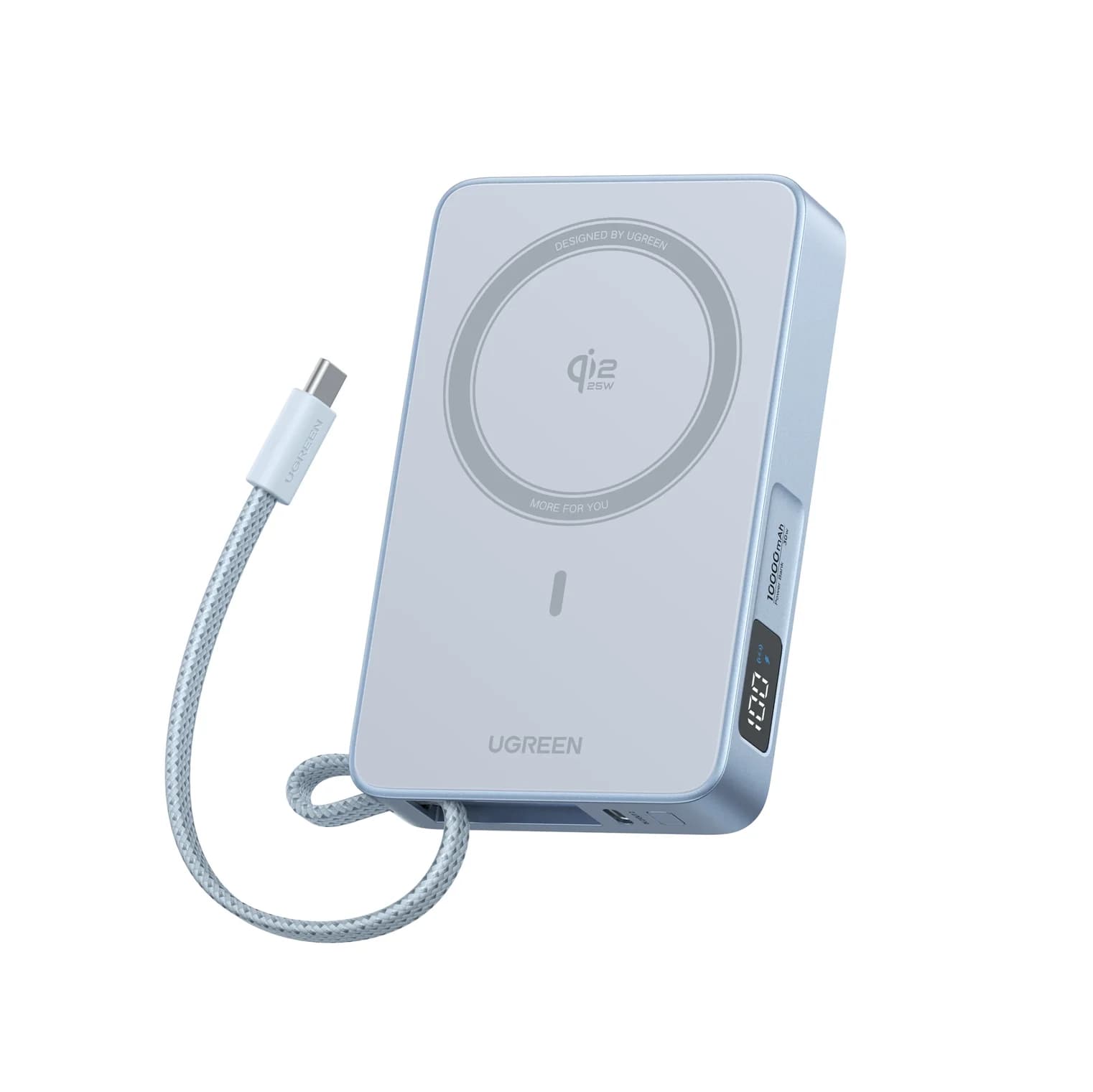
Best for a full day away from an outletUGREEN
UGREEN MagFlow Magnetic Wireless Power Bank 10000mAh (Qi2 25W)
- max output
- 30W
- ports
- 2
- Choose
- 10,000mAh with Qi2 25W on devices that support it, a built-in 30W USB-C cable and a second USB-C port, at 254 g.
- Limit
- iPhone 12-15 models are limited to 15W wireless
- 2,750–3,500mAhAnker's US-page usable-charge estimate from the Slim 5K's 5,000mAh battery; its model FAQ says 2,750–3,250mAh
- 5,600mAhUGREEN's rated capacity for the MagFlow 10,000mAh battery
- 8.6 mmThickness of the Anker Slim 5K; the MagFlow is more than twice as thick
Quick picks
| Pick | Best for | The one-line case |
|---|---|---|
| Anker Nano MagGo Slim 5K | Pocket carry, top-ups, minimum bulk | 8.6 mm and 122 g, Qi2 up to 15W wireless, 20W USB-C both directions |
| UGREEN MagFlow 10,000mAh | A full day out, faster wireless, no extra cable | 10,000mAh, Qi2 25W, built-in 30W cable plus a second USB-C port |
Which should you buy for an afternoon or a full travel day?
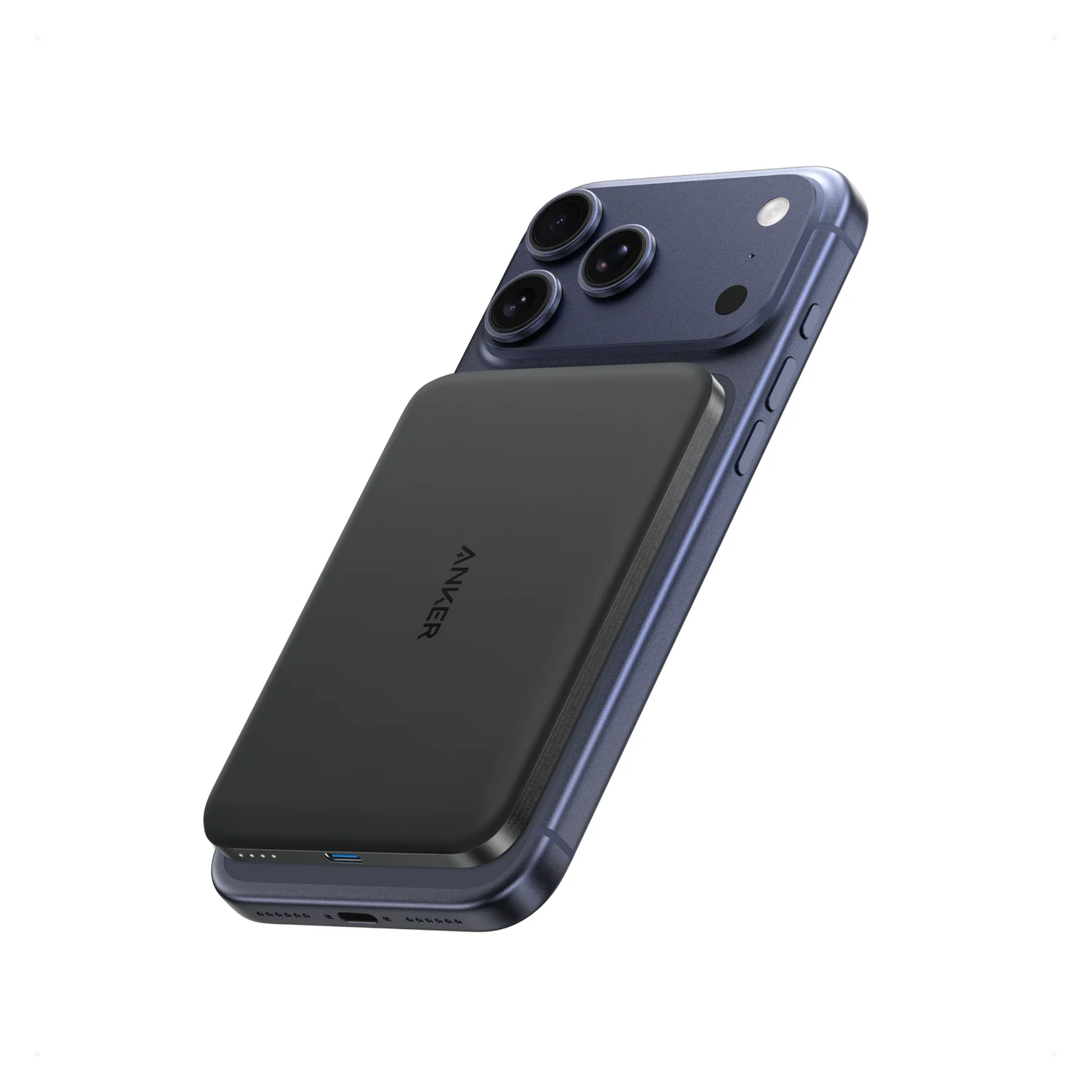
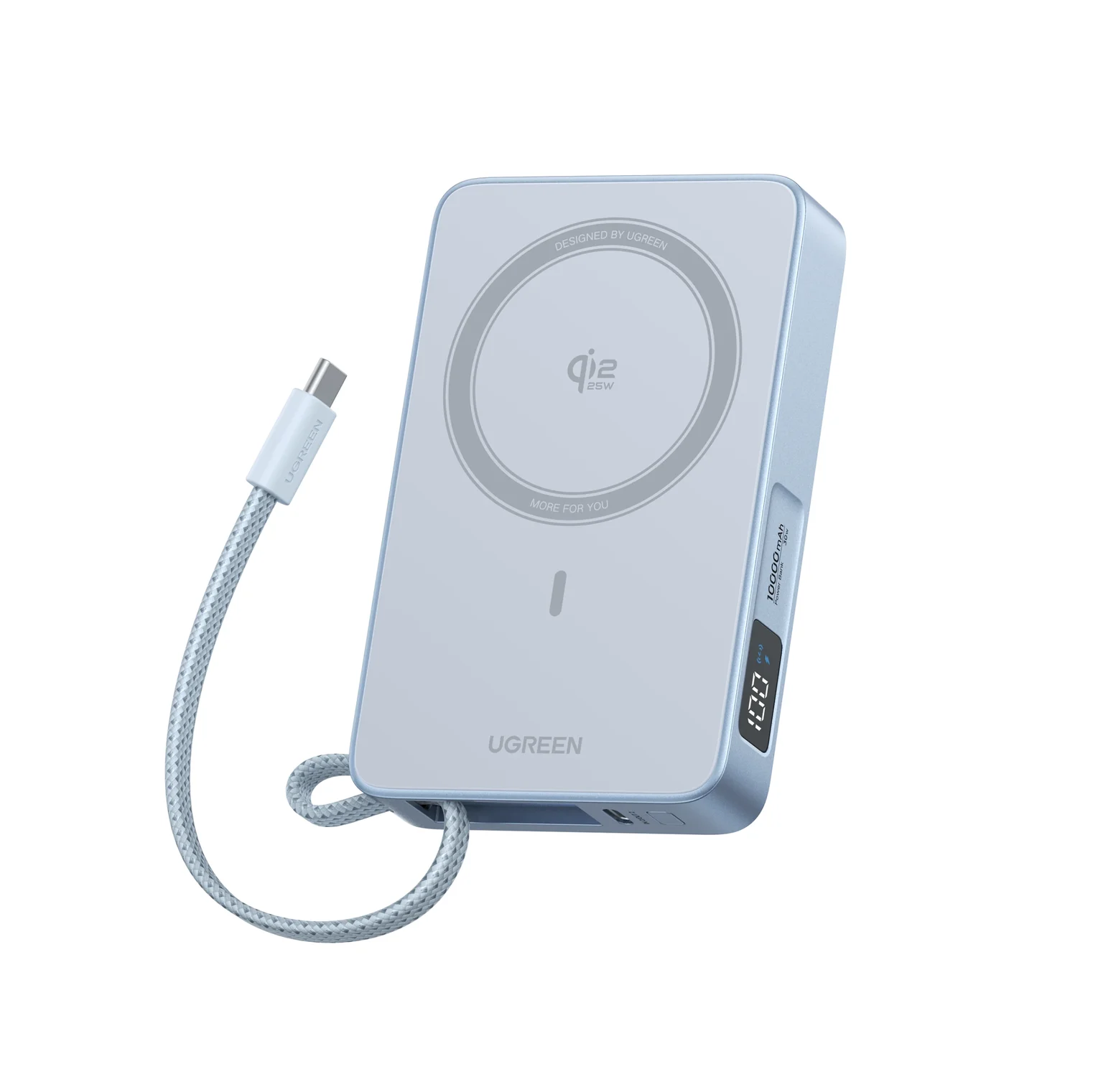
The honest dividing line is how far you are from a charger. Anker's own FAQ positions the Slim 5K "for portability and quick top-ups": its usable output is about 2,750mAh to 3,250mAh after conversion losses, while the US product page gives 2,750mAh to 3,500mAh. Both are maker estimates without published test conditions; Anker says the result is "often not enough for a full phone recharge." That is an afternoon rescue, not a day of navigation and photos.
The MagFlow's 10,000mAh battery carries a 5,600mAh rated capacity in UGREEN's US specification table, and UGREEN's UK page says it "provides nearly two full charges for iPhones." UGREEN gives no test conditions for the rated figure, so it is not numerically comparable with Anker's usable estimate. Reserve, in other words: it can carry a heavy day and still have something left at the hotel. The trade is pocket feel, covered below.
The exact versions to match before buying
Confusion costs money here, because both names sit in families. Anker A1665 is the "Nano Power Bank (5K, MagGo, Slim)" on Anker's US store, with the model number printed in its own specifications section. Anker also sells the MagGo Power Bank 10K (A1654) with a kickstand, and the 633 Magnetic Battery (A1641); the Slim 5K deliberately has no kickstand, per its FAQ.
UGREEN's candidate is MagFlow Magnetic Wireless Power Bank 10000mAh Qi2 25W, SKU 65958. Do not confuse it with the MagFlow Pro (10,000mAh with liquid cooling and a 45W built-in USB-C cable) or the MagFlow Air (a slimmer 10,000mAh variant listed at Qi2 15W), both of which appear alongside it in UGREEN's own navigation. Our UGREEN MagFlow 10,000mAh vs 20,000mAh guide covers the 20,000mAh sibling; our Anker MagGo 5K vs Nano Slim guide separates two similar Anker 5K cards.
| Specification | Anker Nano MagGo Slim 5K (A1665) | UGREEN MagFlow 10,000mAh (65958) |
|---|---|---|
| Nominal battery capacity | 5,000mAh | 10,000mAh |
| Rated / usable capacity, maker’s figure | 2,750–3,250mAh usable (model FAQ) or 2,750–3,500mAh (US page); no test conditions | 5,600mAh rated (US spec table; no test conditions) |
| Wireless output | Qi2-certified, 5W / 7.5W / 15W | Qi 2.2, up to MPP 25W |
| Wired USB-C output | Up to 20W | Up to 30W |
| Wired input (recharging the bank) | Up to 20W (9V/2.22A) | Up to 30W |
| Connections | 1x USB-C port | Built-in USB-C cable + 1x USB-C port |
| Dimensions | 102 × 70.6 × 8.6 mm | L110.8xW70xH21(mm), per UGREEN's spec table |
| Weight | 122 g | 254 g |
| Devices at once | 1 wireless + USB-C, with lower combined limits | Up to 3, no published wattage split |
| Warranty | 24-month worry-free warranty, per the maker's box description | 2-Year Product Warranty (UGREEN UK) |
Phone and case fit: what actually charges
Both are magnetic banks, so the phone matters as much as the bank. Anker's compatibility list for wireless charging covers the iPhone 12 through 16 series, and Anker's US page adds the iPhone 17 series as the model it is "best for," plus the Google Pixel 10 series. Anker excludes the iPhone 16e, iPhone 12 mini, 13 mini and iPhone SE from wireless charging, and its FAQ says the bank is "exclusively compatible with iPhone models 12 through 16 that support MagSafe technology" in one place while other pages extend it; the exclusions are consistent everywhere.
On the UGREEN side, the Qi2 25W mode only helps phones that support it. The MagFlow’s US specification lists Qi 2.2 modes up to MPP 25W but does not tie every phone to a rate. UGREEN’s launch release names the Google Pixel 10 Pro XL, the iPhone 16 series on iOS 26 and the then-upcoming iPhone 17 series; it specifically presents Pixel 10 Pro XL and iPhone 16 on iOS 26 as using the higher rate, while it does not state an iPhone 17 rate. Older MagSafe iPhones still charge, at the Qi2-era 15W ceiling, and the Wireless Power Consortium says Qi2 25W delivers nearly 70% more power than the original Qi2, which launched in November 2023 with 15 watts.
- Yes: iPhone 17 series: up to 15W on the Anker; UGREEN's launch list does not confirm its MagFlow wireless rate
- Yes: iPhone 12–16 with MagSafe: 15W wireless on either bank
- Yes: AirPods with MagSafe/wireless charging cases: 5W wireless on the Anker
- Yes: Android with a Qi2-compatible magnetic case: works on either, at lower power
- No: iPhone 16e, 12 mini, 13 mini, iPhone SE: excluded from the Anker's wireless charging
- No: Thick or non-magnetic cases (over 2.5 mm): impair charging on both
For the case, Anker's note is the rule of thumb for any magnetic bank: use a MagSafe-compatible case, avoid anything thicker than 2.5 mm, and keep cards, keys and pop grips away from the pad. Apple's charging guidance says the same about credit cards, security badges and passports between the phone and a MagSafe charger, because the magnets can damage magnetic strips and RFID chips.
Nominal capacity, losses and honest top-ups
No 5,000mAh or 10,000mAh figure arrives at your phone in full. Anker is unusually direct about this: its FAQ attributes a 30% to 45% energy loss to battery cells and conversion circuitry, and its Slim 5K FAQ estimates 2,750mAh to 3,250mAh of usable charge, "often not enough for a full phone recharge." UGREEN publishes a 5,600mAh rated capacity row for the MagFlow without stating its test conditions, and its UK page rounds the story to "nearly two full charges for iPhones" from 10,000mAh. Treat all of these as maker estimates, not measurements of what your specific phone will see; capacity choice is about reserve, and roughly twice the reserve is what the MagFlow buys.
Thickness, weight, built-in cable and shared-output behavior
The Anker card's whole reason to exist is its body: 102 × 70.6 × 8.6 mm and 122 g, which Anker compares to an Apple Pencil for thinness and calls half the weight of an iPhone 16 Pro Max. It fits in a wallet or a jeans pocket behind the phone. The MagFlow is more than twice as thick at 254 g: attached to a phone, it is a two-layer stack you notice, and a bag or jacket pocket item rather than a card.
The cable question is the MagFlow's second advantage. Its built-in USB-C lead charges at 30W in both directions and doubles as a carry strap, so the bank is complete without packing anything else, and UGREEN says it powers up to three devices at once with power "allocated smartly," though it publishes no wattage split for that mode. The Anker has no built-in lead: its single USB-C port is both input and output, up to 20W, and Anker lists lower combined limits (USB-C 5V/2.4A maximum plus wireless 5W maximum) when both run at once. Its FAQ adds a genuine pass-through detail: while the bank itself recharges, wireless charging supports up to 7.5W.
Refill charger and the complete usable purchase
Neither box includes a wall adapter. Anker's US listing includes a USB-C-to-USB-C cable and a welcome guide, and its spec note says to use a 3A cable with a charger rated at 20W or higher for optimal recharging; Anker's FAQ puts a full refill at around 1 hour and 54 minutes on such a charger. The MagFlow's US "Cable Spec" row lists a 0.5m 3A USB-C cable rated at 60W, so check the regional box before assuming you need to add one, and either bank refills from any USB-C charger, with the power bank itself accepting up to 30W input. Count the adapter in the checkout total; our USB Power Delivery explainer helps you match one.
Both banks manage heat by design: Anker says the Slim 5K attempts to keep the wireless surface under around 104°F (40°C) with dual NTC chips, and says it can still get a bit warm while wirelessly charging. UGREEN lists 13-layer safety protection in its launch release. Heat still slows wireless charging on any bank, so expect peak wattage early in a session, not throughout.
Gift fit and the checked-offer gap that changes the verdict
Either works as a gift for an iPhone owner: no setup, no drivers, snap-on use. The Slim 5K is the stocking-stuffer shape and a safe pick for someone whose complaint is pocket bulk; the MagFlow suits a traveler whose complaint is battery life. When comparing offers, match the exact model code (A1665 or SKU 65958), not just the marketing name, because the MagFlow Pro and MagFlow Air share the family name with different wattages, and Anker sells several MagGo cards. If a listing does not state the model, that gap is the verdict: skip it.
When a wired bank or another capacity is the better buy
If wireless charging is a nice-to-have and speed is the priority, a wired-only bank charges faster per gram of carry. If 5,000mAh is too small but a 21-millimetre-thick bank is too thick, the Anker MagGo 10K (A1654) adds a kickstand, and the slimmer 20,000mAh-to-10,000mAh choices are compared in our MagFlow capacities guide. For the full landscape of snap-on banks, start from our best MagSafe power bank guide, and for the wired question, our best power banks guide.
How we choose
This comparison is built from the makers' own documents, not bench testing: Anker's US product page, FAQ and support pages for the A1665; UGREEN's US and UK product pages for SKU 65958 and its launch release; the Wireless Power Consortium's Qi2 25W announcement; Apple's charging guidance for case and card rules; and the FAA's lithium-battery rules for travel. Where the makers disagree with themselves (Anker's compatibility notes, UGREEN's regional cable descriptions), we say so instead of picking a version, and where neither maker publishes a number (the MagFlow's three-device wattage split), we leave it out rather than invent one.
Buying advice
Match the model code
Confirm A1665 (Anker) or SKU 65958 (UGREEN), not just the brand name.
Check your phone and case
Confirm the phone's wireless mode and that the case is MagSafe-compatible and under 2.5 mm.
Count the whole kit
Neither box has a wall adapter; add a 20W or higher USB-C charger if you do not own one.
Check the travel label
Verify the printed watt-hours and your airline's power-bank rules before flying.
Both banks are carry-on items under FAA rules, which require power banks in carry-on baggage only and limit lithium-ion batteries to 100 watt hours each; our power-bank flight rules guide has the details.
Verdict
Buy the Anker Nano MagGo Slim 5K if the phone it saves is one you carry in a pocket: 8.6 mm and 122 g of honest top-up, at 15W wireless and 20W USB-C. Buy the UGREEN MagFlow 10,000mAh for days that outlast a pocket-sized battery: twice the reserve, Qi2 25W on phones that support it, and a built-in 30W cable that makes the bank self-contained. The right answer is about your day's distance from an outlet, not the brand on the box.
Frequently asked questions
Is the Anker MagGo Slim 5K enough for a whole day?
Usually not for a full recharge. Anker's model FAQ says the 5,000mAh bank provides about 2,750mAh to 3,250mAh of usable charge after energy loss, while its US product page gives a 2,750mAh to 3,500mAh estimate. Anker calls that often not enough for one full phone recharge. It is built for top-ups: a partial charge that gets you to the evening. If your day regularly runs the battery flat, the UGREEN MagFlow 10,000mAh or a larger bank is the better fit.
Does the Anker MagGo Slim charge at 25W?
No. The Slim 5K is Qi2-certified at up to 15W wireless, the level the original Qi2 standard launched with in November 2023. Qi2 25W is the Wireless Power Consortium's branding for the newer Qi v2.2.1, and UGREEN's MagFlow advertises it. Only phones that themselves support the higher mode benefit, so an iPhone 15 tops out at 15W on either bank.
Can I use the UGREEN MagFlow with an Android phone?
Wirelessly, only with a magnetic case. Most Android phones, including the Galaxy S26 Ultra and S26 Plus that Anker's FAQ names, lack built-in magnetic rings, so they cannot snap on without a Qi2-compatible magnetic case, and the connection is less reliable without one. The built-in USB-C cable supports USB PD, PPS and Quick Charge for device charging; for recharging, UGREEN lists USB PD and Quick Charge-family input protocols.
Can either power bank go on a plane?
Yes. The FAA requires spare lithium-ion batteries and power banks in carry-on baggage only, removed from any bag checked at the gate, and its normal limit is 100 watt hours per battery. Both of these banks are well under that limit, and airlines can still set stricter quantity rules, so check your carrier. Our power-bank flight rules guide covers the details.
Do I need to buy anything else with them?
A wall charger, yes: neither maker lists one in the box. Anker includes a USB-C-to-USB-C cable and says to recharge with a 20W or higher charger for best speed. The MagFlow has its built-in cable and a USB-C port, so any USB-C charger works; 30W is the maximum input it accepts. Budget for the adapter when comparing the total purchase.
Will either bank charge a laptop?
Not usefully. Anker's FAQ states the Slim 5K is built for smartphones, with 20W maximum wired output and no 20V laptop profile. The MagFlow's 30W USB-C output suits phones, tablets and earbuds. For laptop charging, look at a higher-wattage bank instead, such as those in our power banks guide.
Related guides
Baseus PicoGo Qi2 5K vs UGREEN MagFlow 5K: The Honest Answer in 2026
No UGREEN MagFlow 5K exists — the real Qi2 5K showdown is Baseus PicoGo vs Belkin BoostCharge Pro 10K. Here are the picks, specs, and gotchas.
Updated November 5, 2026Read
Anker Zolo 10K Power Bank Review: A1688 vs the Nano 10K
Anker Zolo 10K vs Nano 10K: compare built-in cable length, 30W charging, shared output, refill speed and the complete kit, from the makers' own documents.
Updated November 5, 2026Read
UGREEN 145W 25,000mAh vs Anker Prime 27K 250W Power Bank: Which to Buy
UGREEN's 145W 25,000mAh power bank vs Anker Prime 27K 250W: ports, charging speed, weight, flight rules and which laptop travelers should pick.
Updated November 5, 2026Read