Black Friday: the specs to check before you buy
Comparison
Updated November 5, 2026Anker MagGo 5K vs Nano Slim: Which Model Should You Buy?
Short answer
Buy the Anker Nano Power Bank (5K, MagGo, Slim), model A1665, for everyday carry: its published 8.6 mm thickness, 122 g weight, 15W Qi2 wireless maximum and 20W USB-C port make it our default choice. Choose the Anker 622 Magnetic Battery (MagGo), upgraded model A1614, when you specifically want its folding stand and accept 7.5W wireless charging. Check the model number before ordering: A1667 MagGo 5K Slim is another product, with Qi2 and 20W USB-C, so “MagGo 5K” alone does not identify the older stand-equipped bank.
Our picks at a glance
Best for everyday carryAnker
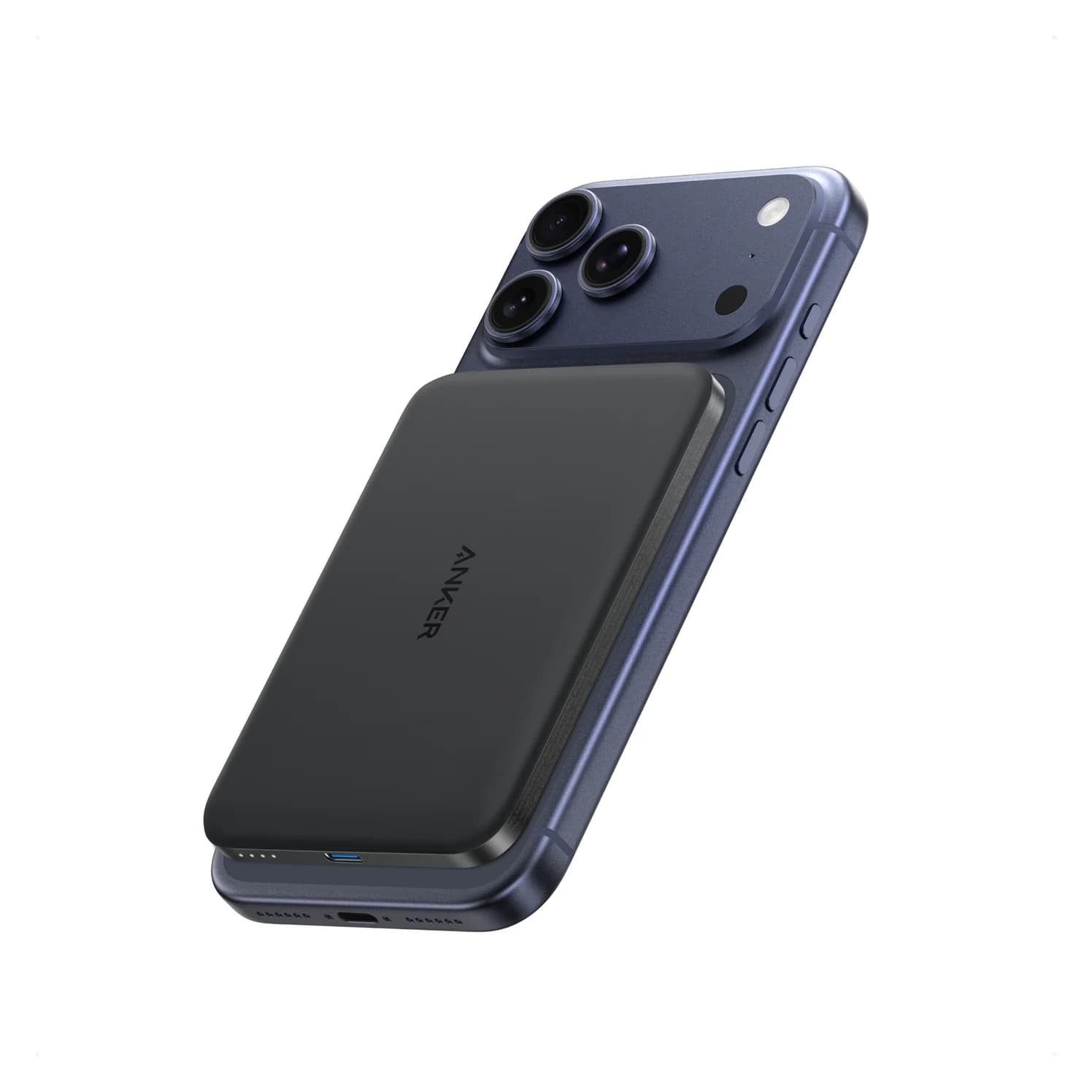
Anker Nano Power Bank (5K, MagGo, Slim)
- max output
- 20W
- port
- 1
- Choose
- The A1665 Nano pairs an 8.6 mm body and 122 g weight with up to 15W Qi2 wireless charging and 20W USB-C input or output.
- Limit
- 5,000mAh is a top-up, not a full recharge for large phones
Quick picks
| Your use | Exact model / maker SKU example | Complete charging kit | Why choose it | Buying link |
|---|---|---|---|---|
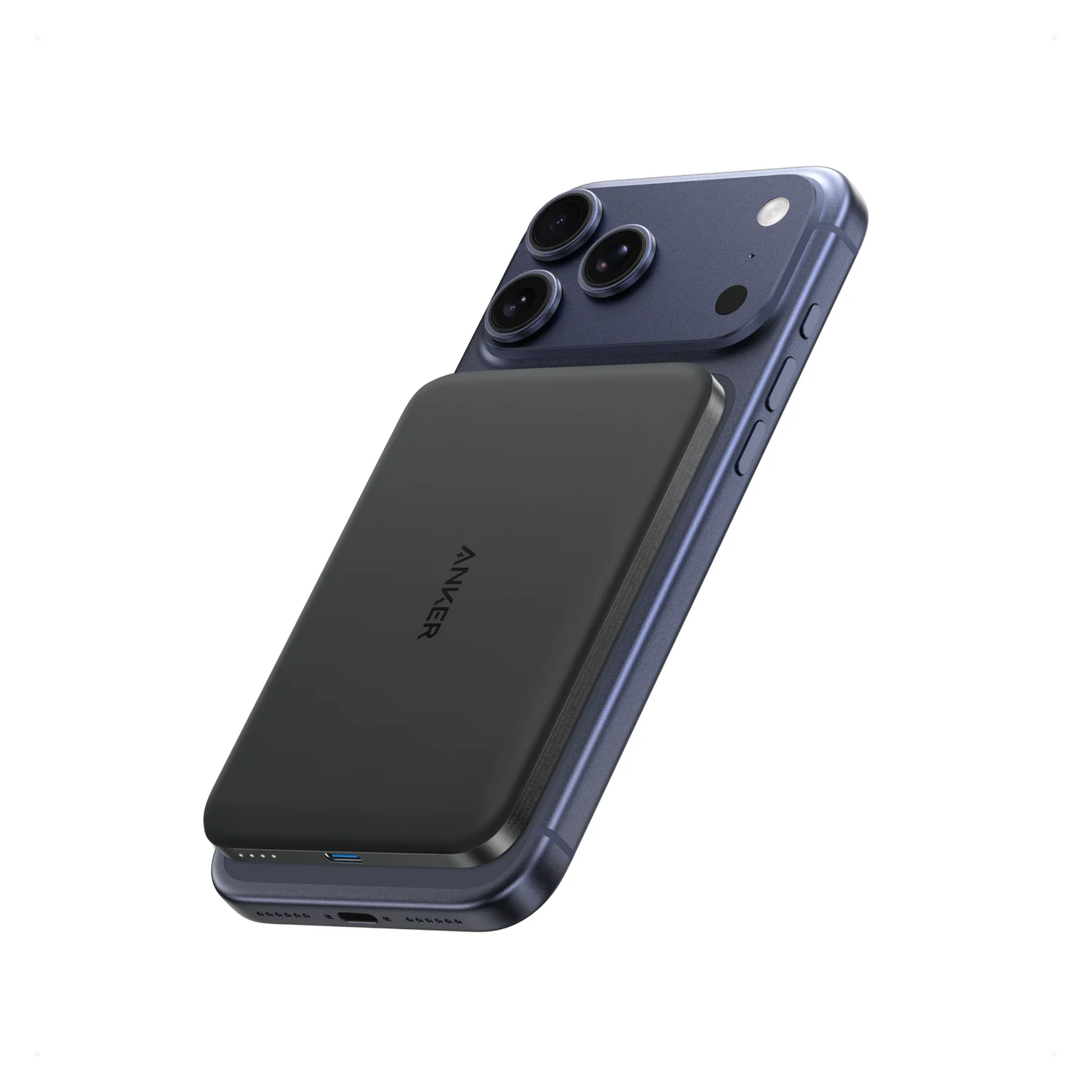
| Phone-mounted everyday top-ups | Nano A1665 / A1665011, Black single pack | Included USB-C cable; use a 20W-or-higher charger for recharging | Our pick for the thinner body and higher charging limits | Check price on Amazon |
| Propping up an iPhone while charging | Upgraded 622 A1614 / A1614011, Interstellar Gray | Included 60 cm USB-C cable; Anker recommends at least a 12W charger | Folding stand | Check the A1614 at Anker |
The SKU examples come from Anker's own product data and identify particular colour/package selections. Match the model, then the colour and pack count, before comparing offers. Anker's US pages listed both comparison models in stock when checked; availability can change.
The charging and pocketability comparison
| Specification | Nano Slim A1665 | Upgraded 622 MagGo A1614 |
|---|---|---|
| Cell capacity | 5,000mAh | 5,000mAh |
| Dimensions | 102 × 70.6 × 8.6 mm | 105 × 66.5 × 12.8 mm |
| Weight | 122 g | 140 g |
| Built-in stand | No | Folding kickstand |
| Magnetic wireless charging | Qi2; up to 15W | MagSafe-compatible; up to 7.5W |
| Physical USB ports | One USB-C | One USB-C |
| USB-C output, used alone | Up to 20W; 5V/3A or 9V/2.22A | Up to 12W; 5V/2.4A |
| USB-C input | Up to 20W | Up to 12W |
| Wired and wireless device output together | Listed combined-output limits: USB-C 5V/2.4A max, wireless 5W max | Unsupported; wired device gets priority |
| Wireless while recharging the bank | Pass-through confirmed; up to 7.5W | Pass-through advertised; separate mode-specific wattage not stated on Anker's product pages |
| Box contents relevant to charging | USB-C to USB-C cable | 60 cm USB-C to USB-C cable |
| Advertised warranty | 24 months | 24 months |
Sources: Anker's Nano specifications, Nano support FAQ, 622 specifications and 622 product notes. The warranty and cable descriptions also appear in the US product data.
Source: Anker's Nano specifications and 622 specifications
These are maximum ratings, not a promise that the Nano finishes charging your phone twice as quickly. Anker's Nano manual says charging power may fall as temperatures rise. The Wireless Power Consortium describes Qi2 as magnetic alignment with 15W charging; the MagGo name by itself should never replace a model-specific output check.
Best for everyday carry: Anker Nano Slim A1665
Anker
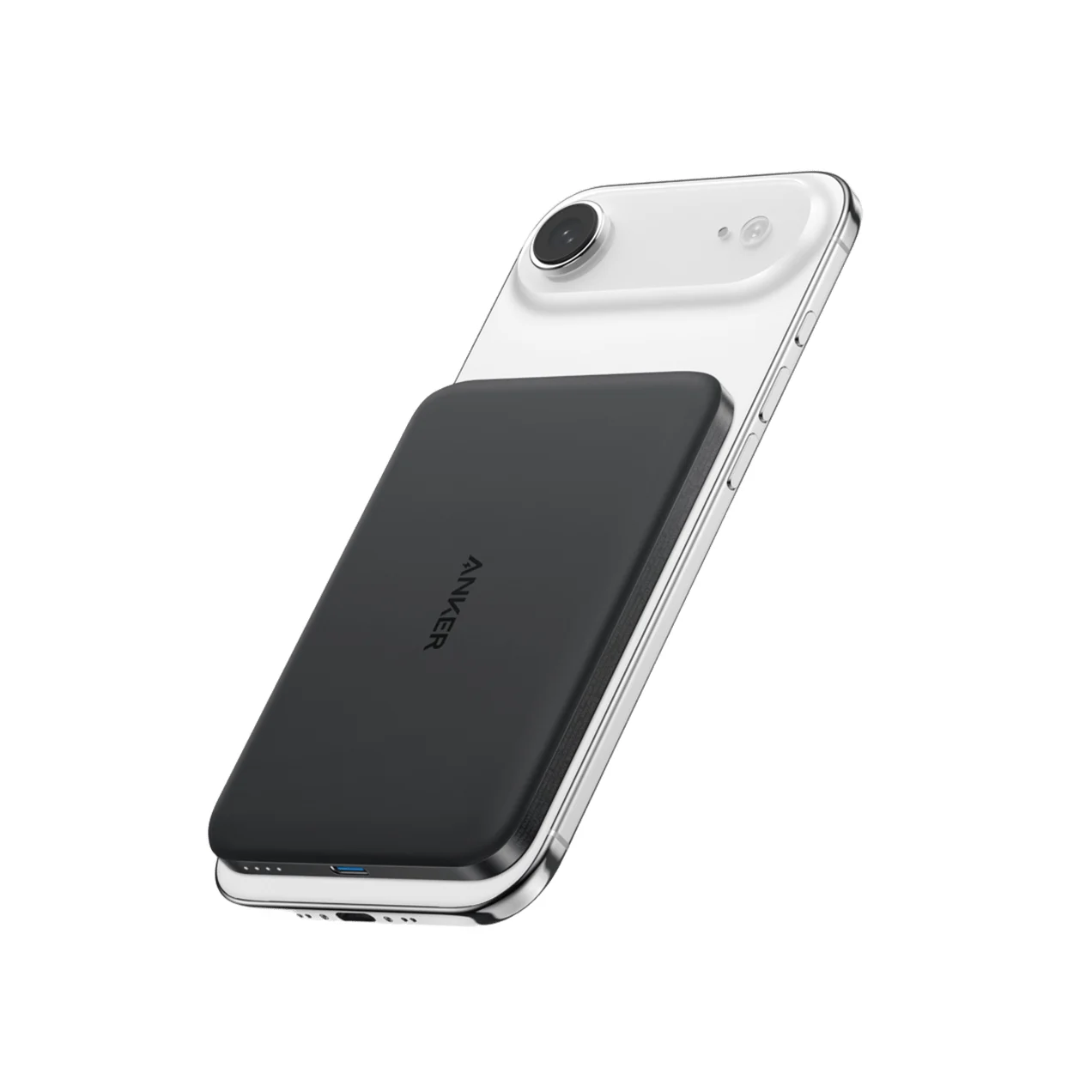
Anker Nano Power Bank (5K, MagGo, Slim)
An 8.6mm-thin 5,000mAh magnetic power bank with Qi2-certified 15W wireless charging and a 20W USB-C port.
- 20W max output
- 1 port
The Nano is the recommendation when you want backup power attached to your phone while moving around. Relative to this A1614, its published dimensions make it thinner and shorter, although wider, and its specified weight is lower. Anker explicitly confirms that it has no kickstand. If you rarely prop up your phone, that is a sensible trade for this use.
Its USB-C port is useful beyond refilling the bank: Anker rates both input and standalone output up to 20W. Keep the included cable available if wired charging is part of your plan. The 20W USB-C rating and 15W wireless rating describe different outputs; choose the mode you need rather than treating them as interchangeable.
Choose it if: you value a thin attached pack and the higher standalone charging limits. Reconsider if: your main requirement is a built-in viewing stand.
Check the Anker Nano Slim price on Amazon
Choose for the stand: Anker 622 MagGo A1614
The upgraded 622 earns its place through its folding kickstand. Anker describes holding a compatible iPhone upright while charging, which makes it the more useful choice here for video calls or watching something at a table. Buy it for that function rather than treating the older MagGo branding as a charging-speed advantage.
This comparison applies specifically to A1614, which Anker's support portal calls the upgraded version. Its published limits are 7.5W wireless and 12W USB-C; its 5V/2.4A port has no listed 9V output. Anker also says it cannot charge two devices at once: connecting a wired device gives that device priority over wireless charging.
The maker's US product data specifies a USB-C cable and a 24-month warranty. Confirm the same package and local warranty terms on the offer you select.
Check the upgraded 622 A1614 at Anker
What about A1667 MagGo 5K Slim and the 621?
A1667 is not the stand-equipped 622 in this comparison. Anker's A1667 support page lists 102 × 70.6 × 8.6 mm, Qi 2.0 MPP 15W wireless charging and 20W wired input/output. Its UK listing describes a 5,000mAh pack with a USB-C cable and 24-month warranty. Those headline specifications overlap the Nano's; they do not establish that the products are identical in every respect.
If your offer says A1667, compare its exact regional package with A1665. The 622's slower-output column does not apply to it. We have not established a matching US retail package for A1667, so it is an identification note here rather than another buying pick.
The 621 MagGo, A1610, is another naming trap: Anker lists 7.5W magnetic charging and says a wired device takes priority. Keep its specifications separate from both the Nano and upgraded 622.
How we choose
This comparison uses Anker's product pages, model-specific support information and downloadable manuals, alongside the Wireless Power Consortium's explanation of Qi2. Recommendations follow the documented dimensions, charging modes, stand and compatibility restrictions. We have not physically evaluated these packs, and no recommendation here depends on buyer anecdotes or inferred charging times.
When Anker's pages disagree, we identify the conflict. A shared capacity or product-family name is insufficient evidence that two listings describe the same hardware.
Buying advice: thickness, fit and charging modes
Resolve the Nano thickness conflict conservatively
The US specifications give 8.6 mm. Anker's UK page also gives 8.6 mm in its table, but its descriptive paragraph says 7.6 millimetres. Use the larger published dimension for planning pocket space; these pages do not prove that the smaller figure identifies a separate version. The Nano remains thinner on paper than the A1614's 12.8 mm body using the larger figure.
Check the phone, case and camera surround together
For the Nano, Anker's US page names iPhone 12 through 17 series but specifically excludes 12 mini, 13 mini and 16e. Its manual repeats those exclusions. The same US page now names Pixel 10 compatibility while an older paragraph says exclusively MagSafe iPhones from 12 through 16; confirm your exact Android model with Anker rather than treating that older paragraph or MagGo branding as a universal answer. Anker's 622 US FAQ says that model is not Android-compatible.
For cases, Anker advises MagSafe-compatible designs and warns about thickness over 2.5 mm, plus metal attachments, cards and grips that interfere with charging. Check whether the pack can sit flat around your case's camera lip; use the published footprint as a screening tool, then confirm clearance with the case maker. We cannot certify camera clearance from the pack's dimensions alone.
For a mini, choose another solution: the 622's product notes advise against the 12/13 mini because of size, even though its quick-start sheet lists the 12 mini. That is a maker-document conflict, not a basis for promising a good fit.
Separate sharing output from pass-through
The Nano's combined-output row specifies USB-C 5V/2.4A max plus wireless 5W max. Do not plan on getting its standalone wired and wireless maxima simultaneously. For the 622, plan to charge a single device because the wired connection takes priority.
Pass-through means refilling the bank while it powers a phone. Anker's Nano FAQ confirms up to 7.5W wireless in that mode. Anker also advertises pass-through for the A1614, but Anker's product pages do not give a separate wattage for that operating mode. Choose the Nano for its higher standalone ceiling, without assuming that ceiling survives wall-powered use.
Budget for a top-up and a complete kit
Anker's Nano FAQ and manual estimate 2,750–3,250mAh of usable charge after losses; the US product page instead estimates 2,750–3,500mAh. These conflicting maker estimates support a top-up recommendation, not an exact promise of phone battery percentage. If a full refill is essential, start with our broader power-bank guide.
For recharging, Anker recommends 20W or higher for the Nano and at least 12W for the 622. Both documented packages include USB-C cables. Budget for an adapter unless the selected bundle explicitly includes one; add a phone-compatible cable if the included USB-C cable does not fit your phone. Our USB-C charger guide helps with that part of the kit.
Match the model
Check the exact model number on the offer, then its colour, pack count and regional package.
Compare the usable kit
Include any adapter or phone cable you still need, and check the stated warranty for the selected offer.
Choose by use
Pick the Nano for attached carry and charging limits, or the upgraded 622 for its folding stand.
We do not label either bank a current bargain without a comparable live offer. Recheck the selected model and kit at checkout rather than assuming a sale badge settles the decision.
For more magnetic-pack options, use the MagSafe power-bank guide. If you are considering more capacity within Anker's range, use the MagGo 10K versions comparison. If your real choice is a wired pocket bank versus this magnetic Nano, use the Nitecore NB Air versus Nano comparison.
Verdict
Choose the A1665 Nano Slim for everyday carry and its higher standalone charging limits. Choose the A1614 upgraded 622 when the folding stand is the feature you will use. If the offer says A1667, pause at the model check: it belongs to the Qi2 Slim branch, and the older 622 comparison does not describe it.
Frequently asked questions
Is the Anker Nano 5K MagGo Slim better than the older MagGo 5K?
For everyday carry, we recommend the A1665 Nano: Anker specifies 8.6 mm thickness, 122 g weight, up to 15W Qi2 wireless charging and 20W USB-C charging. Choose the older A1614 upgraded 622 if its folding stand matters more than charging speed. Check the model number first: the separate A1667 MagGo 5K Slim also has Qi2 and 20W USB-C.
Is the Anker Nano Slim 7.6 mm or 8.6 mm thick?
Anker's US specifications list 8.6 mm, and the UK specification table agrees. The UK's descriptive paragraph nevertheless says 7.6 millimetres. We use 8.6 mm for this comparison and flag the conflicting copy. Treat the smaller figure as unresolved; Anker's pages do not establish that it represents a different regional hardware version.
Can the Nano 5K charge a phone while the power bank recharges?
Yes. Anker's model-specific Nano FAQ confirms pass-through charging, with wireless output up to 7.5W while the bank recharges. That is a different operating mode from its standalone 15W wireless maximum. For refilling the bank, Anker recommends a charger rated at 20W or higher; its manual gives about two hours with a compatible charger.
Does the Anker Nano 5K have a stand?
No. Anker's support FAQ explicitly says the A1665 Nano omits a kickstand to maintain its slim design. The A1614 upgraded 622 has a folding stand and is our conditional choice for propping up a listed compatible iPhone. Its wireless maximum is 7.5W, so decide whether the stand is worth accepting that lower ceiling.
Will these magnetic power banks fit an iPhone mini or 16e?
Choose another solution. Anker excludes iPhone 12 mini, 13 mini and 16e from the Nano's wireless compatibility list. Its 622 product notes advise against the two minis because of size, although the 622 quick-start sheet includes iPhone 12 mini. That conflict prevents a confident mini recommendation. Check your exact phone and case rather than relying on a broad iPhone-series label.
Will a 5,000mAh Anker pack fully recharge my phone?
Buy it for a top-up. Anker's Nano FAQ and manual estimate 2,750 to 3,250mAh of usable charge after losses, while its US product page gives 2,750 to 3,500mAh. These are manufacturer estimates with conflicting upper limits, not measured results from thisUSB. We would move to the broader power-bank guide if a full refill is essential.
Related guides
Baseus PicoGo Qi2 5K vs UGREEN MagFlow 5K: The Honest Answer in 2026
No UGREEN MagFlow 5K exists — the real Qi2 5K showdown is Baseus PicoGo vs Belkin BoostCharge Pro 10K. Here are the picks, specs, and gotchas.
Updated November 5, 2026Read
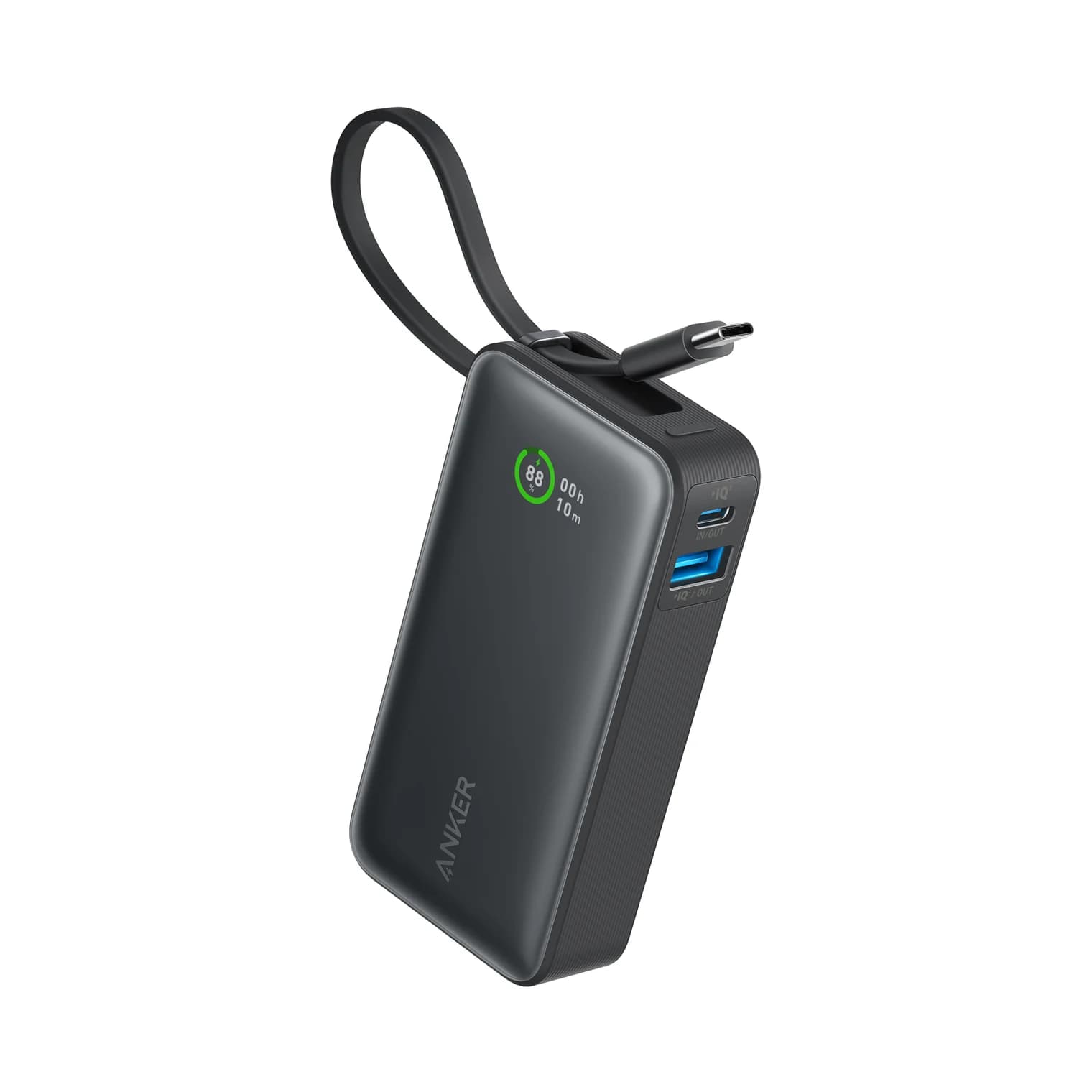
Anker Zolo 10K Power Bank Review: A1688 vs the Nano 10K
Anker Zolo 10K vs Nano 10K: compare built-in cable length, 30W charging, shared output, refill speed and the complete kit, from the makers' own documents.
Updated November 5, 2026Read
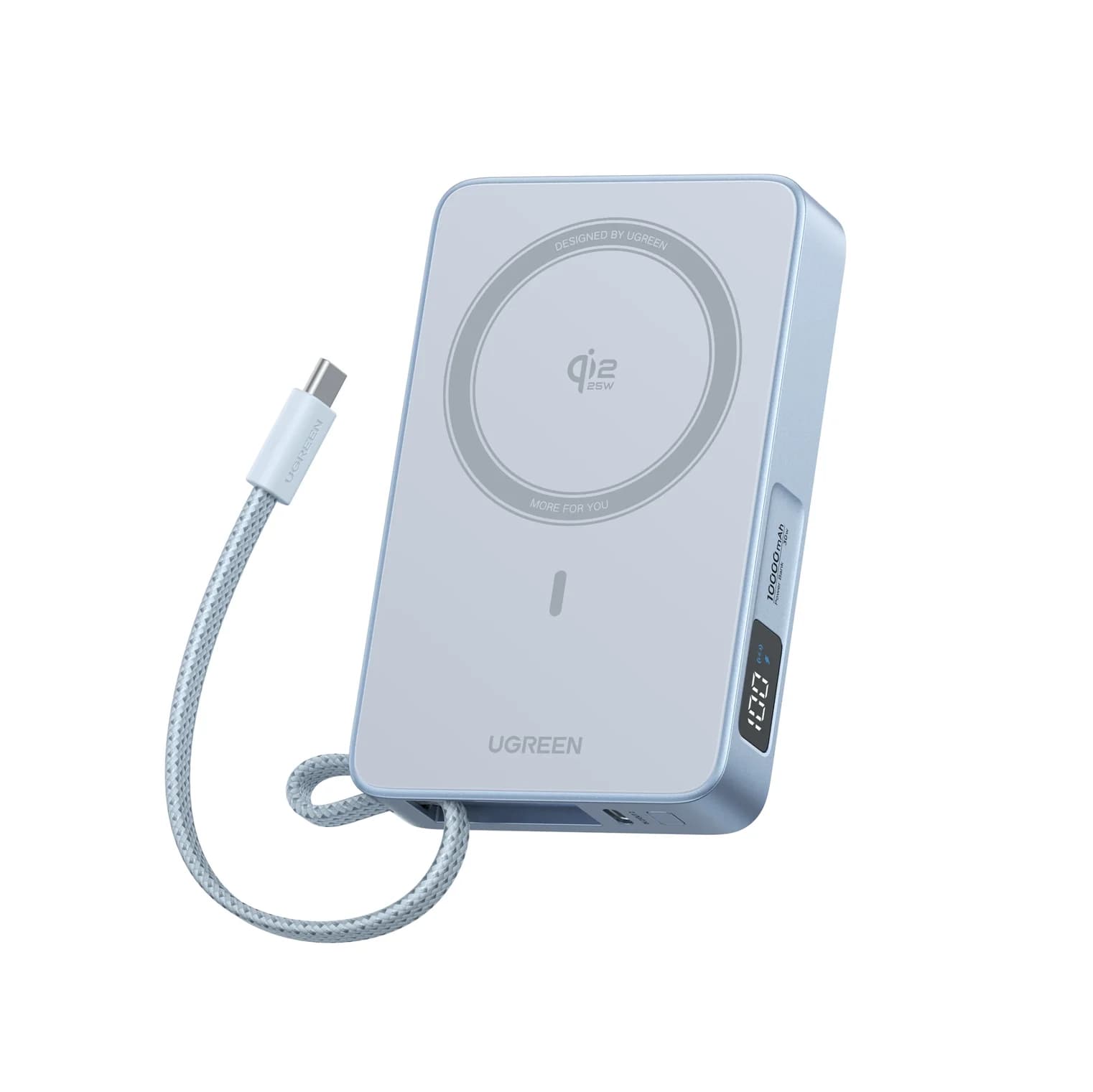
Anker Nano MagGo Slim 5K vs UGREEN MagFlow 10K: Which Magnetic Power Bank?
The Anker MagGo Slim 5K is the 8.6 mm pocket card; the UGREEN MagFlow 10K adds Qi2 25W and a built-in cable. Exact specs, phone fit and honest capacity.
Updated November 5, 2026Read