Black Friday: the specs to check before you buy
Explainer
Updated November 3, 2026Can I Bring a Power Bank on a Plane? 2026 Rules, mAh to Wh
Short answer
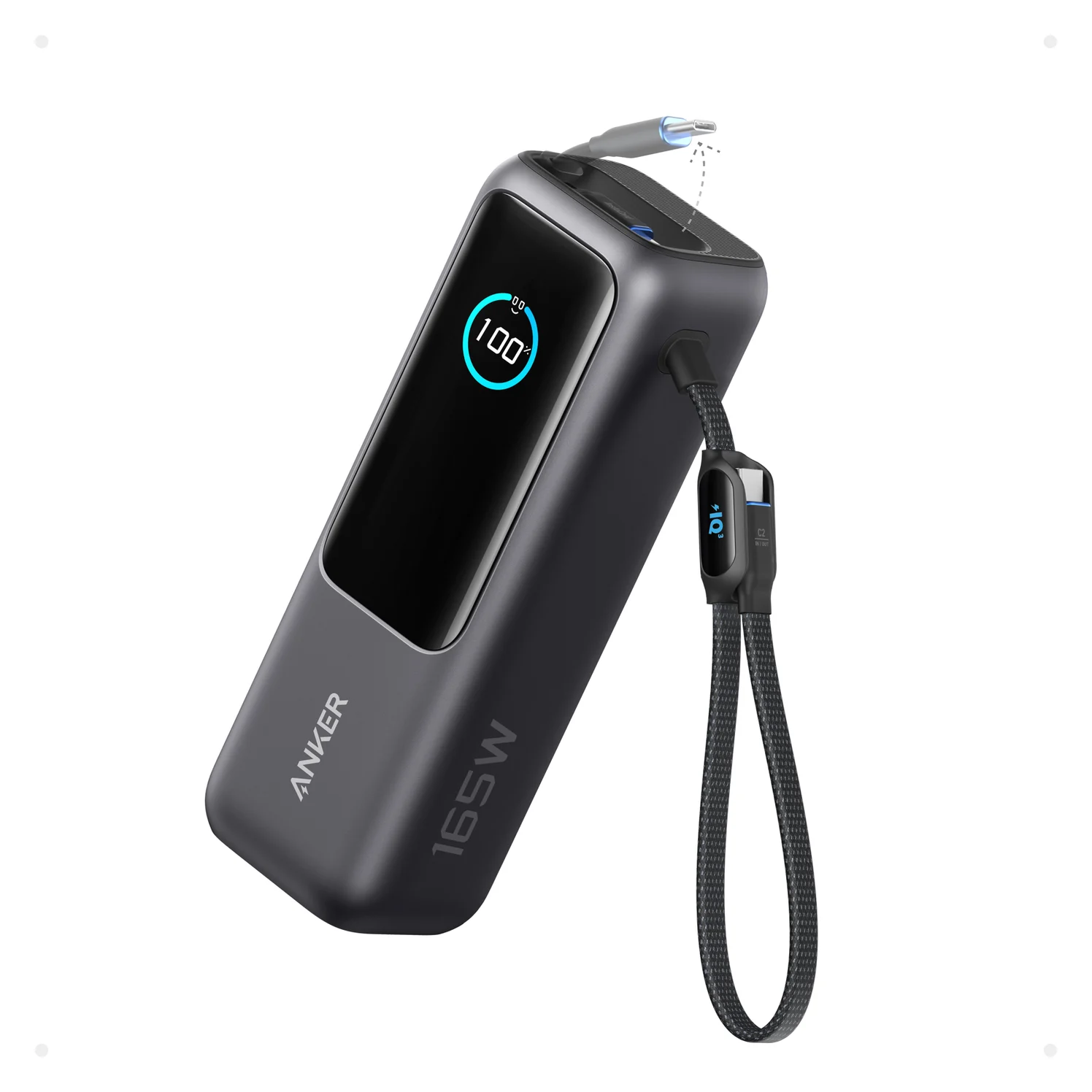
Yes, you can bring a power bank on a plane in your carry-on: under FAA and ICAO rules, one rated 100Wh or less needs no approval, one up to 160Wh needs your airline's OK, and anything bigger can't fly. If you're taking a laptop and a phone, pack the Anker Laptop Power Bank (25K, 165W): Anker rates it at 90Wh, and its three USB-C outputs, two of them built-in cables, deliver up to 100W each. The 2026 catch is the count: on international flights, ICAO's rules have allowed at most two per passenger since March 27 and ban recharging them in flight, and some airlines are stricter still, with Southwest and WestJet allowing only one.
Our picks at a glance
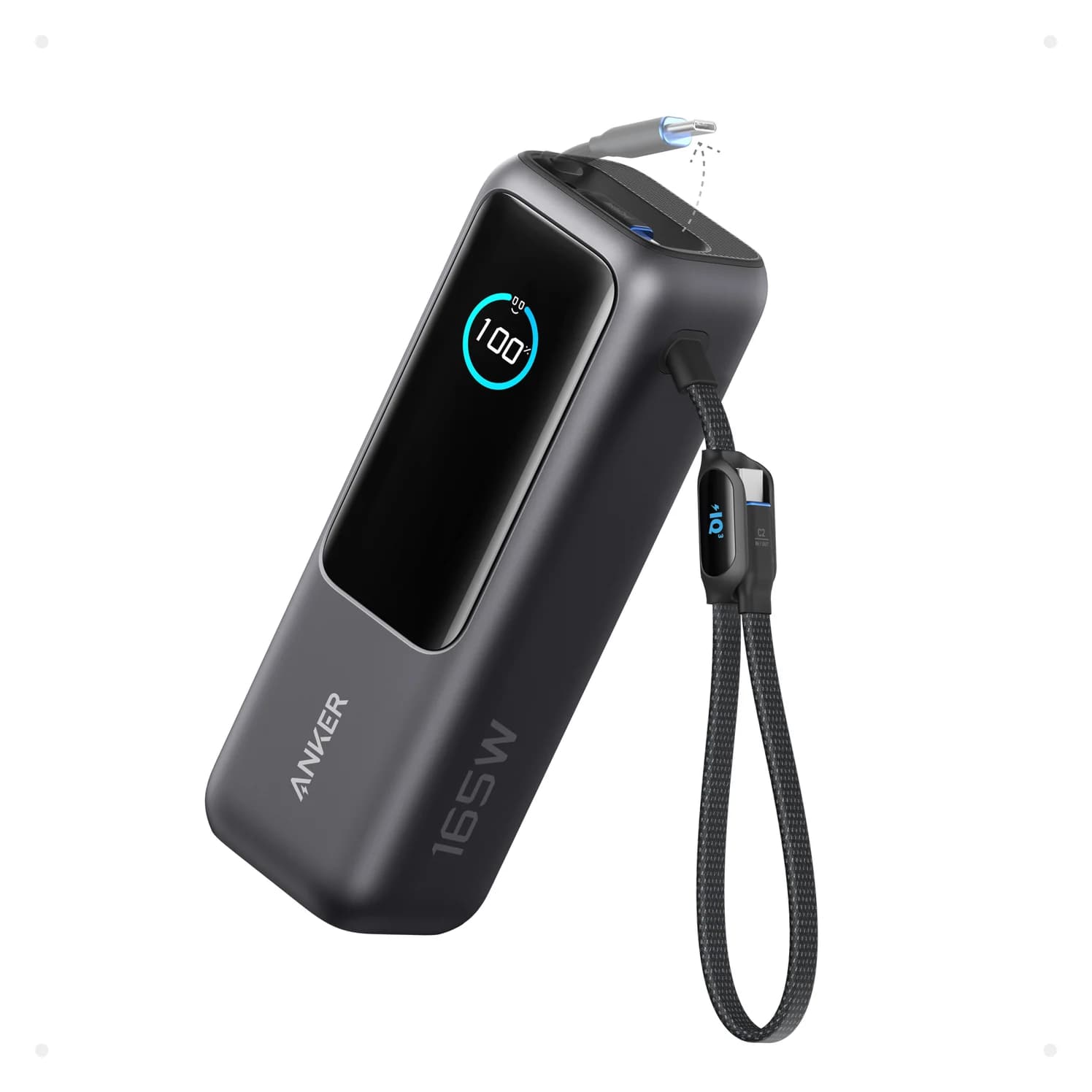
Best for flying with a laptopAnker
Anker Laptop Power Bank (25K, 165W, Built-In and Retractable Cables)
- max output
- 100W
- ports
- 4
- Choose
- Anker rates it at 90Wh, under the 100Wh line, and its three USB-C outputs, two of them built-in cables, deliver up to 100W each.
- Limit
- At 21 oz it is heavy for a pocket or small sling
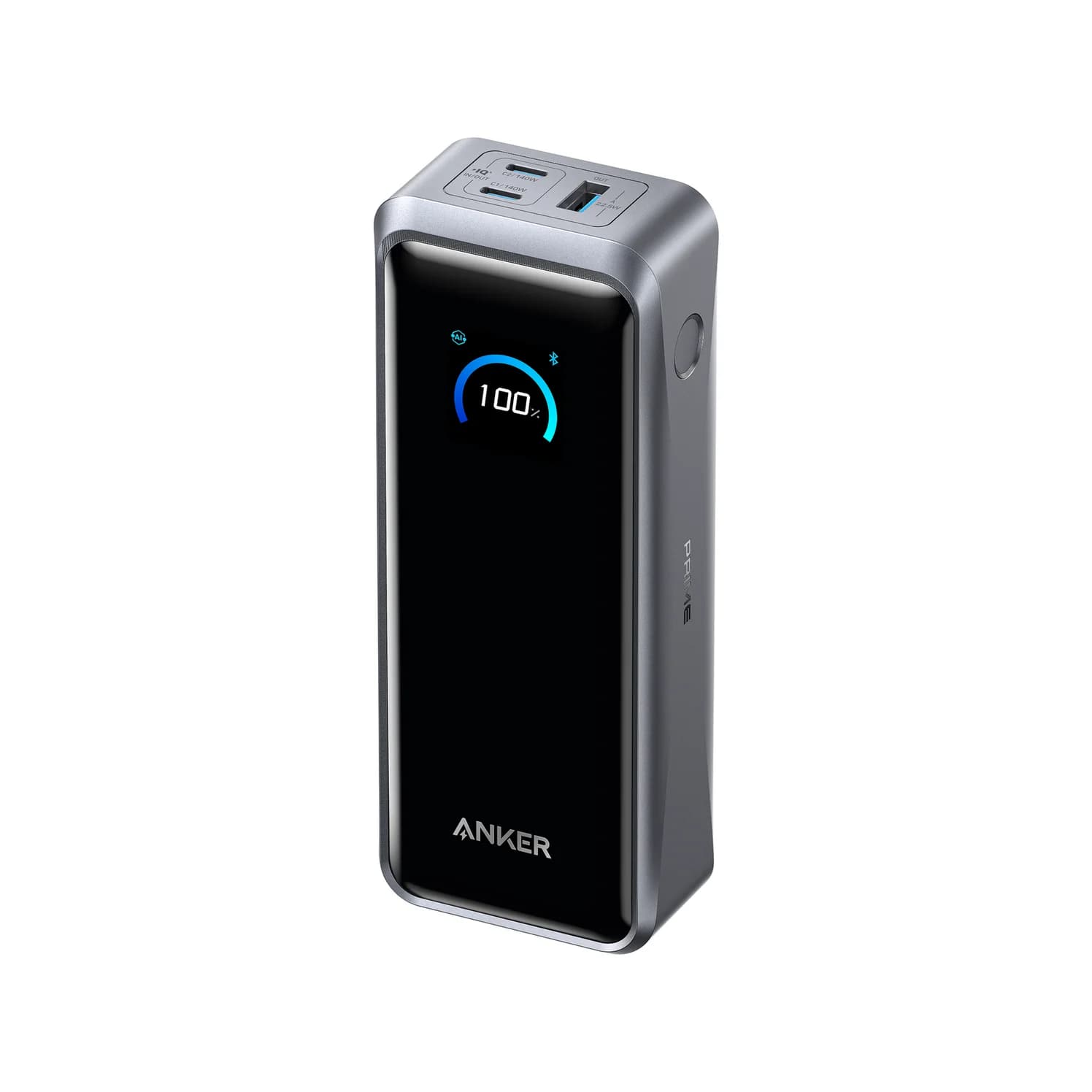
Closest to the 100Wh lineAnker
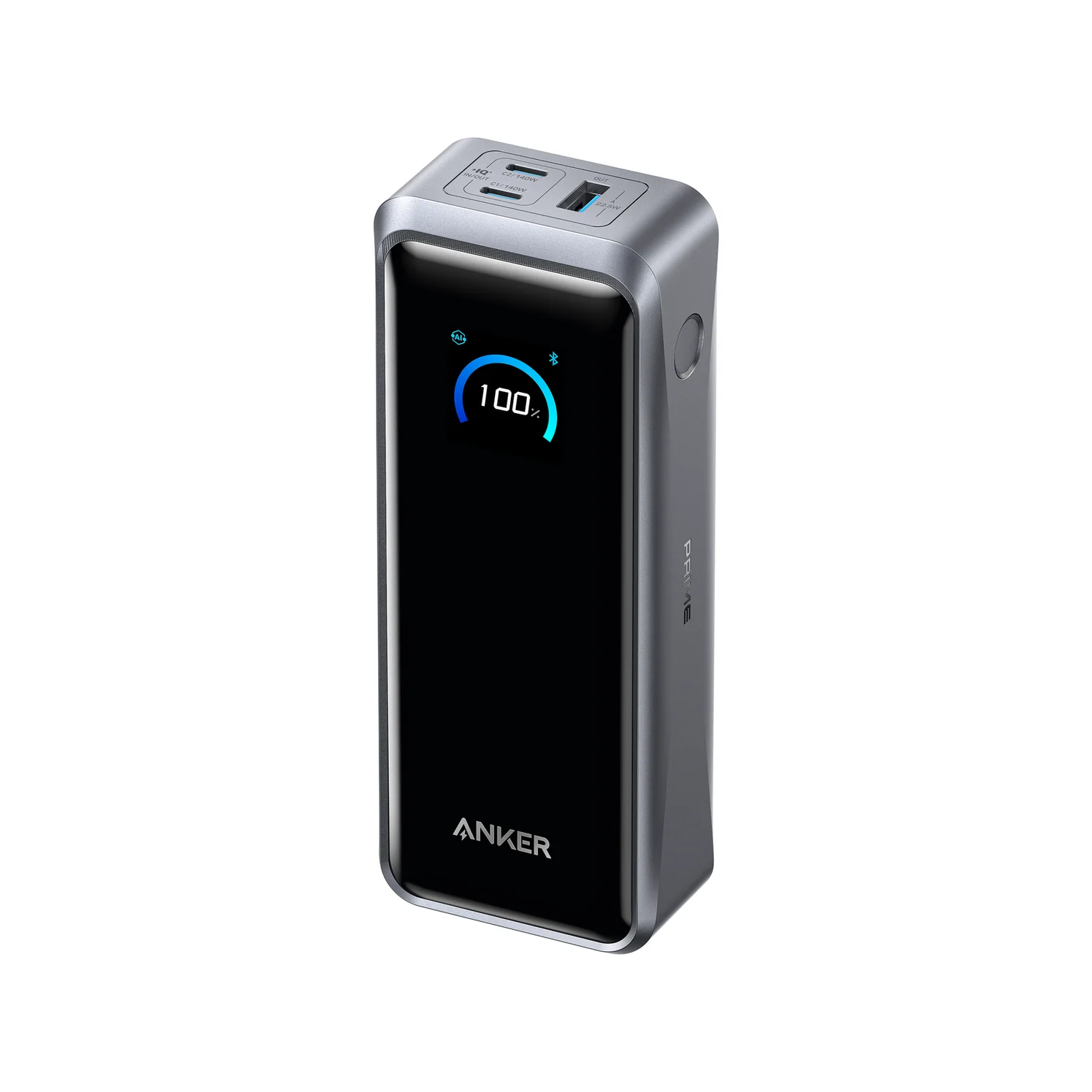
Anker Prime Power Bank (26K, 300W)
- max output
- 140W
- ports
- 3
- Choose
- Rated 99.75Wh, just under the 100Wh line, with two USB-C ports at up to 140W each and 300W total output.
- Limit
- At 600 g it's a bag item, not a pocket one
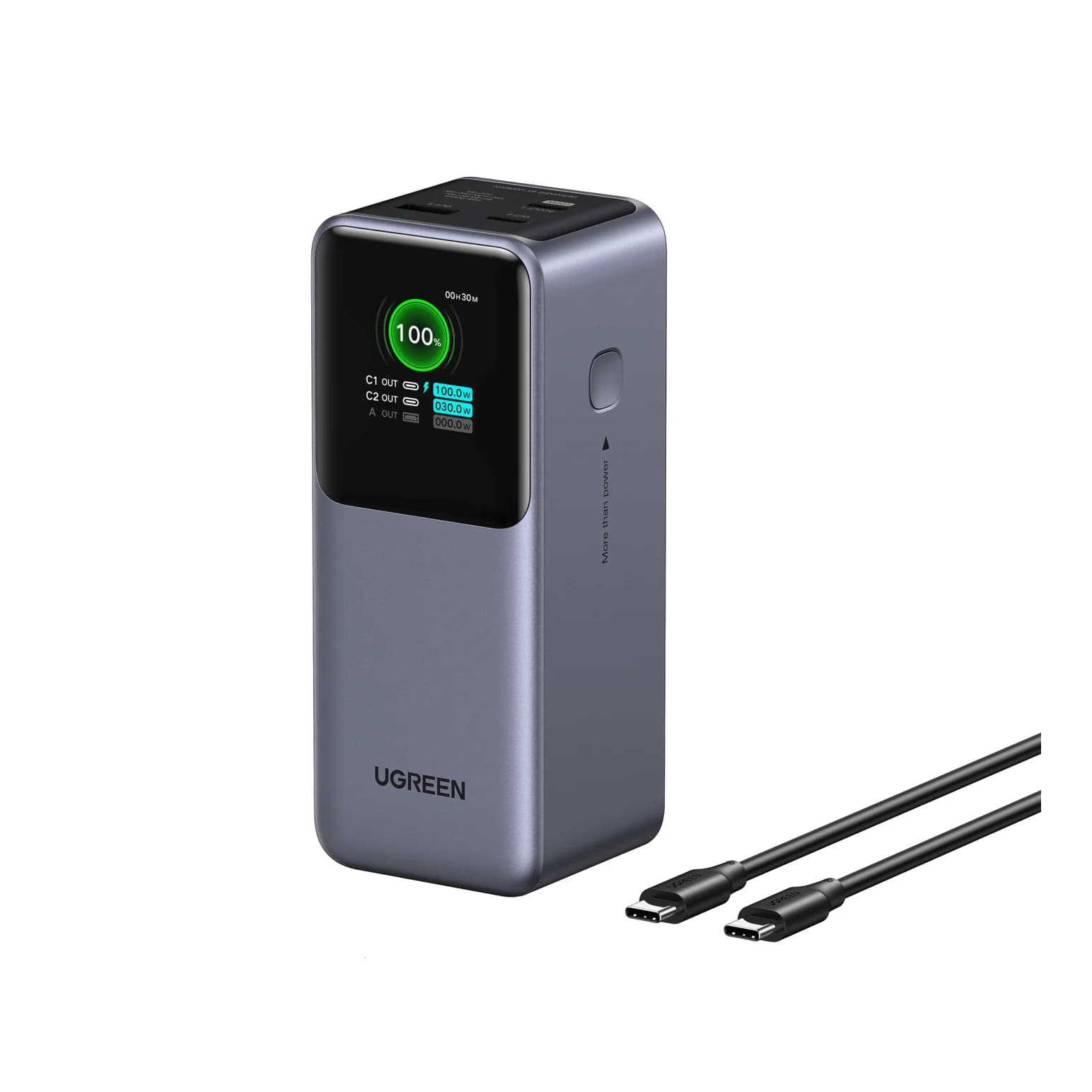
Best 20,000mAh power bank for flyingUGREEN
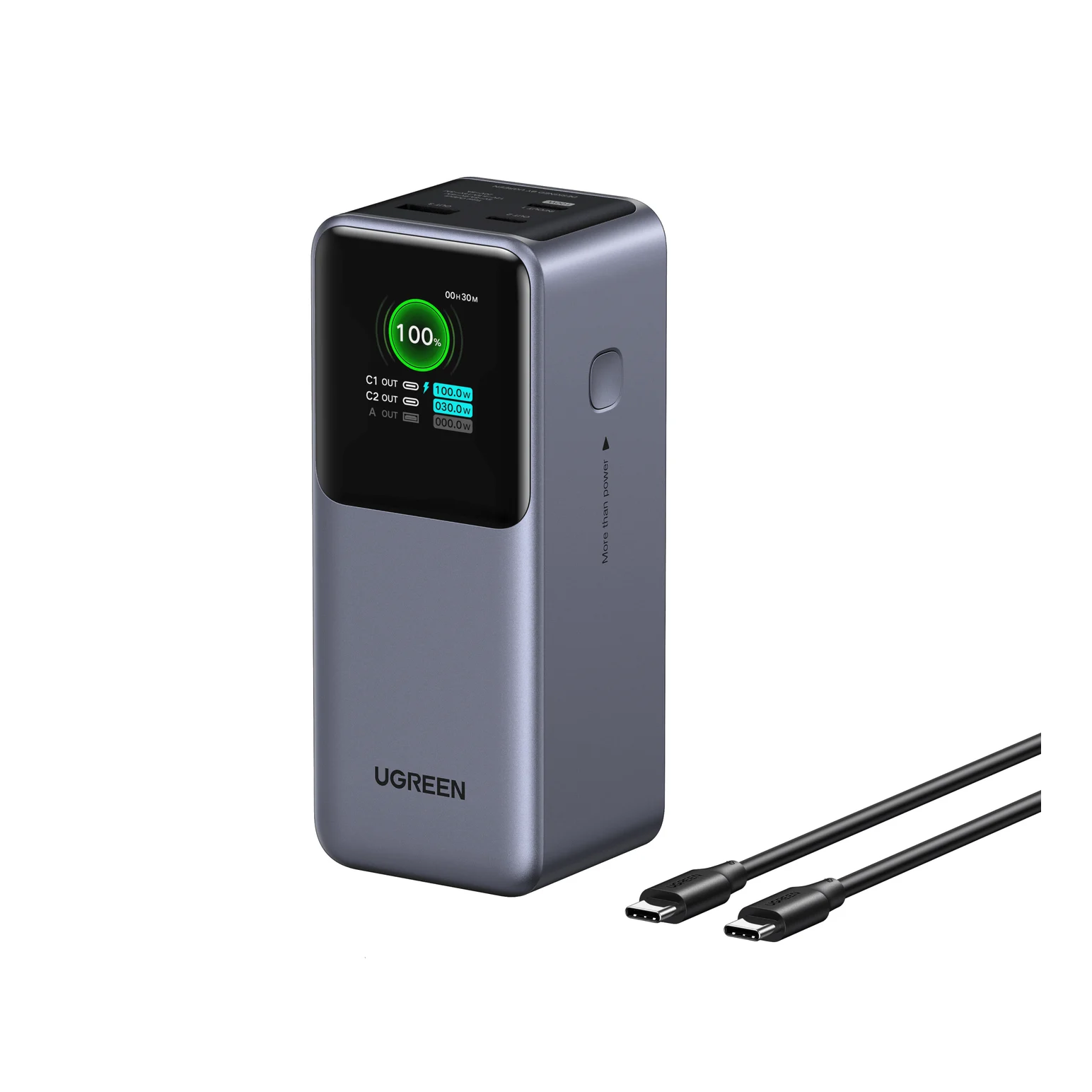
UGREEN Nexode Power Bank 20000mAh 130W with Smart Digital Display
- max output
- 100W
- ports
- 3
- Choose
- UGREEN rates its 20,000mAh at 72Wh, and its main USB-C port delivers up to 100W.
- Limit
- Only one port reaches 100W; the second USB-C port tops out at 30W
- See on Amazon4
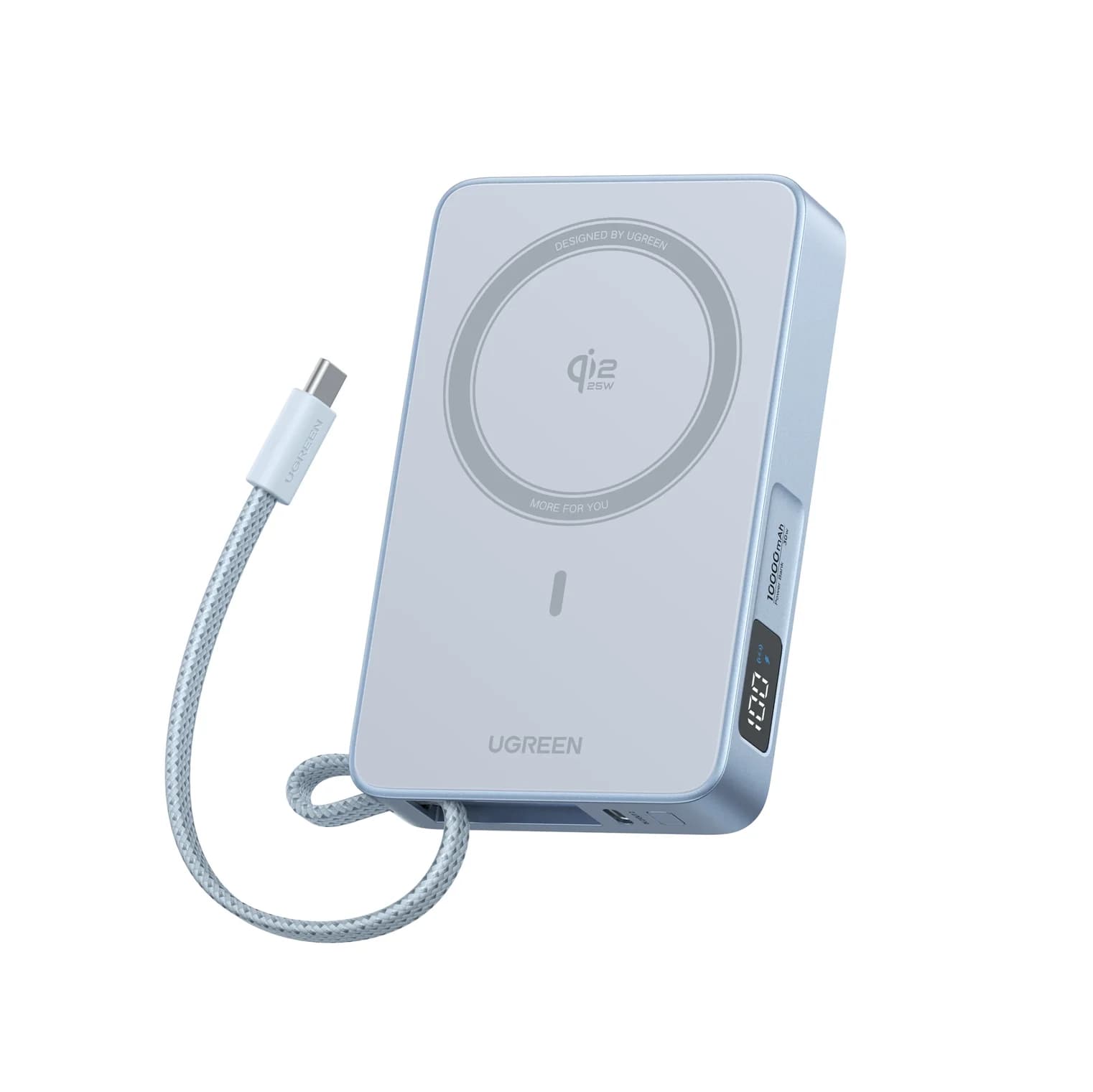
Best for a phone
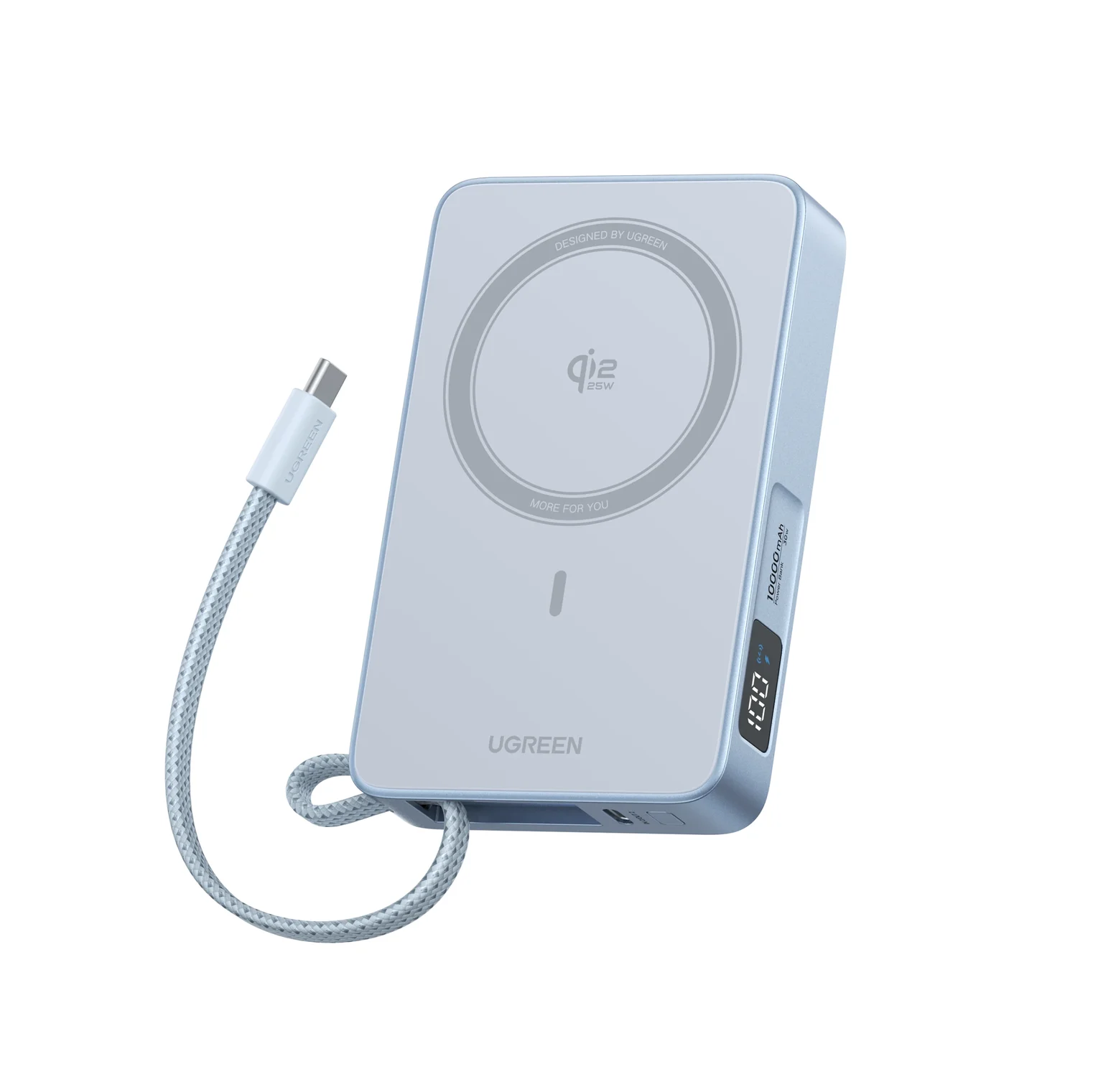
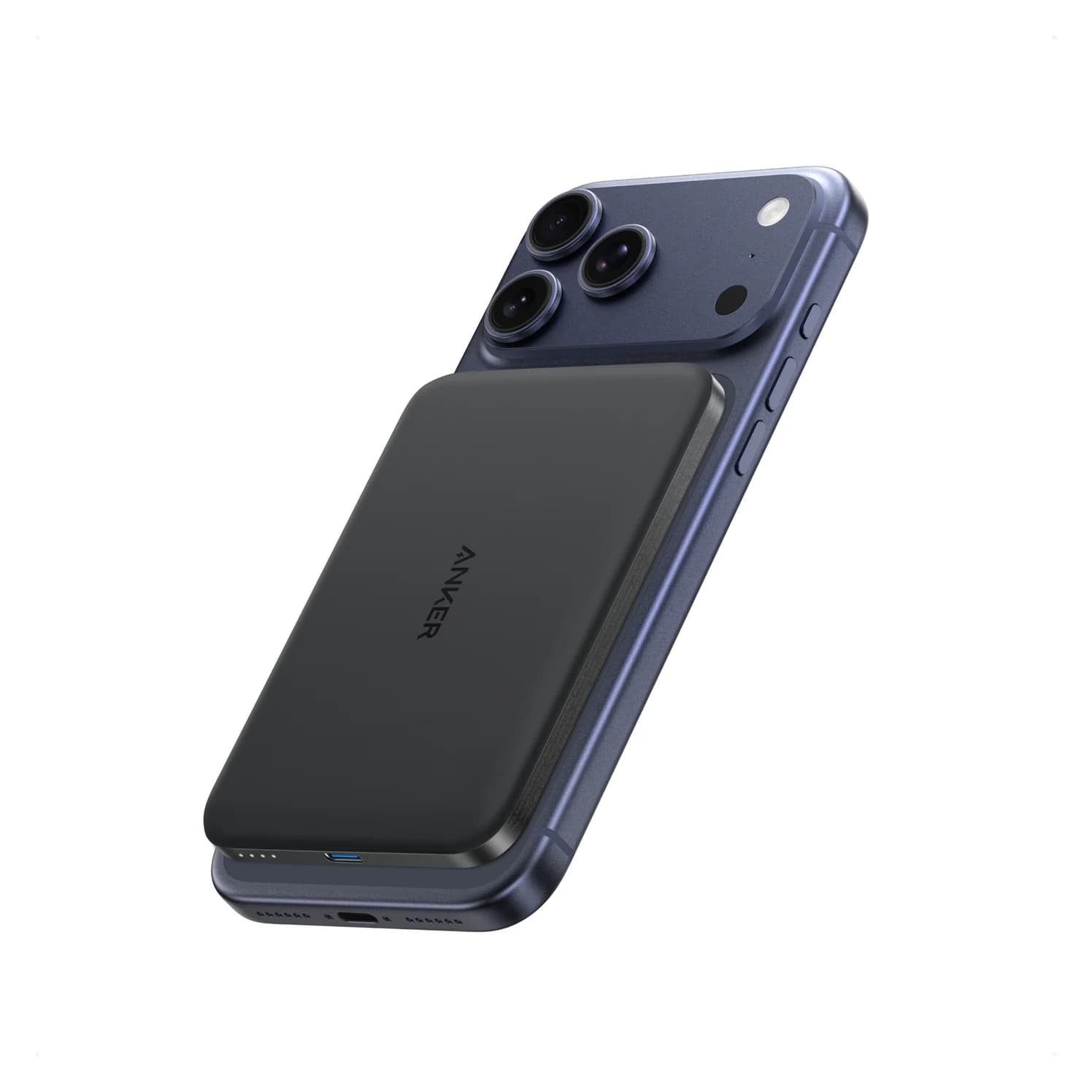
UGREEN MagFlow Magnetic Wireless Power Bank 10000mAh (Qi2 25W)
30W max output · 2 ports
Rules last checked November 1, 2026, on each regulator's and airline's own page. Airlines can be stricter than these rules, and at US checkpoints the TSA officer has the final say.
- 100WhThe no-approval line under FAA and ICAO rules
- 160WhThe most a power bank can be rated, and only with approval
- 2The most power banks per passenger under ICAO's rules since March 27, 2026
Can I bring a power bank on a plane?
Yes, in the cabin. The FAA, TSA, Transport Canada, the UK Civil Aviation Authority and EASA all say the same thing: a power bank travels in your carry-on bag or on you, never in checked luggage (TSA, EASA). Phone battery cases count too (FAA). The size limit is set in watt-hours (Wh), and it applies to each power bank, not to the total you carry:
- Yes: In your carry-on or on you, at 100Wh or less: yes, with no approval needed
- Partly: Over 100Wh, up to 160Wh: only with the airline's approval, two at most, and some airlines take none
- No: In checked bags, including a carry-on checked at the gate: never
- No: Over 160Wh: not allowed on passenger planes
- No: Recharging it during the flight: not allowed under ICAO's rules, or at most airlines named below
The FAA, the UK CAA and Canada's screening authority, CATSA, all draw the 100Wh and 160Wh lines. Each power bank must also be of a type that passes the UN's lithium battery tests (UN 38.3), and be protected from short circuits when you're not using it: in its retail packaging, with its terminals taped, or in its own plastic bag or pouch (ICAO). The FAA allows them only for your own use, and it bars damaged or recalled batteries that could spark or overheat unless the battery has been removed or made safe (FAA). Transport Canada puts it more simply: "Do not bring damaged or recalled batteries on the plane" (Transport Canada).
How many power banks can I bring?
Two sets of rules apply to every flight: the regulator's for that flight, and your airline's own, which can be stricter (see the next section). The regulators' counts:
| Rules | How many power banks | Source |
|---|---|---|
| International flights (ICAO) | At most two per passenger, since March 27, 2026 | ICAO |
| US (FAA) | No FAA limit under 100Wh, if they're for your own use; two spares over 100Wh, up to 160Wh, with approval | FAA |
| UK (CAA) | At most two per person | UK CAA |
| EU (EASA's passenger guide) | Two per person, counting spare batteries | EASA |
| Canada (Transport Canada) | No count in its passenger guidance, which says to follow your airline's rules | Transport Canada |
The ICAO change is the big one for 2026: an addendum to its dangerous goods rules (Doc 9284), applicable from March 27, 2026, that allows no more than two power banks per person and says they must not be recharged on board. It adds that they should not be used to recharge other devices on board, as the UK CAA's summary also says. The FAA sets no count for power banks under 100Wh, but it says many airlines "may have stricter quantity and Wh limits", and several do.
Airline power bank limits in 2026
Each of these comes from the airline's own page, as of November 1, 2026:
| Airline | Limit | On board |
|---|---|---|
| Southwest | One power bank, up to 100Wh, from April 20, 2026 | Not in the overhead bin, in view while in use, and not charged from seat power |
| Delta | Two, up to 100Wh each | Not in the overhead bin or recharged on board; no charging devices from it during taxi, takeoff and landing |
| JetBlue | Two, up to 100Wh each | Under the seat, not in the overhead bin; not recharged or used to charge devices on board |
| WestJet | One per guest | On you or in the seat pocket, not in the overhead bin; not charged on board, or used to charge devices when onboard power is available |
| Air Canada | Approval needed from 100Wh up to 160Wh, and at most two of those | Three Anker models banned outright: A1647, A1681 and A1689 |
| Lufthansa Group, including SWISS | Two, from January 15, 2026 | Not charged during the flight, and not used to charge devices, though it may still power essential medical devices; not in the overhead bin |
| easyJet | Two, up to 160Wh (over 100Wh needs approval under ICAO rules) | Not used to charge other devices; easyJet's dangerous goods page says power banks are "prohibited from use" on its aircraft |
| Virgin Atlantic | Two power banks | Not in the overhead lockers; not used to charge devices or plugged into seat power |
The three Anker models Air Canada bans are all on Anker's recall list, and none of our Anker picks is. Airline rules can change, so check yours in the week you fly, and check the airline for each leg of a connection.
Can I use a power bank during the flight?
Don't plan on charging the power bank itself: ICAO's rules ban recharging power banks on board, Delta and JetBlue say the same on their own pages, and Southwest bans charging one from seat power. Using one to charge your phone is discouraged too: ICAO's addendum says a power bank "should not be used to recharge a portable electronic device while on board", and EASA says the same. Some airlines make it a rule: easyJet says power banks must not be used to charge other devices on board, and its dangerous goods page goes further, calling them "prohibited from use" on its aircraft. Lufthansa Group airlines no longer let you charge a phone or tablet from one.
US airlines draw the line in different places: Delta bans charging devices from a power bank during taxi, takeoff and landing, JetBlue bans it on board, and Southwest lets you use one as long as it stays in view, not in a bag. Charge your phone before you board, and use the seat outlet where there is one. EASA adds that batteries at a lower charge pose a lower risk, so it suggests carrying them at a lower charge and charging them fully on arrival.
How to convert mAh to Wh
The FAA's formula: divide the mAh by 1,000 to get amp-hours, then multiply by the voltage. For a power bank, use the voltage of its battery cells, which Anker says is typically around 3.7V, not the voltage its USB ports put out.
Wh = mAh × V ÷ 1,000. For a 20,000mAh bank at 3.7V: 20,000 × 3.7 ÷ 1,000 = 74Wh.
Watt-hours measure the energy a battery stores, and a mAh figure can't tell you that without the voltage. Every limit here is written in Wh. Here are common sizes worked out at 3.7V:
| Capacity on the box | About this many Wh at 3.7V | Can it fly? |
|---|---|---|
| 5,000mAh | 18.5Wh | Yes, in carry-on |
| 10,000mAh | 37Wh | Yes, in carry-on |
| 20,000mAh | 74Wh | Yes, in carry-on |
| 25,000mAh | 92.5Wh | Yes, in carry-on |
| 27,000mAh | 99.9Wh | Yes, but read the label |
| 30,000mAh | 111Wh | Only with airline approval |
| 40,000mAh | 148Wh | Only with airline approval |
| 50,000mAh | 185Wh | No |
That's why you'll see 100Wh given as about 27,000mAh: Anker puts the line at 27,027mAh, and Virgin Atlantic at 27,000mAh, with 160Wh at 43,000mAh. But not every cell runs at 3.7V. UGREEN's 20,000mAh Nexode is rated 72Wh and Anker's 25,000mAh laptop bank 90Wh, both of which work out to 3.6V, while Anker's 26,250mAh Prime is rated 99.75Wh, which works out to 3.8V. At 3.8V, a 27,000mAh bank would hold 102.6Wh, over the line. Near 27,000mAh, go by the Wh on the label, not the mAh.
How to read a power bank's label
The FAA says a lithium-ion battery's Wh should be marked on the battery, and if it isn't, you work it out from the volts and amp-hours. Anker's 735 power bank, for example, is labeled 25,600mAh/94.72Wh on the bottom. A label or spec sheet may also show a second, smaller mAh figure, the rated capacity: UGREEN's spec sheet for the 10,000mAh MagFlow gives 5600mAh. Anker explains that the rated capacity is often calculated at the 5V output, after conversion losses, so it isn't the battery's size, and the limits don't use it. If a bank has no readable rating at all, expect questions: WestJet, for one, says items that can't be safely identified may be refused.
Find the Wh rating
It's the number the limits use. Look on the label or the maker's spec page.
No Wh? Do the math
Divide the battery's mAh by 1,000 and multiply by its cell voltage, 3.6V to 3.8V on the power banks here. If the maker gives the pack's voltage instead, as UGREEN does with 14.4V × 5,000mAh, multiply those: it's the same energy.
Skip the rated capacity
It's often worked out at the 5V output after losses, so it undercounts the battery.
Check for a recall
Look up your model on the maker's recall page; Anker's shows where to find the model and serial number. A maker's list of flight-friendly models isn't a recall check: Anker's still names the recalled A1647.
Which power bank for your trip?
| You're flying with | Our pick | Why |
|---|---|---|
| A laptop and a phone | Anker Laptop Power Bank (25K, 165W) | 90Wh, three 100W USB-C outputs |
| The most capacity of our picks | Anker Prime Power Bank (26K, 300W) | 99.75Wh, two 140W USB-C ports |
| A laptop, from a 20,000mAh bank | UGREEN Nexode 20000mAh 130W | 72Wh, a 100W USB-C port |
| Just a phone | UGREEN MagFlow 10000mAh (Qi2 25W) | 36Wh, magnetic, 254g |
Source: makers' pages for the Anker 25K, Anker Prime 26K, UGREEN Nexode and UGREEN MagFlow; limits from the FAA
All four are under 100Wh, so none needs airline approval, and each fits the 100Wh caps at Delta, JetBlue and Southwest.
Best for flying with a laptop: Anker Laptop Power Bank (25K, 165W)
Anker
Anker Laptop Power Bank (25K, 165W, Built-In and Retractable Cables)
A 25,000mAh (90Wh) laptop power bank with two built-in USB-C cables, a USB-C port and a USB-A port, rated up to 165W total.
- 100W max output
- 4 ports
Anker rates this 25,000mAh bank at 90Wh, so it flies without approval with 10Wh to spare, and it's on Anker's list of power banks under the limit. Its three USB-C outputs, two of them built-in cables, deliver up to 100W each, with 165W in total across two devices and 130W across three or four. Anker also says only about 63 to 70Wh reaches your devices after conversion losses. That matters for how many charges you get, not for the airline limit, which goes by the 90Wh rating. At 595g (21 oz), it's a bag item, not a pocket one.
Closest to the 100Wh line: Anker Prime Power Bank (26K, 300W)
Anker
Anker Prime Power Bank (26K, 300W)
A 26,250mAh (99.75Wh) power bank with two 140W USB-C ports and a USB-A port, rated up to 300W total and 250W recharge input.
- 140W max output
- 3 ports
At 26,250mAh and 99.75Wh, this bank sits 0.25Wh under the 100Wh line, so it needs no airline approval and fits the 100Wh caps at Delta, JetBlue and Southwest. Both USB-C ports deliver up to 140W, and Anker rates the bank at 300W in total across those two ports and a USB-A port. It weighs 600g (1.32 lb). With so little margin, don't assume a bank with a bigger mAh number is also under the line: check its label.
Best 20,000mAh power bank for flying: UGREEN Nexode Power Bank 20000mAh 130W
UGREEN
UGREEN Nexode Power Bank 20000mAh 130W with Smart Digital Display
A 20,000mAh (72Wh) three-port power bank with a 100W USB-C port, a 30W USB-C port, a USB-A port and a color status display, rated 130W total.
- 100W max output
- 3 ports
If you're asking about a 20,000mAh bank, this is the one we'd fly with: UGREEN rates it at 72Wh, well under 100Wh. Its main USB-C port delivers up to 100W, the second USB-C port 30W and the USB-A port 22.5W. Its spec sheet also shows the voltage point from the label section: UGREEN writes the capacity as 14.4V × 5,000mAh, the same 72Wh as 20,000mAh at 3.6V.
Best for a phone: UGREEN MagFlow 10000mAh (Qi2 25W)
UGREEN
UGREEN MagFlow Magnetic Wireless Power Bank 10000mAh (Qi2 25W)
A 10,000mAh magnetic power bank with Qi2 25W wireless charging, a built-in 30W USB-C cable that doubles as a carry strap, and a second USB-C port.
- 30W max output
- 2 ports
If you only need to keep a phone going, a 10,000mAh bank, about 37Wh at 3.7V, sits far below every limit here. UGREEN calls this one a 36Wh power bank; its 10,000mAh at the 3.7V UGREEN also lists works out to 37Wh, so either way it's about a third of the limit. It charges magnetically with Qi2 at up to 25W, and its built-in USB-C cable delivers up to 30W. It weighs 254g. On Southwest or WestJet, where you get one power bank, it's this or a laptop bank. More magnetic options are in our MagSafe power bank guide.
How we choose
We haven't tested these power banks or flown with them. This page is built from official sources:
- Rules come from the regulators' and airlines' own pages, read on November 1, 2026, and every airline rule names its airline.
- Watt-hours come from the makers. Every pick has a Wh rating its maker publishes; we don't pick banks whose makers list only mAh.
- Recalls: none of the Anker picks is on Anker's recall list.
For more power banks, sorted by what they charge, see our power bank guide. For the wall end of the trip, see our travel charger guide, and for gift ideas, USB gifts for travelers.
Verdict
Pack your power bank in your carry-on, keep it at 100Wh or under, and check your airline's count: at most two on international flights and at Delta, JetBlue, Lufthansa Group, easyJet and Virgin Atlantic, and one on Southwest and WestJet. For a laptop and a phone, the Anker Laptop Power Bank (25K, 165W) is the one to fly with. The Anker Prime 26K gets closest to the 100Wh line, the UGREEN Nexode 130W is the 20,000mAh option, and the UGREEN MagFlow covers a phone.
Frequently asked questions
Is a 20,000mAh power bank allowed on a plane?
Yes, in your carry-on. At 3.7V, the typical cell voltage Anker cites, 20,000mAh is about 74Wh, and UGREEN rates its 20,000mAh Nexode at 72Wh. Both are under the 100Wh line that needs no airline approval. It can't go in checked bags. On international flights you can carry at most two power banks, and Southwest and WestJet allow only one.
Can I bring a 10,000mAh power bank on a plane?
Yes. By Anker's math, a 10,000mAh bank holds about 37Wh (10Ah × 3.7V), well under the 100Wh limit, so no approval is needed. Pack it in your carry-on or keep it on you, never in checked luggage, and keep it out of the overhead bin on airlines that ban that, such as Delta, JetBlue, Southwest and WestJet.
Is a 30,000mAh power bank allowed on a plane?
It depends on its Wh rating, so check the label. At 3.7V, 30,000mAh is about 111Wh, over the 100Wh line, which under FAA and ICAO rules needs your airline's approval, up to 160Wh. Delta, JetBlue and Southwest accept no power bank over 100Wh. But cells vary: Jackery rates its 30,000mAh Explorer 100D at 96Wh. If the label says under 100Wh, no approval is needed.
How many mAh is 100Wh?
About 27,000mAh at 3.7V: Anker puts the line at 27,027mAh, and Virgin Atlantic at 27,000mAh. Cells vary, though. Anker's Prime 26K stores 99.75Wh in 26,250mAh, which works out to 3.8V, and at 3.8V a 27,000mAh bank would hold 102.6Wh, over the limit. Near that size, go by the Wh printed on the label, not the mAh.
Best for flying with a laptop
Anker Laptop Power Bank (25K, 165W, Built-In and Retractable Cables)
Related guides
Baseus PicoGo Qi2 5K vs UGREEN MagFlow 5K: The Honest Answer in 2026
No UGREEN MagFlow 5K exists — the real Qi2 5K showdown is Baseus PicoGo vs Belkin BoostCharge Pro 10K. Here are the picks, specs, and gotchas.
Updated November 5, 2026Read
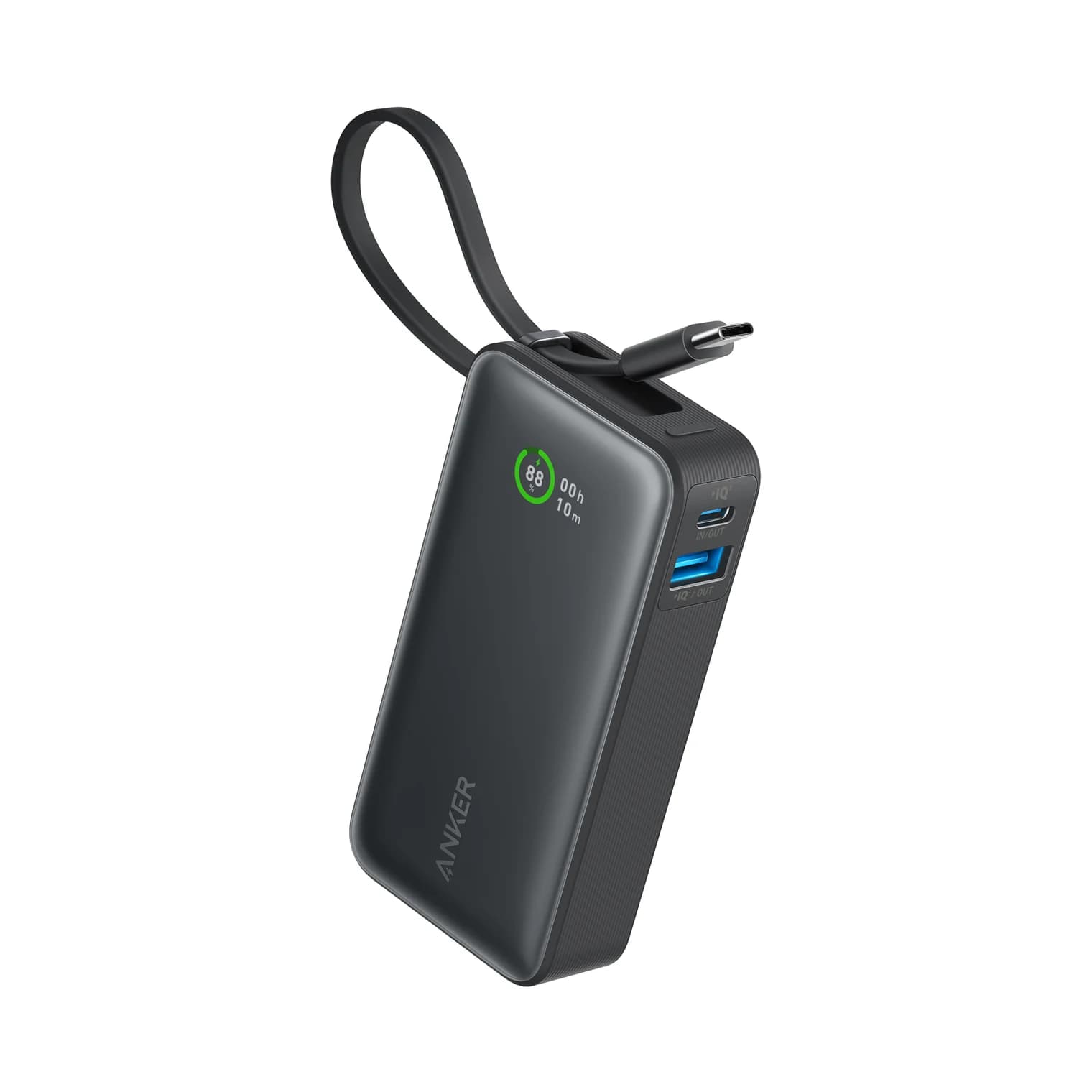
Anker Zolo 10K Power Bank Review: A1688 vs the Nano 10K
Anker Zolo 10K vs Nano 10K: compare built-in cable length, 30W charging, shared output, refill speed and the complete kit, from the makers' own documents.
Updated November 5, 2026Read
Anker Nano MagGo Slim 5K vs UGREEN MagFlow 10K: Which Magnetic Power Bank?
The Anker MagGo Slim 5K is the 8.6 mm pocket card; the UGREEN MagFlow 10K adds Qi2 25W and a built-in cable. Exact specs, phone fit and honest capacity.
Updated November 5, 2026Read