Explainer
USB Power Delivery Explained: PD 3.1, PPS, AVS and 240W Charging
How USB-C Power Delivery works: fixed voltages, PPS for Galaxy and Pixel, AVS for iPhone 18 Pro, 240W EPR, why bigger chargers are safe, and port sharing.
By thisUSB EditorialUpdated October 22, 20269 min read4 picks
Our picks at a glance
USB Power Delivery (USB PD) is the standard that lets one USB-C charger run anything from earbuds to a laptop. The charger lists the voltages it can supply, the device asks for one, and nothing changes until both agree. That's why a bigger charger is safe. For one charger that covers phones and big laptops, the Anker 140W 4-port PD 3.1 charger handles up to 140W. iPhone 18 Pro owners who want Apple's fastest figure need an AVS charger such as Apple's 40W Dynamic Power Adapter with 60W Max.
The 30-second answer
| Device | What it uses | What to buy |
|---|---|---|
| iPhone 15 to 17, iPad, AirPods | Standard USB PD | Any PD charger; 40W or more for the iPhone 17's fastest charging |
| iPhone 18 Pro | USB PD 3.2 with AVS | A 60W-capable AVS charger |
| Galaxy S26+ and S26 Ultra, Pixel 11 series | USB PD with PPS | A PPS charger matched to the phone (30W to 60W) |
| MacBook Air, 14-inch MacBook Pro | Standard USB PD | 70W to 100W, plus a 5A cable above 60W |
| Laptops that need over 100W, big power banks | PD 3.1 EPR (28V and up) | A PD 3.1 charger plus a 240W cable |
How PD negotiation works
The USB PD specification sums it up in one line: the source (the charger) advertises its capabilities, the sink (your device) requests one of them, and the source adjusts its output to match. Until that happens, a USB-C charger supplies only 5V.
That has two consequences:
- A bigger charger is safe. The device asks only for what it can take. Apple's Mac power adapter page says you can charge a Mac "with any USB-C power adapter or display, even if it provides higher or lower wattage." Samsung lists three limits on charging speed: the device's supported power, the charger's output and the cable. A 140W charger on a phone behaves like a phone charger.
- A smaller charger works too, just slower.
The one caveat is quality: Apple says third-party adapters should comply with applicable safety standards.
Standard Power Range: the fixed voltages
Most chargers live in PD's Standard Power Range (SPR), which tops out at 100W. The spec sets the voltages each rating must offer:
| Charger rating | Fixed voltages offered | Typical use |
|---|---|---|
| Up to 15W | 5V | Accessories |
| Over 15W, up to 27W | 5V, 9V | 20W phone chargers |
| Over 27W, up to 45W | 5V, 9V, 15V | 30W to 45W chargers |
| Over 45W, up to 100W | 5V, 9V, 15V, 20V | Laptop chargers |
Each level up to 15V stays at 3A or less. The top level, 20V, runs at up to 3A on any cable (60W) or up to 5A on a 5A e-marked cable (100W). The spec is explicit that anything over 60W requires a 5A cable. That's a common reason a "100W" charger delivers only 60W.
PD 3.1 Extended Power Range: 28V, 36V and 48V
USB PD 3.1, announced in 2021, went past 100W by raising voltage rather than current. The USB-IF's PD page lists the new fixed voltages:
| EPR level | Maximum power |
|---|---|
| 28V at 5A | 140W |
| 36V at 5A | 180W |
| 48V at 5A | 240W |
EPR has two conditions. The cable must be an EPR (240W) cable, e-marked for 50V and 5A; with any other cable, the spec keeps the charger in the standard range, so 100W is the most you'll get. And the device must ask for EPR. There's also an adjustable EPR AVS mode, from 15V up to the charger's top fixed voltage.
Anything above 100W over USB-C has to use EPR. Apple recommends a 140W adapter for the 16-inch MacBook Pro, and big power banks like Anker's Prime 26K list 28V at 5A (140W) per USB-C port.
PPS: how Samsung and Google fast charge
PPS (Programmable Power Supply) is an optional PD feature built for phones. Instead of picking 9V or 15V, the phone asks for an exact voltage in 20mV steps, with a current limit in 50mA steps, and keeps adjusting as the battery fills. Samsung's 60W adapter page describes PPS as charging that "adjusts voltage and current in real time based on the device's charging status." The spec defines PPS ranges that top out at 11V, 16V or 21V, depending on the charger's wattage.
- Galaxy S26 Ultra: up to 60W wired. Samsung's 60W adapter lists USB PD 3.1 with PPS from 5V to 20V at 3A.
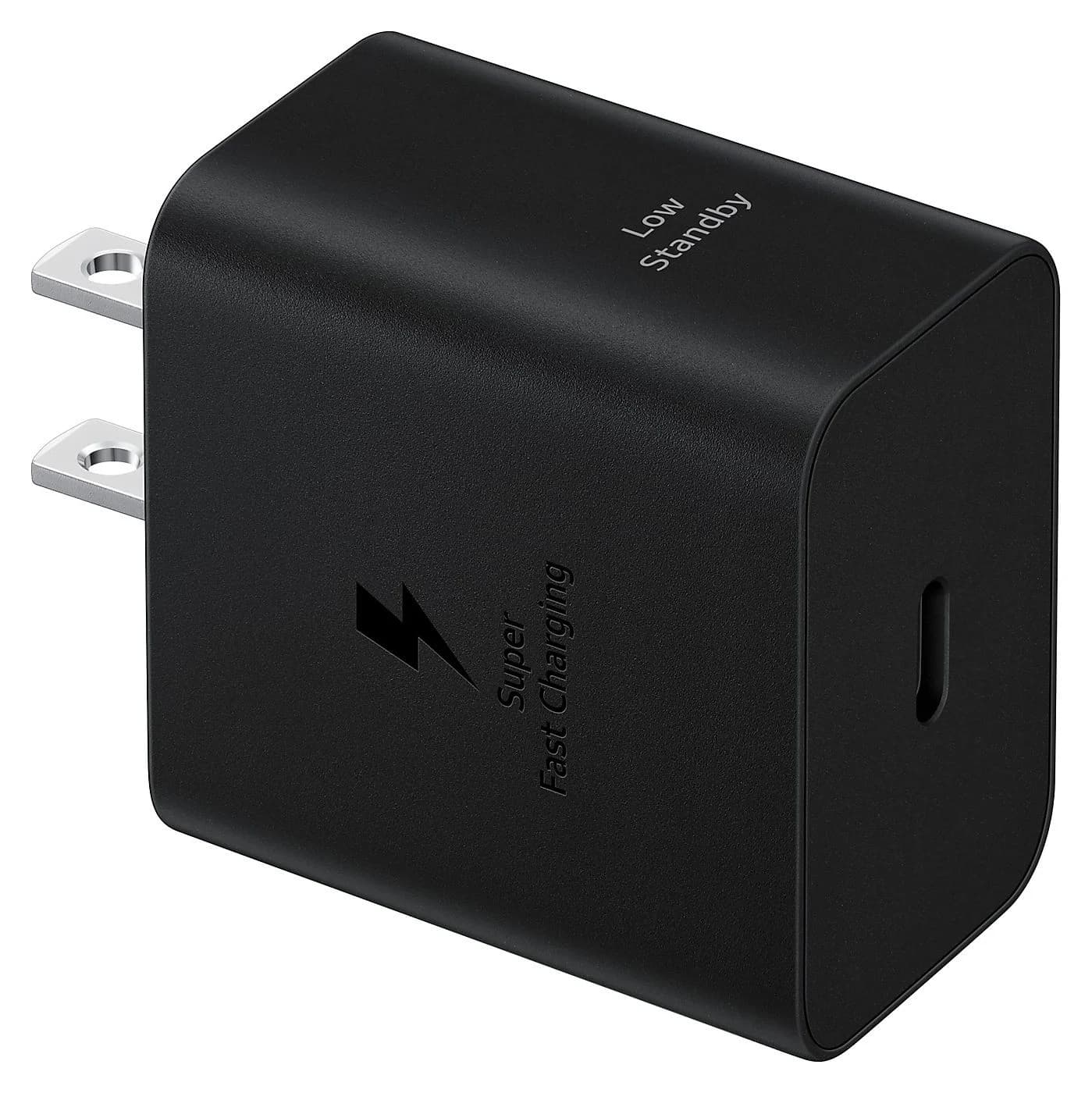
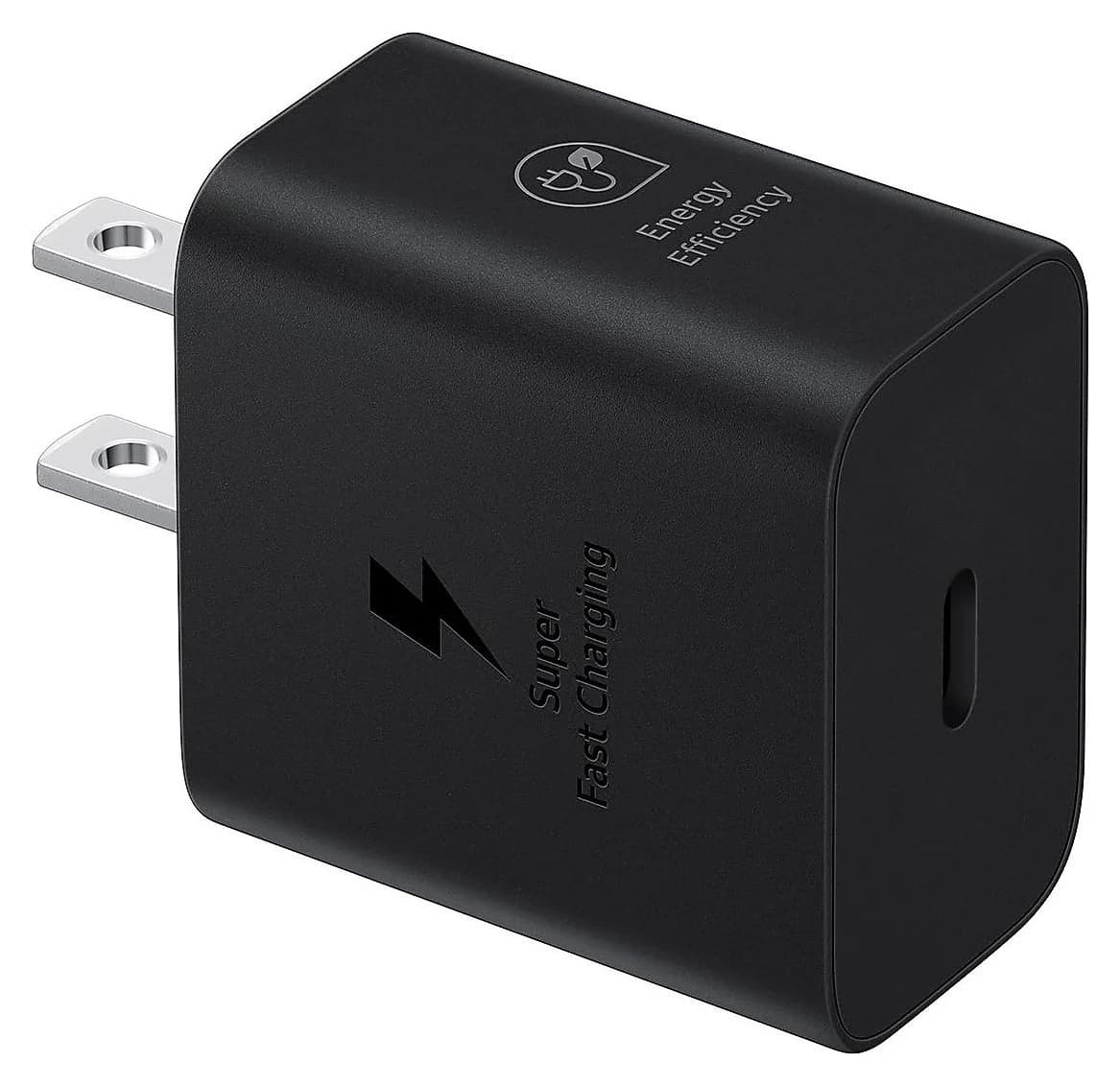
- Galaxy S26+: up to 45W wired, with Samsung's 45W PPS adapter.
- Pixel 11 Pro XL: Google quotes up to 75% in about 30 minutes "using 45W USB-C PPS charger or higher" on its Pixel tech specs page. Google cites a 30W PPS charger for the Pixel 11 and 11 Pro.
The trap is that PPS isn't a yes-or-no feature. The charger's PPS voltage and current have to cover what the phone requests. UGREEN's 65W Nexode, for example, lists PPS up to 21V at 3A, yet UGREEN says it supports Samsung's 25W Super Fast Charging and not the 45W mode. Without suitable PPS, a Galaxy or Pixel still charges over standard PD, just more slowly. Our fast-charging phones guide lists each phone's exact requirement.
AVS: what Apple uses for the iPhone 18 Pro
AVS (Adjustable Voltage Supply) is PD's other variable-voltage mode. It moves in coarser 100mV steps, and unlike PPS, the charger doesn't limit current. The current PD 3.2 spec defines AVS in the standard range too: 9V to 15V on chargers up to 45W, and 9V to 20V above that.
Apple's fast-charge support page says the iPhone 18 Pro and 18 Pro Max reach Apple's figure of 50% in around 15 minutes with the USB-C cable from the box and either the Apple 40W Dynamic Power Adapter with 60W Max or "a comparable third-party 60W-capable (or greater) adapter that uses Adjustable Voltage Supply (AVS)" and supports USB PD 3.2. Other USB-C PD chargers still charge it, just without that figure. The iPhone 17, 17 Pro and 17 Pro Max need 40W or more for their fastest charging, with no AVS requirement.
Apple's adapter also shows off another PD feature, the Dynamic Power Supply. The spec defines it as a source that "offers a guaranteed power and offers a maximum power when conditions are right." That's the idea behind Apple's rating of 40W sustained and up to 60W, and Apple's output label marks those profiles DPS. See our best iPhone charger guide for model-by-model picks.
Multi-port chargers: how power gets split
A multi-port charger's headline wattage is a total, not a per-port promise. The USB-IF's certified charger rules separate "assured capacity" chargers, where each USB-C port can supply its labeled power regardless of the other ports, from "shared capacity" chargers, which divide what's left as devices connect. All four multi-port chargers below share, so check the maker's split table:
| Charger | One device | Sharing example |
|---|---|---|
| Anker 140W 4-port | 140W (C1 or C2) | 70W + 70W on C1 and C2; 100W + 40W on C1 and C3; 134W max on all four |
| Anker Prime 100W 3-port | 100W (either USB-C) | 100W combined on two ports; 89W on three |
| UGREEN Nexode 65W 3-port | 65W (either USB-C) | 45W + 20W on two USB-C ports, per UGREEN's port diagram |
| Apple 35W Dual | 35W | 17.5W each for a Mac and an iPhone |
Plug the laptop into the highest-rated port, usually C1, and check what it keeps once a phone joins: the Anker 140W still gives 100W on C1 with a phone on C3, while the UGREEN drops to 45W.
The cable is part of the deal
| Power | Cable needed |
|---|---|
| Up to 60W | Any USB-C to USB-C cable (all are rated 3A) |
| 61W to 100W | 5A e-marked cable (sold as 100W or 240W) |
| Over 100W | 240W EPR cable |
One exception sits below 60W: Samsung's Galaxy S22+, S22 Ultra, S23+, S23 Ultra, S24+ and S24 Ultra draw their 45W over PPS at roughly 10V and 4.5A, so Samsung says they need a 5A e-marked cable for it. Samsung says Galaxy S25 and later models reach 45W on the 3A cable in the box. Our Samsung Galaxy charger guide covers each model.
USB PD needs USB-C at both ends, so a USB-A to USB-C cable won't negotiate it. Our USB-C cable types explainer covers e-markers in detail.
Chargers that cover each case
Everything up to 140W, including EPR.
Anker
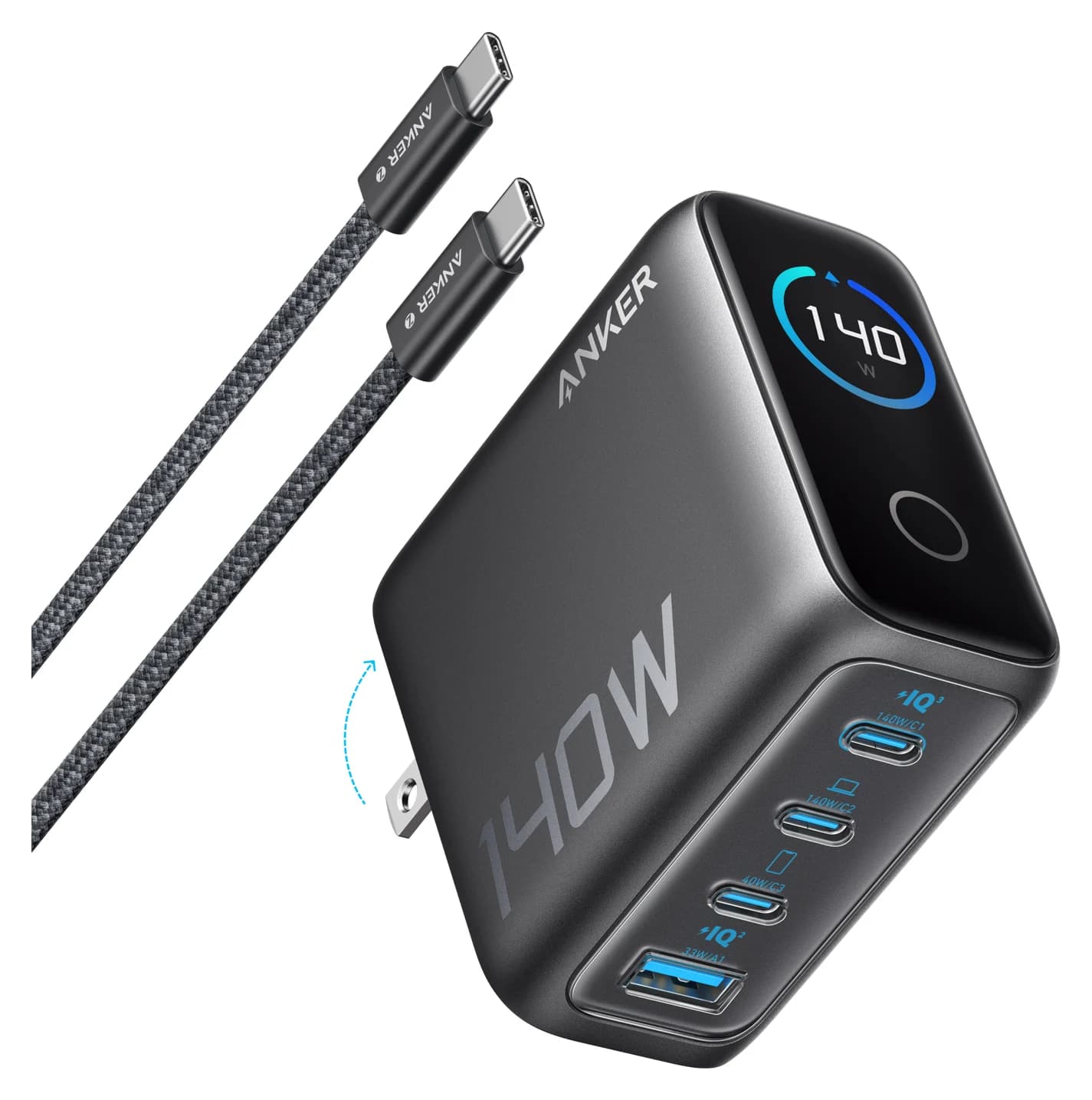
Anker Charger (140W, 4-Port, PD 3.1)
A 140W USB PD 3.1 GaN charger with three USB-C ports, one USB-A port and a smart status display, sold with a 240W USB-C cable.
- 140W max output
- 4 ports
The Anker Charger (140W, 4-Port) is a USB PD 3.1 charger. Its top two USB-C ports reach 140W, Anker publishes the full split table, and a 5 ft 240W cable in the box covers the EPR cable requirement. The third USB-C port tops out at 40W. It's a desk charger, not a pocket one. See it on Amazon.
iPhone 18 Pro at Apple's rated speed.
Apple
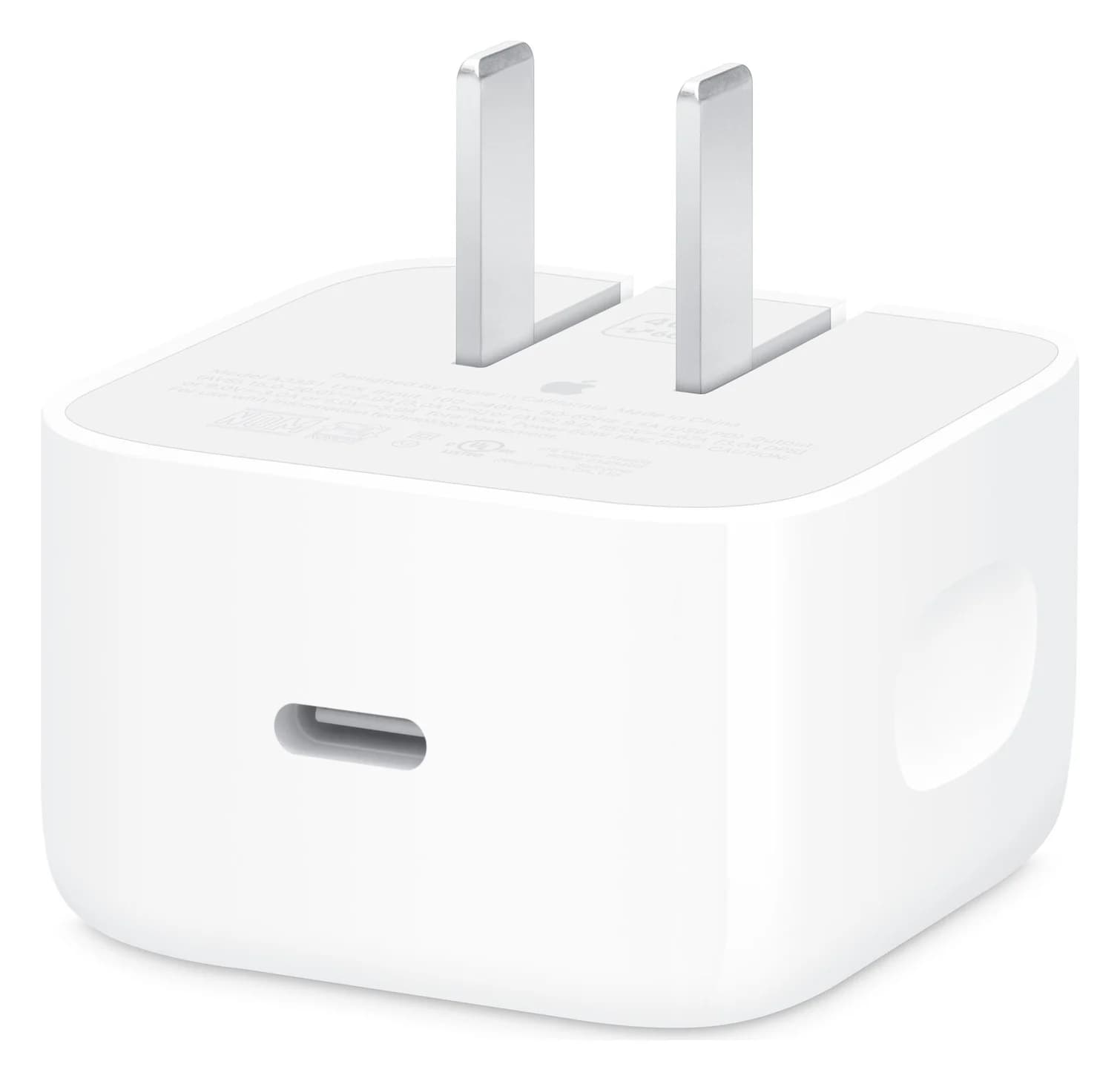
Apple 40W Dynamic Power Adapter with 60W Max
Apple's single-port USB-C wall charger, rated 40W continuous, that can dynamically deliver up to 60W and supports Adjustable Voltage Supply (AVS).
- 40W max output
- 1 port
Apple's 40W Dynamic Power Adapter with 60W Max lists AVS profiles from 9V to 20V, and it's the adapter Apple names for the iPhone 18 Pro's fastest charging. No cable is included; Apple says to use the one from the iPhone box. It's a single port, and 40W sustained is slow for a MacBook Pro. See it on Amazon.
Galaxy and Pixel phones, plus a light laptop.
UGREEN
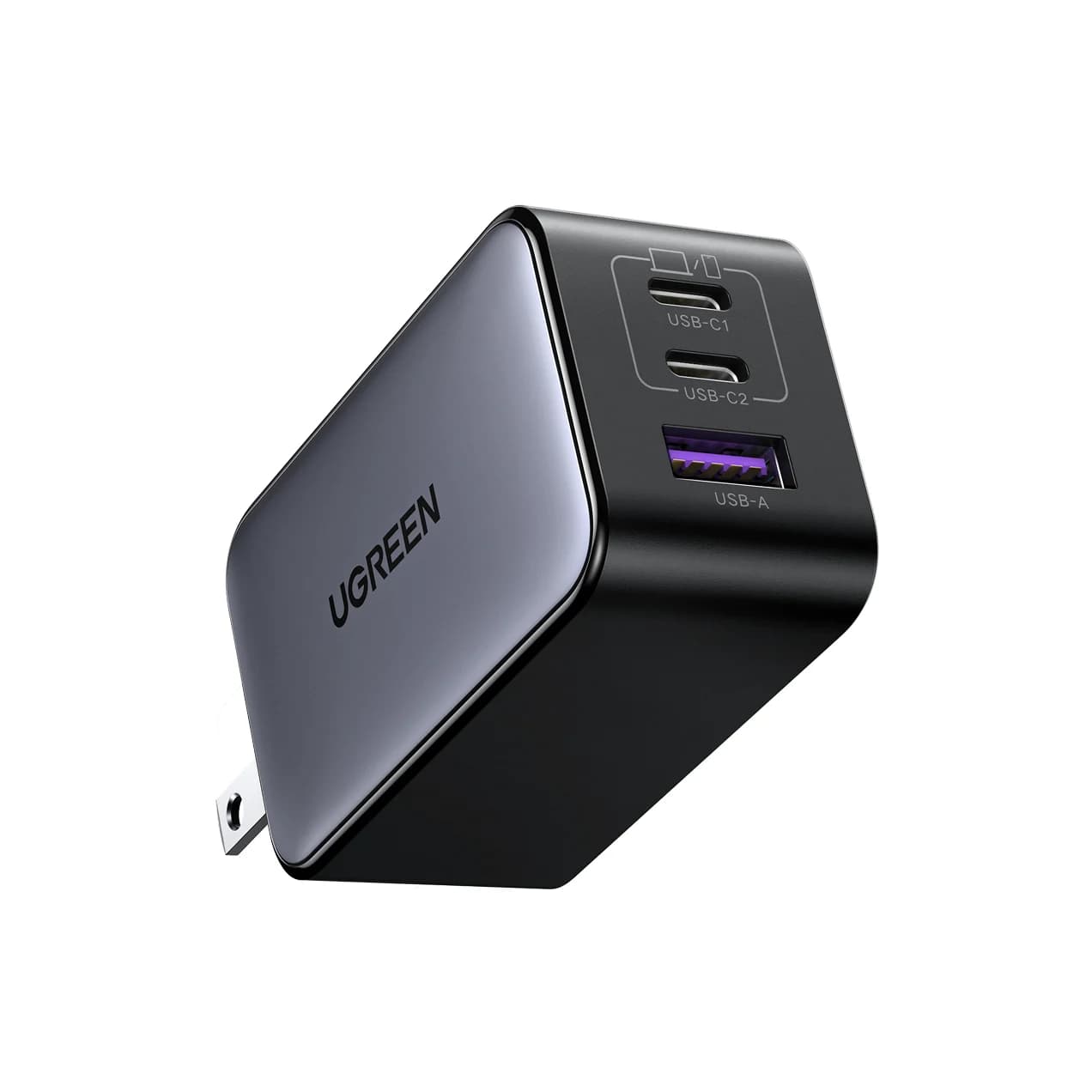
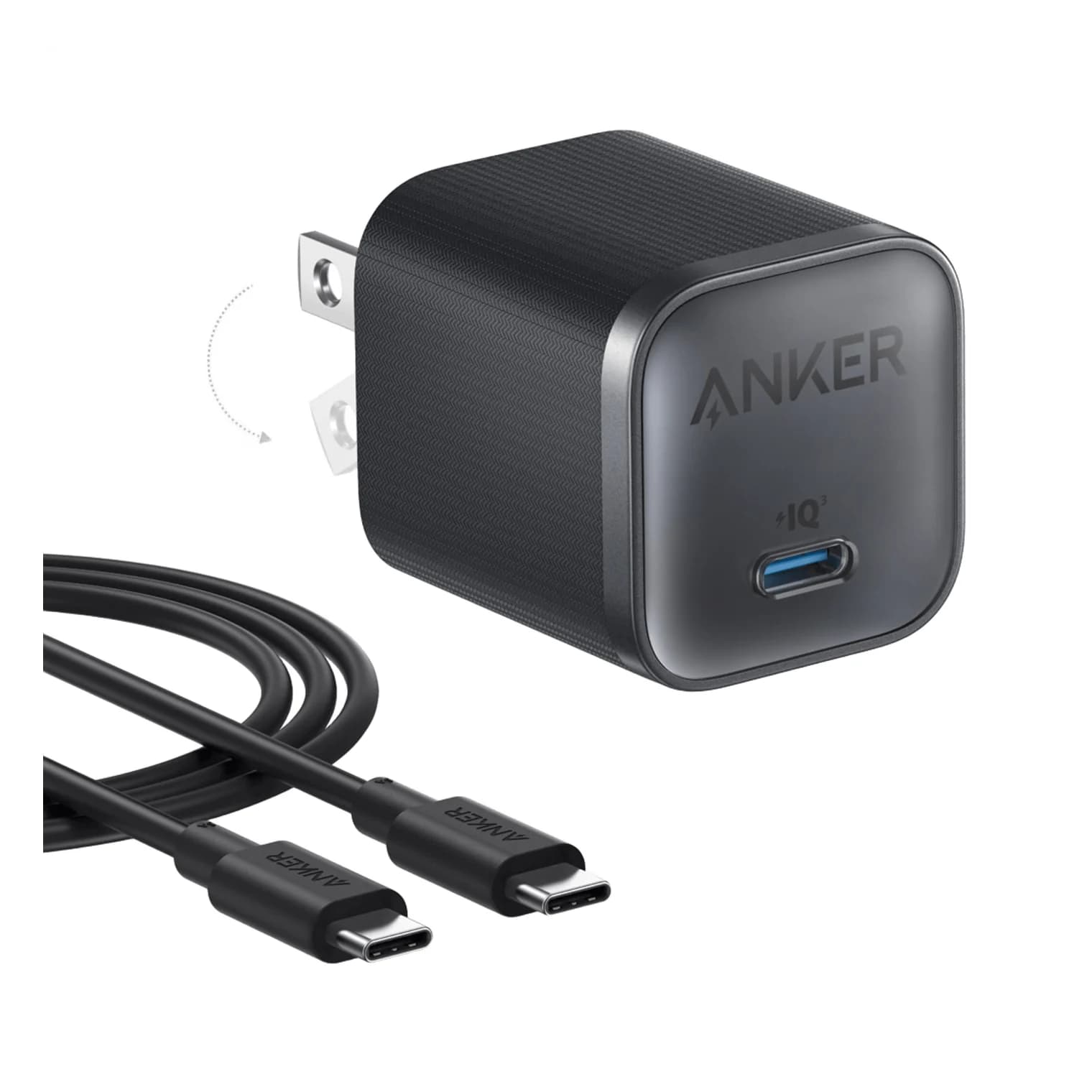
UGREEN Nexode 65W 3-Port USB-C Charger
A compact 65W GaN wall charger with two USB-C ports and one USB-A port and a foldable plug.
- 65W max output
- 3 ports
UGREEN's Nexode 65W lists PPS from 3.3V to 21V at 3A on both USB-C ports, which on paper exceeds Google's 45W PPS requirement, though Google quotes charge times only for its own charger. UGREEN supports Samsung's 25W Super Fast Charging but not 45W, so Galaxy S26+ and Ultra owners wanting full speed should buy Samsung's adapter. See it on Amazon.
A full 100W laptop port.
Anker
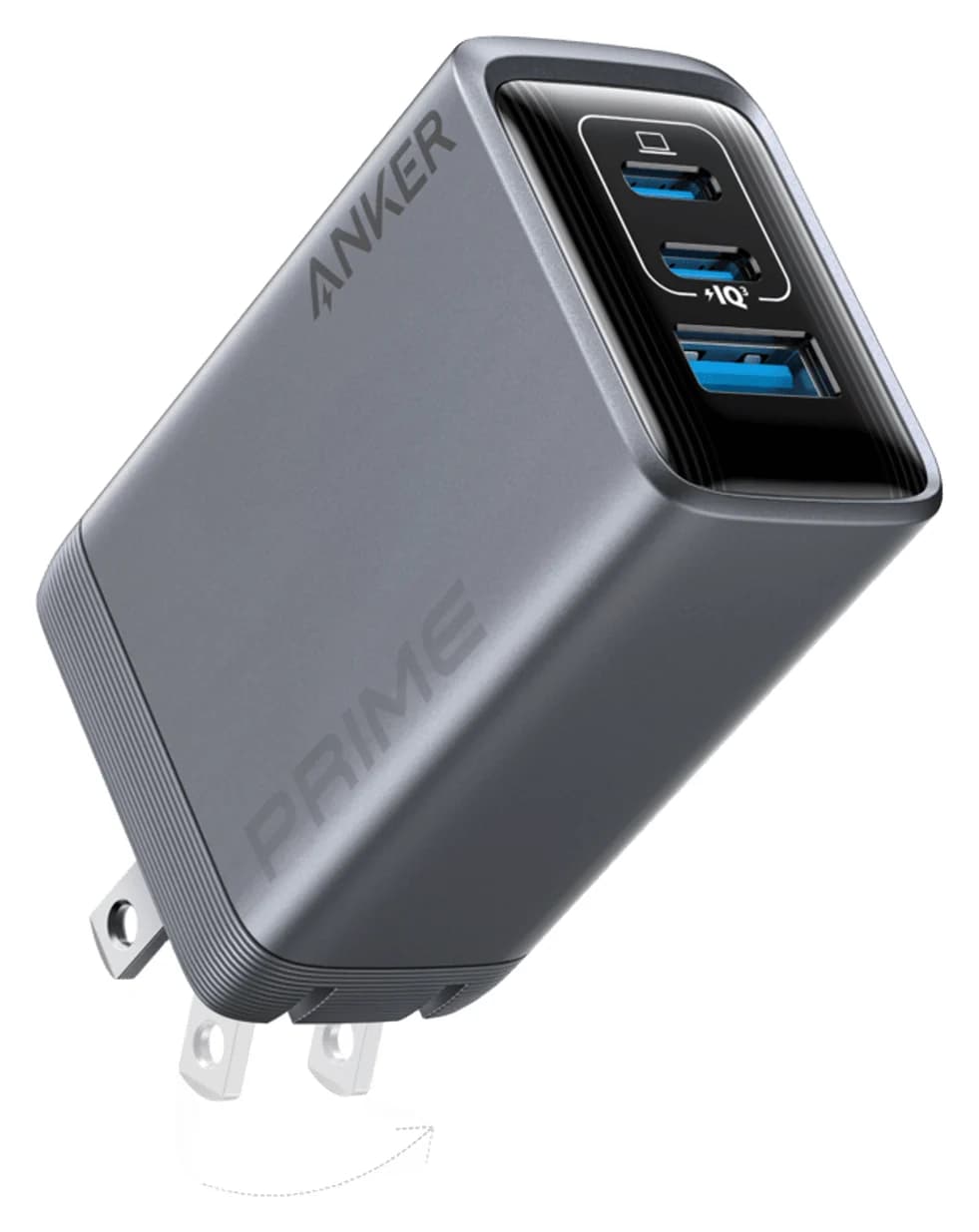
Anker Prime Charger (100W, 3 Ports, GaN)
A 100W GaN wall charger with two USB-C ports and one USB-A port and a foldable plug.
- 100W max output
- 3 ports
The Anker Prime Charger (100W, 3 Ports) delivers 20V at 5A, the top of the standard power range, from either USB-C port. Anker lists 100W combined for two devices and 89W for three. You need a 5A cable above 60W, and it can't reach the 140W some 16-inch laptops want. See it on Amazon.
For more options, see our best USB-C chargers and best travel chargers guides.
How we put this together
This explainer is based on the USB Power Delivery specification (Revision 3.2), the USB Type-C specification, the USB-IF's certified charger guidelines, Apple's, Samsung's and Google's charging support pages, and Anker's, Apple's and UGREEN's spec sheets. We haven't physically tried these chargers, and charge times are the makers' own figures.
Common problems and fixes
| Symptom | Likely cause | What to try |
|---|---|---|
| Laptop stuck around 60W on a 100W charger | 3A cable | A 5A e-marked or 240W cable |
| 140W charger delivers 100W | Cable isn't EPR, or the device doesn't use EPR | A 240W cable; check the device's charging spec |
| Galaxy or Pixel charges slower than the maker's figure | No PPS, or a PPS range too small | The maker's adapter, or a PPS charger that matches |
| iPhone 18 Pro misses the 15-minute figure | No AVS, or under 60W | A 60W-capable AVS adapter |
Verdict
USB PD is a conversation, not a firehose: the device asks and the charger answers, so a bigger charger is safe. Speed depends on whether the charger speaks the device's dialect (fixed PD for laptops and most Apple devices, PPS for Galaxy and Pixel, AVS for the iPhone 18 Pro, EPR above 100W) and on a cable rated for the current. Match those and charging just works.
Frequently asked questions
Is it safe to use a higher-wattage USB-C charger?
Yes, with a USB PD charger. Under the USB PD spec, the charger advertises what it can supply and the device requests one option, so a phone on a 140W charger still asks only for what it can take. Apple says a Mac can charge from any USB-C power adapter, even one of higher wattage. Stick to reputable chargers that meet safety standards.
What's the difference between USB PD and PPS?
Standard USB PD offers fixed steps: 5V, 9V, 15V and 20V. PPS (Programmable Power Supply) is an optional part of PD that lets the phone request any voltage within a range, in 20mV steps, with a current limit in 50mA steps. Samsung and Google use PPS for their fastest wired charging. A PD charger without PPS still charges those phones, just more slowly.
What is AVS charging?
AVS (Adjustable Voltage Supply) lets a device request a voltage in 100mV steps within a range: 9V up to 15V or 20V in standard power, or 15V up to 48V in EPR. Unlike PPS, the charger doesn't limit current. Apple uses AVS for the iPhone 18 Pro and says its 50%-in-15-minutes figure needs a 60W-capable AVS adapter that supports USB PD 3.2.
Do I need a 240W charger?
Probably not. 240W is the ceiling of USB PD 3.1, using 48V at 5A, and few devices draw it. The phones in our catalog top out at 60W, and Apple's MacBook Air and 14-inch MacBook Pro fast charge from 70W and 96W sources. EPR matters for laptops that need more than 100W, such as the 16-inch MacBook Pro, which Apple pairs with a 140W adapter.
Why does my laptop charge slowly on a 100W charger?
Usually one of three things. The cable is a 3A cable, which caps USB PD at 60W; above that you need a 5A e-marked cable. The charger is splitting power with another device. Or the laptop is on a lower-rated port. Use the charger's main port and a 5A or 240W cable. On a Mac, System Information shows the wattage it negotiated.
Does a USB PD 3.1 charger work with older devices?
Yes. A PD 3.1 charger still offers the standard 5V, 9V, 15V and 20V levels, and moves to 28V, 36V or 48V only when the device asks for EPR and the cable is EPR-rated. An older phone or laptop charges from it the same way it would from a PD 3.0 charger of the same standard-range wattage.
Related guides
Best Samsung Galaxy Charger in 2026: 25W, 45W and 60W Super Fast Charging Explained
The right charger for your Galaxy phone or tablet from Samsung's specs: 25W, 45W or 60W, the PPS range and 5A cable behind it, plus Watch, Buds and Pixel tips.
Updated October 22, 2026Read
How to Spot a Real USB-C Deal: A Black Friday Buyer's Guide for 2026
Spot fake-capacity drives, 240W cables with no e-marker, padded charger wattage, uncertified Qi2 and counterfeit sellers before you buy this Black Friday.
Updated October 22, 2026Read
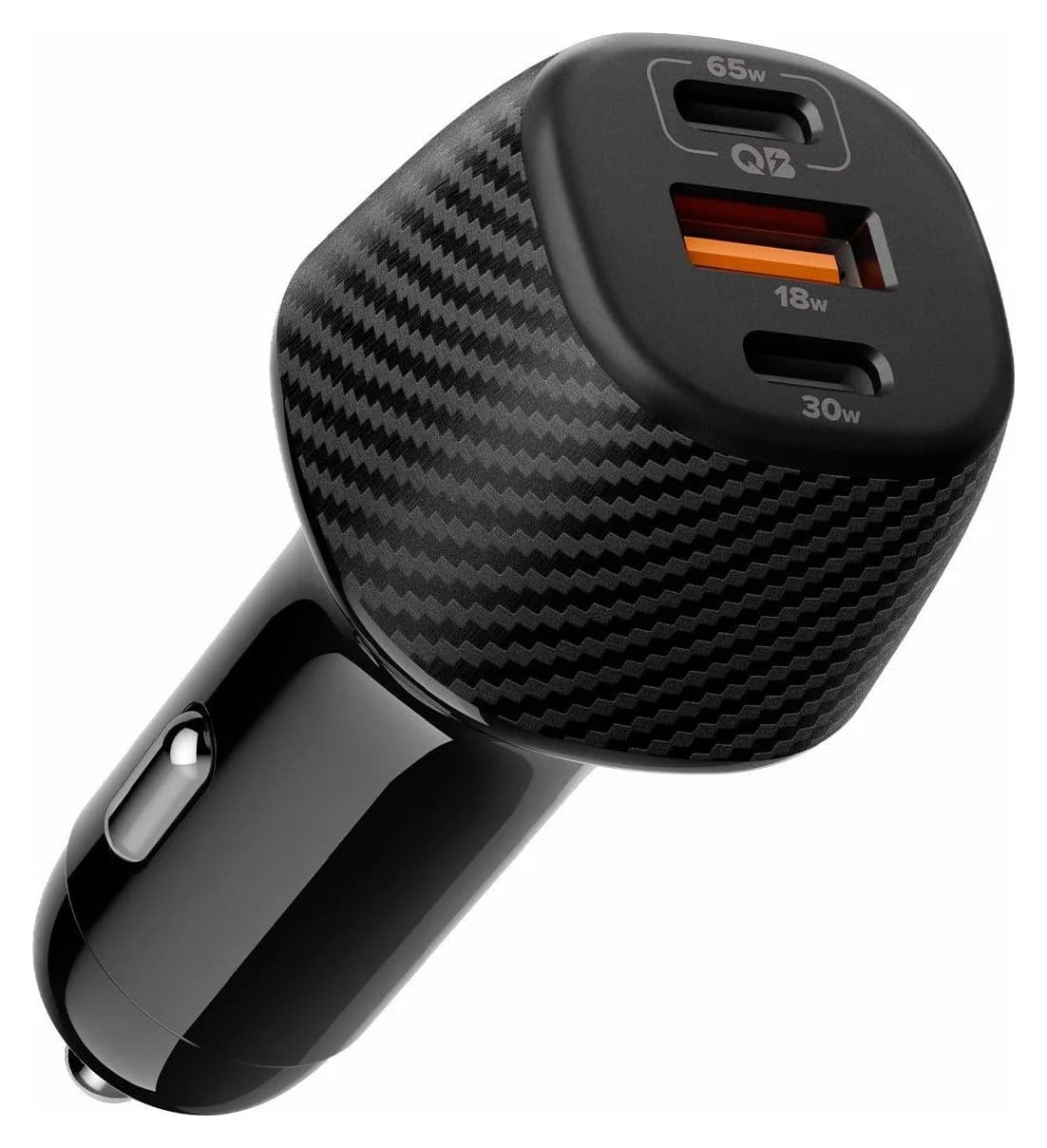
Best USB-C Car Chargers in 2026
USB-C car chargers for phones and laptops, compared on real per-port power splits, PD and PPS support, built-in cables and 12V or 24V ratings from maker specs.
Updated October 22, 2026Read