Black Friday: the specs to check before you buy
Best picks
Updated November 7, 2026Best Wireless Chargers in 2026: Qi2 Stands, Pads and 3-in-1 Stations
Short answer
For most people the best wireless charger is the Anker MagGo Wireless Charger (Stand): a Qi2-certified stand that charges MagSafe-compatible iPhones at 15W and AirPods at 5W, with a 360° rotating head that supports iPhone StandBy Mode. If you charge a watch too, get the Anker MagGo Wireless Charging Station (Foldable 3-in-1), which has a 40W power supply built in. Samsung Galaxy owners should start with Samsung's own Single Wireless Charger, and the Anker MagGo Power Bank (10K) puts the same 15W Qi2 charging in your pocket with no outlet needed.
Our picks at a glance
Every pick here is specified by its maker for Qi2 or Qi2.0 magnetic charging, and each one below lists the adapter wattage it needs — the detail most wireless-charger guides skip and the most common reason a new charger charges slowly.
- 15WQi2 wireless charging on MagSafe-compatible iPhones
- 25WAdapter Samsung says its Galaxy pad needs
- 40WPower supply built into our 3-in-1 pick
Quick picks
| Pick | Award | Charges | Power supply | Note |
|---|---|---|---|---|
| Anker MagGo Wireless Charger (Stand) | Best overall | iPhone 15W, AirPods 5W | Not included | 360° rotating head, StandBy Mode |
| Anker MagGo Wireless Charging Station (Foldable 3-in-1) | Best 3-in-1 station | iPhone 15W, Apple Watch 5W, earbuds 5W | 40W built in | Folds to 3.50 × 2.36 × 0.98 in |
| Anker MagGo Wireless Charger (2-in-1, Stand) | Best budget stand | iPhone 15W, earbuds 5W at once | Not included | Dual LEDs, 45° vertical rotation |
| Samsung Single Wireless Charger | Best for Samsung Galaxy | Galaxy phone | Not included | Needs 25W adapter, Qi2.0 magnetic case |
| Anker MagGo Power Bank (10K) | Best away from an outlet | iPhone 15W wirelessly, USB-C 27W | Charges itself over USB-C | 10,000mAh, display, fold-out stand |
How fast will your phone charge wirelessly?
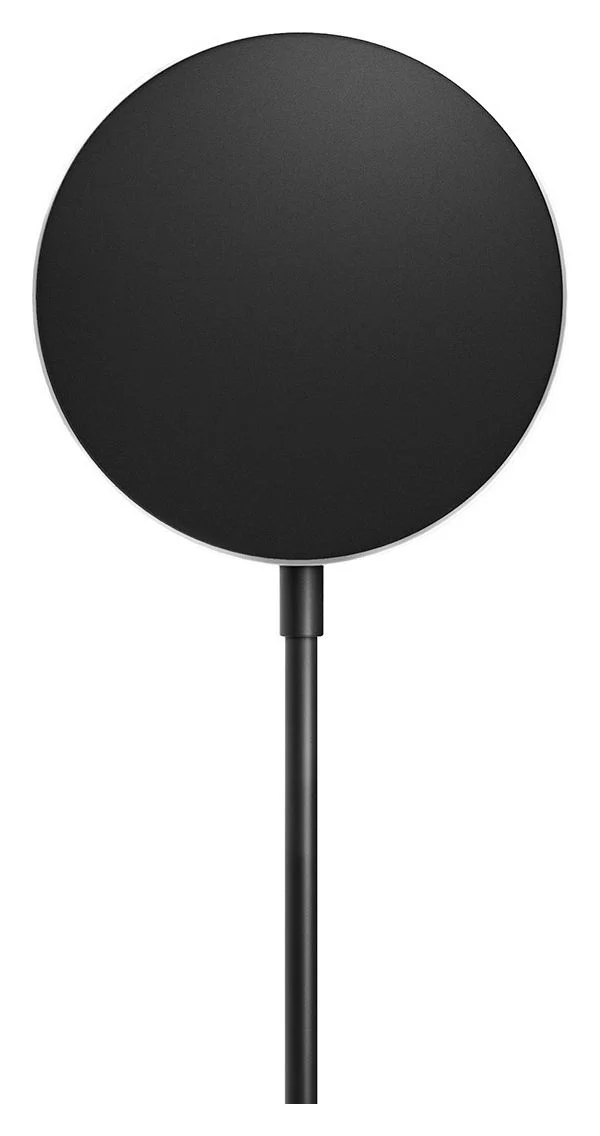
The phone sets the ceiling, not the charger. On Apple's side, the figures come from Apple's MagSafe Charger support page. Samsung publishes a device list rather than per-model wattages, saying its pad works best with the Galaxy S25 Series, Galaxy Z Flip7 and Galaxy Z Fold7.
Source: Apple's MagSafe Charger support page
Two things follow from that chart. First, a 15W Qi2 charger is enough for most iPhone 12-through-15 and iPhone 17e models, with the iPhone 12 mini and 13 mini topping out at 12W; newer models will simply draw what the pad allows. Second, if you own one of those newer iPhones and want its full speed, our MagSafe charger guide covers the 25W Qi2.2 class — this page stays on the general-purpose 15W Qi2 chargers that fit the widest range of phones.
The standards picture is straightforward. Qi2, introduced by the Wireless Power Consortium in 2023, added the Magnetic Power Profile (MPP) so a magnetic charger snaps into place the way MagSafe does, at 15W; the WPC says Qi2 became available on over 1.5 billion devices worldwide in its first year. In July 2025 it launched Qi2 25W, which it says delivers nearly 70% more power than Qi2. A Qi2 15W charger operates at its 15W ceiling; check a charger's certified compatibility for a newer 25W-capable phone.
Best overall: Anker MagGo Wireless Charger (Stand)
A Qi2 charger with the Specification met: MPP(Qi2) marking, this stand delivers 15W to a MagSafe-compatible iPhone and 5W to AirPods (with a wireless charging case), and its head rotates 360° with up to a 70° viewing adjustment so you can flip between portrait StandBy Mode and landscape video. Anker quotes an iPhone 15 Pro reaching 30% in 20 minutes under ideal lab conditions.
The spec sheet keeps its requirements honest: input is 9V at 2.5A, and if you use a third-party adapter Anker says to pick one 25W or higher with the PD protocol. Buy the "With Cable & Adapter" set and the matching power supply comes in the box; the "With Cable" set does not. It is built with 75% post-consumer recycled materials, and Anker lists it for iPhone 16 / 15 / 14 / 13 / 12 Series — no Android phones.
See the exact A25X1 model at Anker
Best 3-in-1 station: Anker MagGo Wireless Charging Station (Foldable 3-in-1)
This is the charger for a nightstand that has to feed an iPhone, an Apple Watch and AirPods. The phone module delivers 15W, the watch and earbud pads 5W each, and Anker quotes an Apple Watch Series 9 going from 0 to 47% in 30 minutes. Folded, it shrinks to 3.50 × 2.36 × 0.98 inches and 6.9 oz, which is smaller than many single-pad chargers, and the phone module adjusts 60–70° for landscape or portrait viewing.
Its best feature is the one that saves you a purchase: the 40W power supply is built in, and Anker says to use it — a multi-port wall charger that supplies less than 30W can leave some modules not charging at all (a flashing blue light signals the input problem). Compatibility runs from the iPhone 12 through the 17 Series, Apple Watch Ultra 2/1, Series 10 and Series 1–9/SE, and AirPods Pro 2/1 and AirPods 3/2 with wireless charging cases. It has no battery; it must be plugged in.
See the exact A2557 model at Anker
Best budget stand: Anker MagGo Wireless Charger (2-in-1, Stand)
Most cheap wireless stands charge one device at a time. This one charges a phone at 15W and earbuds at 5W simultaneously, with dual LEDs (left light for the phone, right for earbuds) so you can see both are actually charging. The head offers 360° horizontal and 45° vertical rotation, and the earbud pad takes AirPods Pro / 3 / 2 with wireless charging cases plus Galaxy Buds Live.
Like the stand above, the wall charger is not included. The spec sheet lists an input of 9V at 3A / 12V at 2.5A / 15V at 2A, and Anker's notes say to use a charger with an output of 18W or higher (not included). Skip non-magnetic and metal cases — the page warns that magnets, cards, keys and pop grips interfere with charging.
See the exact A2544 model at Anker
Best for Samsung Galaxy: Samsung Single Wireless Charger
Samsung's own pad is the Galaxy-side pick because Samsung states its requirements directly: it "requires a Qi-compatible device, a Qi2.0-certified magnetic case, and a 25W power adapter (sold separately)", and Samsung says Fast Wireless Charging "works best with the Galaxy S25 Series, Galaxy Z Flip7, and Galaxy Z Fold7" — no guessing at which Galaxy phones the magnets suit. It is covered by a 12-month limited warranty.
The adapter requirement deserves emphasis, because a USB-C port on an older charger will often not deliver it: pair the pad with a 25W USB-C PD adapter such as the ones in our USB-C wall charger guide. With Fast Wireless Charging enabled, performance varies based on battery level and other factors, per Samsung. The iPhone-ecosystem picks above do not list Galaxy support, so Android owners should start here rather than with a MagGo charger.
Best away from an outlet: Anker MagGo Power Bank (10K)
A wireless charger needs an outlet — unless it carries its own battery. The MagGo Power Bank (10K) packs a 10,000mAh (38.5Wh) cell with 15W Qi2 magnetic charging on its back, a USB-C port that outputs up to 27W, and a smart display showing battery percentage and recharge time. The built-in foldable stand props your phone up while it charges, and pass-through charging keeps the phone powered while the bank itself refills.
Two constraints to know before buying. First, like the rest of the MagGo line, it is not compatible with Android devices — Anker designs it for the iPhone 12 and later. Second, if you charge a device over USB-C at the same time as wirelessly, the wireless output drops to 5W. Recharging the bank itself takes 165mins, quoted exactly as Anker lists it, over its 60 cm included cable. Our power bank guide and the MagGo versions comparison cover how the A1654 stacks up against the Slim and 2 Pro.
See the exact A1654 model at Anker
How we choose
Every pick here is documented by its maker's own product page: the Qi2 or Qi2.0 spec marking, the output wattage per device, the required adapter, and the compatibility list all come from Anker's, Samsung's, Apple's and the Wireless Power Consortium's published pages, which we fetched and archived while writing this. We did not test anything; we compare what the manufacturers state, flag where a page conflicts (such as Anker's stand listing both 15W and 25W maximums in different sections), and note the buyer-reported patterns on those same pages. We prefer chargers whose power-supply requirements are explicit, because an underpowered adapter is the most common cause of a "slow" wireless charger.
Buying advice: the adapter matters as much as the pad
Check the adapter requirement
Anker's stands need 25W or 30W or higher USB-C PD; Samsung's pad needs 25W. Match the maker's stated minimum, not just any USB-C port.
Check your case
Use a magnetic case under 2.5 mm, or no case. Non-magnetic and metal cases, cards and pop grips interfere with charging.
Plug the adapter in first, then place the phone
Apple says plugging into power before placing the iPhone lets the charger verify it is safe to deliver maximum power.
Stand, pad or station is mostly ergonomics. A stand angles the phone for StandBy Mode and keeps the screen visible; a flat pad is the cheapest and simplest for overnight charging; a 3-in-1 station consolidates a phone, watch and earbuds into one block and one outlet. Magnets matter more than shape: a Qi2 MPP charger holds a MagSafe iPhone in perfect alignment, while an old Qi pad relies on you placing the phone by hand every time.
For the iPhone side of the fence, note that the iPhone 16e has no MagSafe magnets — Apple's specs list only "Wireless charging (works with Qi chargers)" — so it will charge on these pads but will not snap onto a magnetic stand. Apple also says that if the battery gets too warm, software might limit charging above 80 percent. If your household spans iPhone and Galaxy, Samsung's 3-in-1 Wireless Charger takes Galaxy phones (S10 or newer, in a magnetic case), Galaxy Watches (Watch3 or newer), Galaxy Buds (Buds2 Pro or newer) and the Galaxy Ring — Samsung lists that compatibility on its product page.
Verdict
Buy the Anker MagGo Wireless Charger (Stand) if you want one magnetic charger for a MagSafe iPhone; buy the Foldable 3-in-1 if an Apple Watch joins the nightly rotation, since its built-in 40W supply removes the adapter guesswork entirely. The 2-in-1 stand is the value pick for phone-plus-earbuds desks, Samsung's Single Wireless Charger is the documented choice for Galaxy flagships, and the MagGo Power Bank (10K) takes 15W Qi2 charging off the grid. Whatever you choose, budget for the adapter the maker actually specifies — 25W or higher for the MagGo stand, 18W or higher for the 2-in-1 stand, 25W for Samsung's pad — and a magnetic case under 2.5 mm, and your charger will hit the wattage printed on its box.
Frequently asked questions
Do I need to buy a power adapter separately for a wireless charger?
Usually, yes. Anker's MagGo stand and 2-in-1 stand ship without a wall charger, and Samsung's pad needs a 25W adapter sold separately. Anker's foldable 3-in-1 station is the exception here: it has a 40W power supply built in. Check the box contents before you buy, and pick an adapter that meets the maker's stated minimum.
Will a Qi2 charger work with my Android phone?
Depends on the charger. Qi2 is backward compatible with plain Qi phones, but magnetic charging needs magnets in the phone or case. Anker's MagGo line is designed exclusively for MagSafe-compatible iPhones, while Samsung's own pad targets Galaxy phones with a Qi2.0-certified magnetic case. The Wireless Power Consortium says almost all major smartphone manufacturers now offer Qi Certified models.
Does a phone case stop wireless charging?
A magnetic case under about 2.5 mm, no. Anker says to avoid cases thicker than 2.5 mm and non-magnetic cases on its MagGo chargers, and warns that metal, magnets, cards, keys and pop grips interfere with charging. Samsung tells Galaxy owners to use a Qi2.0-certified magnetic case.
Is 15W Qi2 charging actually fast?
Apple rates iPhone 15 and earlier models at up to 15W with MagSafe, so Qi2's 15W tier matches that ceiling, and Anker quotes an iPhone 15 Pro reaching 30% in 20 minutes on its MagGo stand. But 15W is not the ceiling anymore: Qi2 25W arrived in July 2025 with nearly 70% more power than Qi2, and recent iPhones charge at up to 25W on MagSafe. A 15W charger still works with those phones, just more slowly.
Can I charge my phone and earbuds on the same wireless charger?
Only on a charger with two pads. Anker's 2-in-1 stand charges a phone at 15W and earbuds at 5W at the same time, and the 3-in-1 station adds an Apple Watch spot. The single-pad MagGo stand rotates between phone and earbuds but cannot charge both at once.
Why does my phone get warm on a wireless charger?
Slight warming is normal. Anker says its chargers comply with the EN 62368-1 and IEC 62368-1 safety standards, and its ActiveShield system monitors temperature. If charging pauses around 80%, an iPhone's thermal protection may have kicked in; Apple says that if the battery gets too warm, software might limit charging above 80 percent.
Best overall
Anker MagGo Wireless Charger (Stand)
Related guides
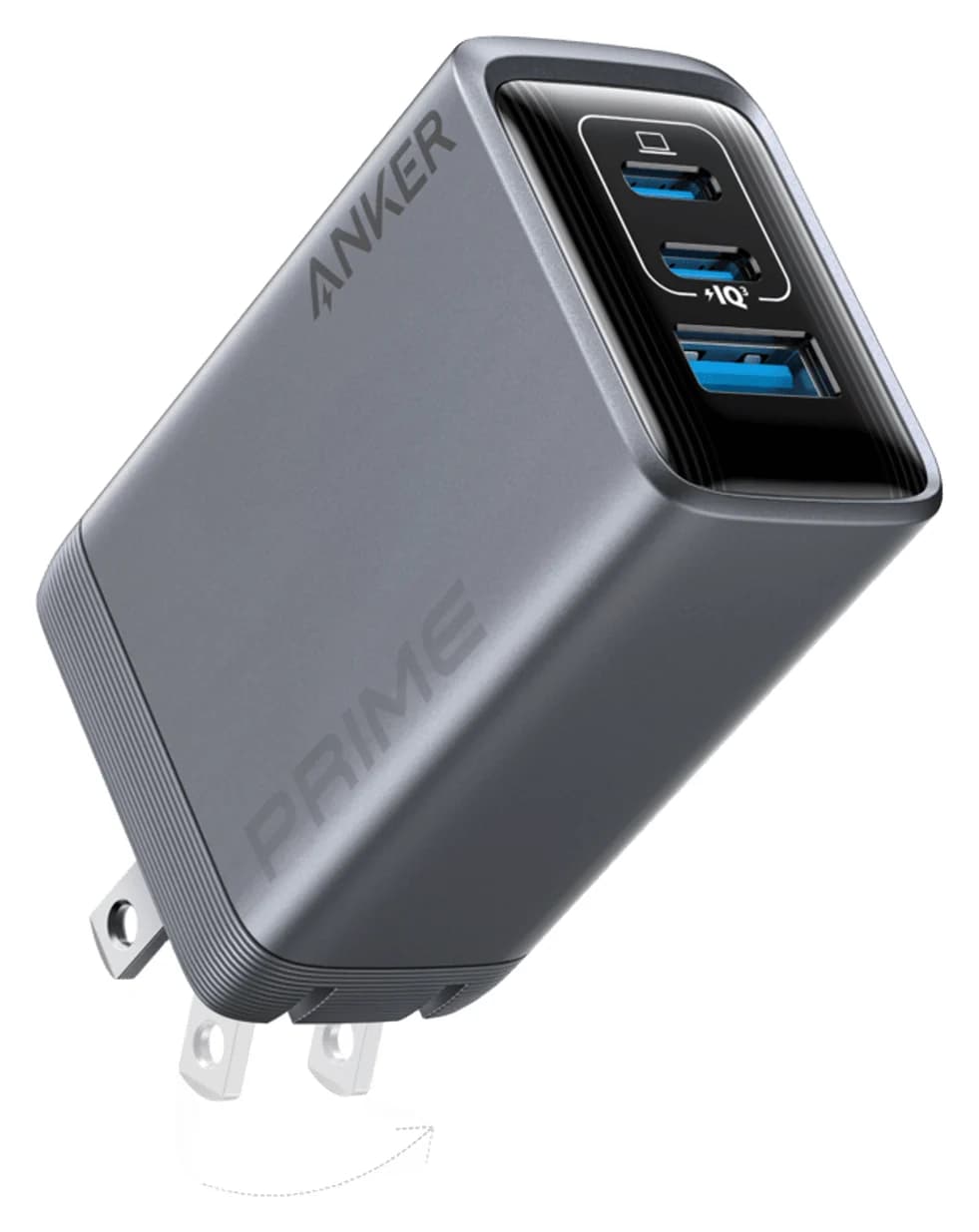
Anker Prime A2688 vs Satechi 100W Charger: Which to Buy?
Anker Prime A2688 vs Satechi 100W Compact GaN: exact port splits, sizes, cables and travel plugs from the makers, and which kit fits your laptop.
Updated November 5, 2026Read
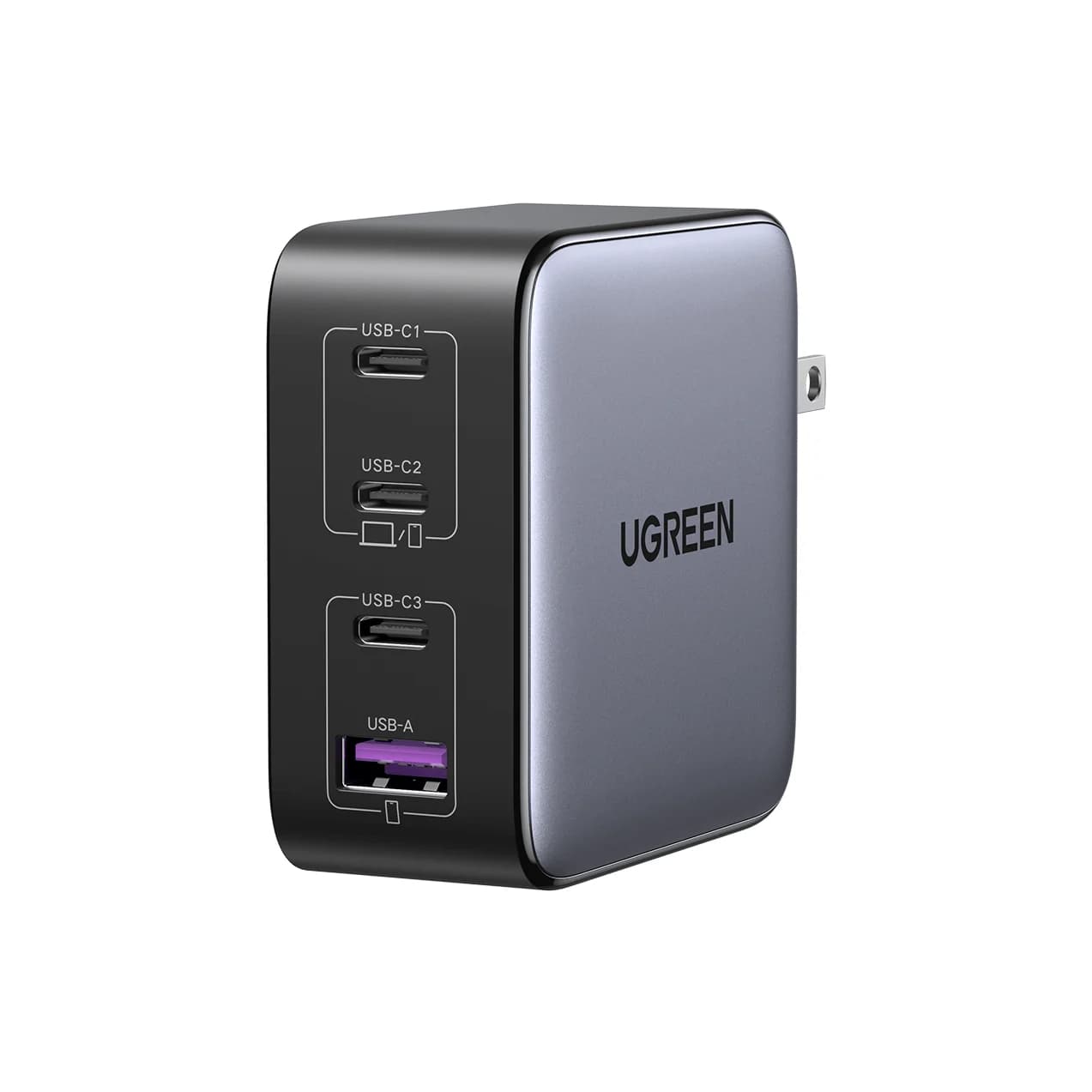
Satechi 145W vs Anker Prime Fusion: The Four-Port Travel Charger Match
Satechi 145W vs the Prime Fusion-class pick: real port splits for one or two laptops plus phones, plug kits, cables and which complete travel kit wins.
Updated November 5, 2026Read
Anker 715 Nano II vs UGREEN Nexode 65W: MacBook Air Picks
Choose Anker 715 for a MacBook Air alone or UGREEN Nexode 65W for a laptop and phone. Compare shared power, exact models, cables and complete charging kits.
Updated November 8, 2026Read