Black Friday: the specs to check before you buy
Comparison
Updated November 5, 2026Anker Prime A2688 vs Satechi 100W Charger: Which to Buy?
Short answer
For one laptop plus a phone, the Anker Prime 100W A2688 is the better buy: either USB-C port gives a single laptop the full 100W, Anker's support page specifies 65W + 35W with a second device on USB-C, and its published body is roughly half the weight of the Satechi. Choose the Satechi 100W USB-C PD Compact GaN Charger (ST-TC100GM) when you want its 2-pin power connector, which accepts a C7 cord so the charger sits on the desk, or when a laptop-and-accessory mix on one USB-C plus one USB-A port should keep the full 100W on the laptop. The trap in both cases is the cable: neither box includes one, and both makers say you need an e-marked 100W-rated USB-C cable to reach the 100W line.
Our picks at a glance
Best overallAnker
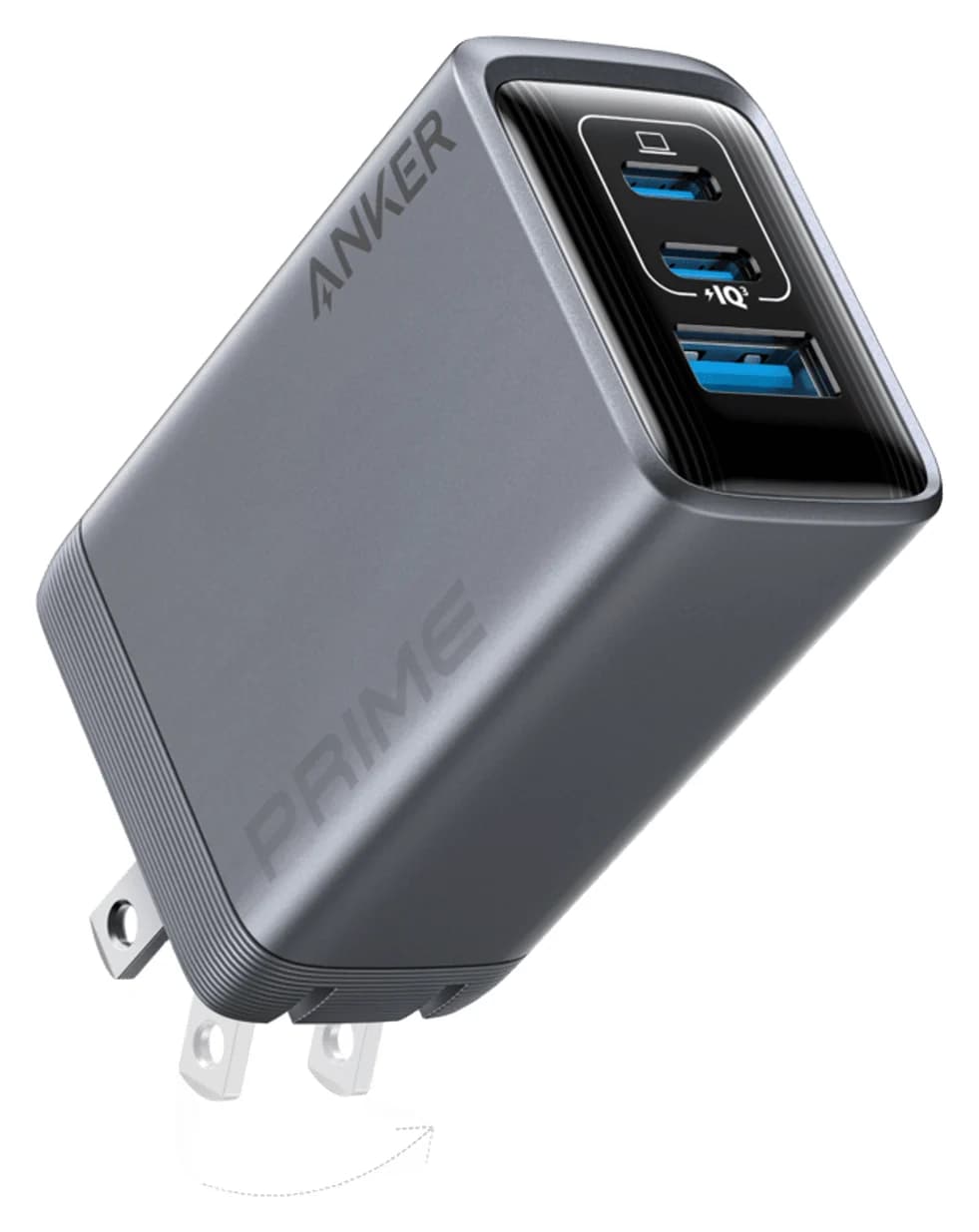
Anker Prime Charger (100W, 3 Ports, GaN)
- max output
- 100W
- ports
- 3
- Choose
- Anker A2688 gives a single laptop the full 100W from either USB-C port and keeps 65W + 35W with a second device, in the smaller published body.
- Limit
- Needs a 5A e-marked cable to deliver more than 60W
Satechi 100W Compact GaN (ST-TC100GM)
- 100WThe line each charger's top USB-C port reaches with one device and an e-marked cable
- 65WAnker's laptop allocation when a phone shares USB-C (Satechi's is 60W)
- 3Ports on each charger: 2x USB-C + 1x USB-A
Quick picks
| Pick | Best for | Headline spec |
|---|---|---|
| Anker Prime 100W A2688 | Best overall: one laptop, plus sharing | 100W single port; 65W + 35W two USB-C devices |
| Satechi 100W Compact GaN (ST-TC100GM) | Desk use with a C7 cord; USB-C + USB-A mixes | 60W + 30W two USB-C; 100W + 12W USB-C + USB-A |
| Satechi USB-C to USB-C 100W cable | A 100W-rated E-Mark cable option | 100W, 6.5 ft, 480 Mbps |
Which pick for your device mix?
| Your setup | Our pick | Why |
|---|---|---|
| One USB-C laptop, nothing else | Anker A2688 | 100W from either USB-C port in the smaller body |
| Laptop + phone on USB-C | Anker A2688 | 65W to the laptop beats Satechi's 60W |
| Laptop on USB-C + watch or earbuds on USB-A | Satechi ST-TC100GM | Keeps up to 100W on the laptop port; Anker gives 65W on USB-C1 but only 12W on USB-C2 |
| Charger that sits on the desk, not in the outlet | Satechi ST-TC100GM | 2-pin connector takes a C7 power cord |
| Frequent flyer, fixed carry-on weight | Anker A2688 | 6 oz versus 11.2 oz, and prongs fold away |
The two chargers, model by model
The Anker is the Anker Prime Charger (100W, 3 Ports, GaN), model A2688. Anker's product page lists two USB-C ports and one USB-A port, a foldable plug, and dimensions of 1.7 x 1.1 x 2.7 inches at 6 oz (170 g). Anker's box list is the charger alone: "Charging cables for compatible devices are not included and must be purchased separately," and for optimal 100W charging it calls for an E-Marker cable.
The Satechi is the 100W USB-C PD Compact GaN Charger, model ST-TC100GM. Satechi's page lists dual USB-C PD ports and one USB-A port, "up to 100W total output with smart power distribution," and 3.75 x 2.5 x 1.25 inches at 11.2 oz. What's in the box is the charger, a 2-pin power connector and the manual: no charging cable. Satechi sells US, EU, UK and AU plug versions (ST-TC100GM, -AU, -EU and -UK).
One naming caveat on each side: Anker also sells an older Prime 100W charger, the A2343, under a similar name, so check the model number before ordering; the outputs on this page belong to A2688. And Satechi's own 100W line has more than one member: the older single-port 100W USB-C PD Wall Charger (ST-UC100WSM, 2.75 x 2.37 x 1.2 inches, 6.7 oz) is a different product with one USB-C port, and Satechi also lists larger desktop chargers. This page compares only the compact ST-TC100GM against the A2688.
| What matters | Anker Prime A2688 | Satechi ST-TC100GM |
|---|---|---|
| Ports | 2x USB-C, 1x USB-A | 2x USB-C PD, 1x USB-A |
| One USB-C device | Up to 100W (USB-C1 or USB-C2) | Up to 100W |
| Two USB-C devices | 65W + 35W | 60W + 30W |
| USB-C + USB-A | USB-C1: 65W + 22.5W; USB-C2: 12W + 12W | 100W + 12W |
| All three ports | 89W max | 60W + 30W + 12W |
| AC input | 100-240V, 2.1A, 50-60Hz | 100-240V (US plug version) |
| Plug | Foldable, fixed | 2-pin connector; accepts a C7 cord |
| Cable in the box | None | None |
| Dimensions | 1.7 x 1.1 x 2.7 in | 3.75 x 2.5 x 1.25 in |
| Weight | 6 oz (170 g) | 11.2 oz |
| Body | Fixed prongs | Polycarbonate with aluminum-style finish |
One laptop: both reach 100W, the cable decides
With a single device connected, both chargers put up to 100W on their top USB-C port. Anker's product page lists USB-C1 and USB-C2 each at 5V/3A, 9V/3A, 12V/3A, 15V/3A and 20V/5A (100W max), so either port charges a USB-C laptop at full speed when nothing else is connected. Satechi's speed table gives the same answer for one USB-C PD device: up to 100W.
Reaching it depends on the cable. Anker says to use an E-Marker cable for optimal 100W charging, and Satechi's FAQ is blunter: "To reach the maximum 100W output, you'll need to use an E-Mark USB-C cable... Using a standard cable may limit the power delivered."
A 100W-class laptop, not a bigger charger, is the honest use case for both. A 100W charger can charge a 16-inch MacBook Pro, but Apple specifies a 140W-or-higher USB PD source for its fast-charge mode. For higher-wattage single laptops, a more powerful charger is the better buy; our best USB-C chargers roundup covers those.
Laptop plus phone: where the port map splits
This is where the two chargers genuinely differ, and both makers publish exact tables.
Anker's support specifications for A2688: with two devices on USB-C, the split is 65W + 35W. With the laptop on USB-C1 and something on USB-A, it is 65W + 22.5W (an 87.5W maximum). With all three ports busy, the total is 89W. Anker also tells you which port to use: "When using both USB-C ports simultaneously, use the upper port for charging laptops."
Satechi's speed table for ST-TC100GM: with two USB-C PD devices connected, up to 60W + 30W. With one USB-C PD and one USB-A device, up to 100W + 12W. With two USB-C PD and one USB-A, up to 60W + 30W + 12W.
So the choice follows what your second device is:
- Phone on the second USB-C port: Anker wins on paper, 65W to the laptop versus Satechi's 60W.
- Watch, earbuds or a small accessory on USB-A: Satechi wins, keeping up to 100W on the laptop port; Anker gives USB-C1 + USB-A 65W + 22.5W and USB-C2 + USB-A only 12W + 12W.
- Three devices: Anker's 89W total still lets its top port hold 65W with USB-A busy; Satechi's three-way table gives the laptop 60W.
These are the chargers' advertised ceilings, not a promise your laptop draws that much: USB Power Delivery negotiates, and a device only takes the power it asks for.
Source: Anker's A2688 support specifications and Satechi's ST-TC100GM page
The cable bill: neither box includes one
Budget a cable into either purchase. Anker's page says cables are not included and calls for an E-Marker cable; Satechi's box is the charger, a 2-pin power connector and the manual, and its FAQ recommends its own e-marked USB-C to USB-C 100W cable to reach full output.
That cable is our pick to complete either kit. Satechi's page lists the USB-C to USB-C 100W Charging Cable (ST-TCC2MM/ST-TCC2MB): 6.5 ft (2 meters), max power output 100W, data up to 480 Mbps. The length is generous for a desk or a bedside table, and the 480 Mbps data rating is fine for charging but not for fast external drives or video, which is the normal trade-off for a dedicated charging cable.
If you want more reach from an outlet, Anker's New Nylon USB-C to USB-C 100W Cable (A8758, 10 ft) is the long alternative: 100W max output with an e-Marker chip in each end, braided nylon, and a 12,000-bend lifespan, with the same 480 Mbps data limit. Our fast-charging cable guide compares more options.
Size, plug fit and travel
The Anker is the travel charger of the two, on paper: 1.7 x 1.1 x 2.7 inches and 6 oz versus Satechi's 3.75 x 2.5 x 1.25 inches and 11.2 oz, and Anker's prongs fold into the body so it packs flat. Anker notes its dimensions exclude the prongs.
The Satechi buys you a different kind of convenience: a 2-pin power connector that accepts a C7 power cord (Satechi's own FAQ mentions using a compatible C7 cable internationally). A corded charger can live on the desk or floor with the brick out of the outlet, and the plug never fights a loose wall socket; an outlet-hung Anker cannot do that. Satechi's housing is polycarbonate with a finish that mimics aluminum, per its FAQ, which keeps the weight down relative to a metal body.
For international use, both accept 100-240V mains, so voltage is not the issue anywhere. Anker's A2688 input is 100-240V at 2.1A, 50-60Hz, and Satechi sells dedicated US, EU, UK and AU plug versions of the ST-TC100GM. What differs is approach: Anker is one fixed plug plus a travel adapter, while Satechi lets you buy the native plug per region, or swap to a local C7 cord.
Best overall: Anker Prime 100W A2688
Anker
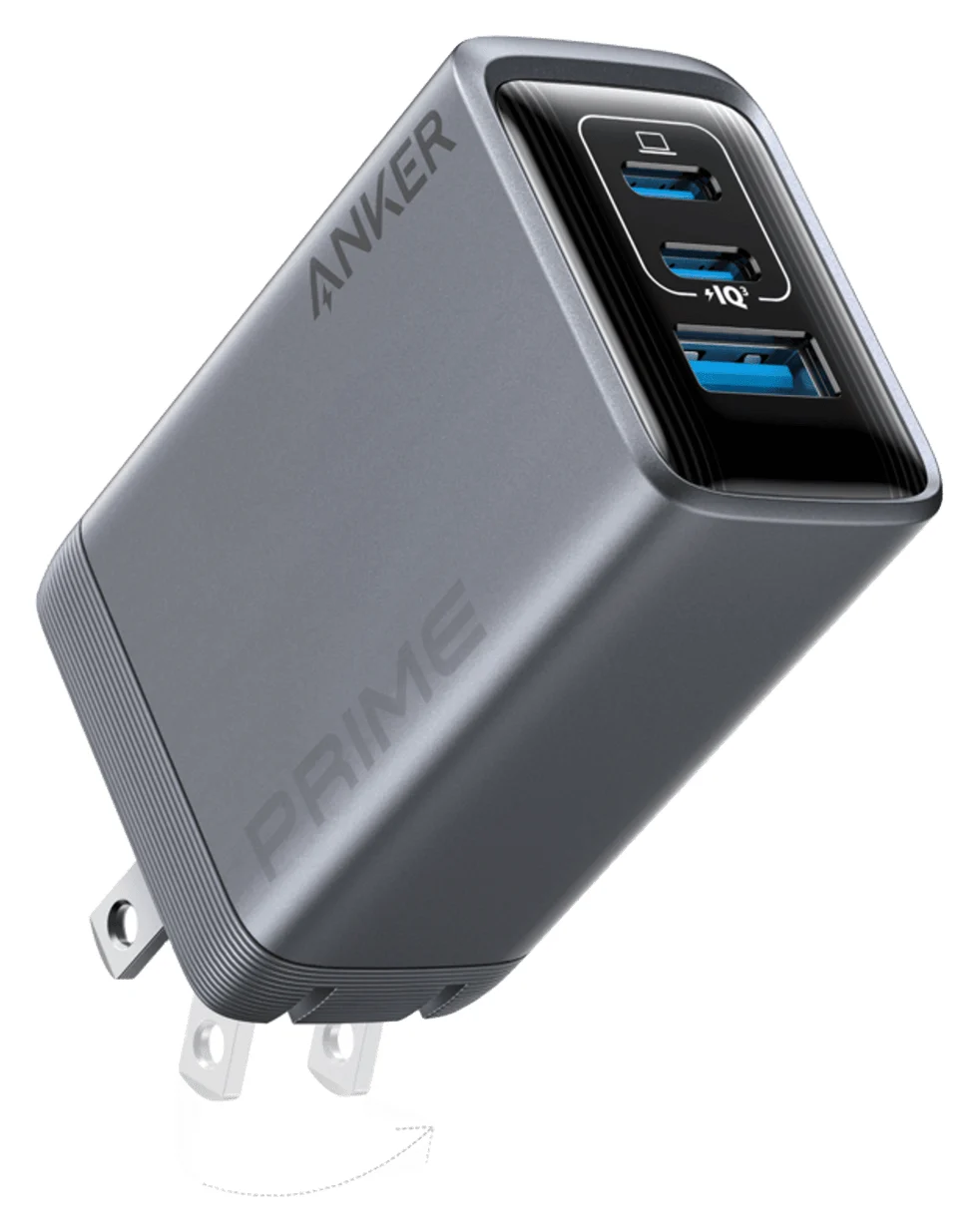
Anker Prime Charger (100W, 3 Ports, GaN)
A 100W GaN wall charger with two USB-C ports and one USB-A port and a foldable plug.
- 100W max output
- 3 ports
For a single laptop plus a phone or tablet, the A2688 is the stronger package on the makers' own numbers: 100W alone on either USB-C port, 65W + 35W sharing across USB-C (versus Satechi's 60W + 30W), and the smaller, lighter, folding body. Add an e-marked 100W cable, because there is no cable in the box.
Its two weak spots are shared-wattage USB-A mixes, and desk placement, since its prongs are fixed and it must hang from the outlet. With USB-C1 + USB-A, Anker allocates 65W + 22.5W; with USB-C2 + USB-A, it allocates only 12W + 12W. Anker also advises using the upper port for the laptop when both USB-C ports are busy, which is worth following.
Best with a cord and a USB-A trick: Satechi 100W Compact GaN
Buy the Satechi ST-TC100GM if your second device is a watch, earbuds or anything on USB-A: its 100W + 12W allocation keeps a laptop at the full line while the small device tops up, where the Anker would drop the laptop to 65W. Its 2-pin connector also takes a C7 cord, so it can sit on the desk, and each region has a native plug version.
The trade-offs are weight and the two-USB-C split: 11.2 oz against Anker's 6 oz, and 60W + 30W when two USB-C devices charge together. Check the model number when ordering, because Satechi's 100W family includes the older single-port ST-UC100WSM wall charger and larger desktop models.
Check the Satechi 100W Compact GaN Charger
The cable both makers ask for: Satechi 100W USB-C cable
Satechi's USB-C to USB-C 100W Charging Cable (ST-TCC2MM) is rated for 100W at 6.5 ft long with 480 Mbps data. Anker's 10 ft nylon 100W cable is the alternative when you want maximum reach from the outlet.
How we choose
We have not put these chargers on a test bench. Every number on this page comes from the manufacturers' own pages: Anker's A2688 product page and support specifications, and Satechi's ST-TC100GM product page and FAQ. Multi-port output tables, box contents, dimensions and cable requirements are quoted from those sources, and where the two makers' naming overlaps with older products (Anker A2343, Satechi ST-UC100WSM) we say so rather than gloss over it. Our USB Power Delivery explainer covers how the negotiation behind these tables works.
Buying tips
Match the model number. "100W" appears on several chargers from both brands. Anker's A2688 and Satechi's ST-TC100GM are the pair compared here; check the model code on the listing before checkout.
Buy the cable with the charger. Neither box includes one; buy an E-Mark 100W-rated USB-C cable separately, because Satechi says a standard cable may limit delivered power.
Pick by your second device. Phone on USB-C: Anker. Accessory on USB-A: Satechi. One laptop and nothing else: either, and the smaller Anker is easier to pack.
Check your laptop's real appetite. If it wants 140W, a 100W charger is a compromise; our MacBook Pro charger guide sorts the higher-wattage options.
Verdict
Buy the Anker Prime 100W A2688 for the common case: one USB-C laptop, sometimes with a phone, where its 100W single-port output and 65W + 35W shared split win on paper and its 6 oz folding body travels better. Buy the Satechi 100W USB-C PD Compact GaN Charger when the second device lives on USB-A, when you want 100W to survive a sharing mix, or when a C7 cord on the desk is worth 11.2 oz. Either way, add an e-marked 100W USB-C cable: the Satechi 100W charging cable or the 10 ft Anker A8758, because neither charger's box has one.
Frequently asked questions
Which 100W charger is better for a laptop and a phone together?
Anker A2688. With a phone on the second USB-C port, Anker's support specifications give the laptop up to 65W, versus up to 60W from Satechi's top port when two USB-C devices are connected. With one USB-C and one USB-A device, Satechi keeps up to 100W on its USB-C port; Anker specifies 65W + 22.5W only when the laptop is on USB-C1, and 12W + 12W when it is on USB-C2. The Anker body is also smaller and lighter in the published figures.
Does the Satechi 100W charger come with a cable?
Satechi's box list is the charger, a 2-pin power connector and the manual: no charging cable. Anker lists its A2688 as sold without a cable and says to use an E-Mark cable for optimal 100W charging. Satechi requires an E-Mark cable, sold separately, for 100W charging and says a standard cable may limit the power delivered.
Why is my 100W charger not charging at 100W?
The most common cause is the cable. Both makers call for an e-marked 100W-rated USB-C cable; Satechi's own FAQ says a standard cable may limit the power delivered. Sharing ports matters too: each maker's multi-port table lowers the per-port figure as soon as a second device connects. One device plus an e-marked cable is what reaches the 100W line.
Can I use the Satechi 100W charger internationally?
Yes. Satechi lists US, EU, UK and AU plug versions and its FAQ says the charger works with power outlets worldwide; outside your plug region you may need an adapter or a compatible C7 cable. Anker's A2688 accepts 100-240V, 50-60Hz and folds its prongs into the body, but it is one fixed plug, so check socket fit at your destination.
Is Satechi's 100W the charger body aluminum?
No. Satechi's FAQ says the housing is durable polycarbonate plastic with a finish designed to mimic aluminum, which keeps it lightweight. The compact model here is ST-TC100GM; Satechi also sells an older single-port 100W USB-C PD Wall Charger (ST-UC100WSM) and larger desktop chargers, so match the model number before buying.
Which is smaller, the Anker Prime A2688 or the Satechi 100W?
The Anker. Anker's page lists 1.7 x 1.1 x 2.7 inches and 6 oz, while Satechi lists 3.75 x 2.5 x 1.25 inches and 11.2 oz for its compact charger. Satechi's 2-pin connector can take a C7 cord so the brick can sit on the desk rather than in the outlet, which the Anker's fixed prongs cannot do.
Related guides
Best Wireless Chargers in 2026: Qi2 Stands, Pads and 3-in-1 Stations
The best Qi2 wireless chargers of 2026, from maker spec sheets: 15W MagGo stands, foldable 3-in-1 stations, a Galaxy pad, and the adapter wattage each one needs.
Updated November 7, 2026Read
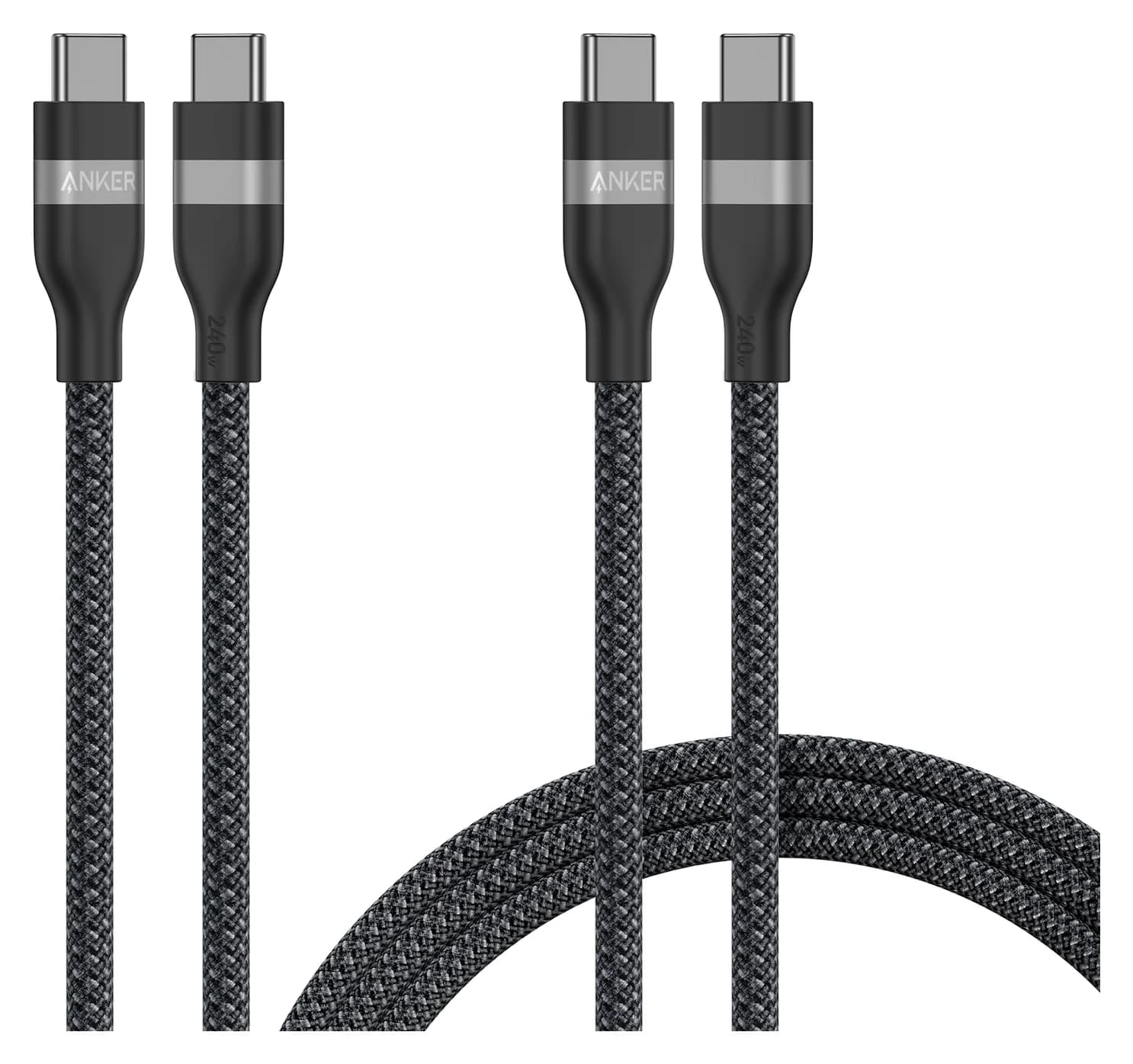
Satechi 145W vs Anker Prime Fusion: The Four-Port Travel Charger Match
Satechi 145W vs the Prime Fusion-class pick: real port splits for one or two laptops plus phones, plug kits, cables and which complete travel kit wins.
Updated November 5, 2026Read
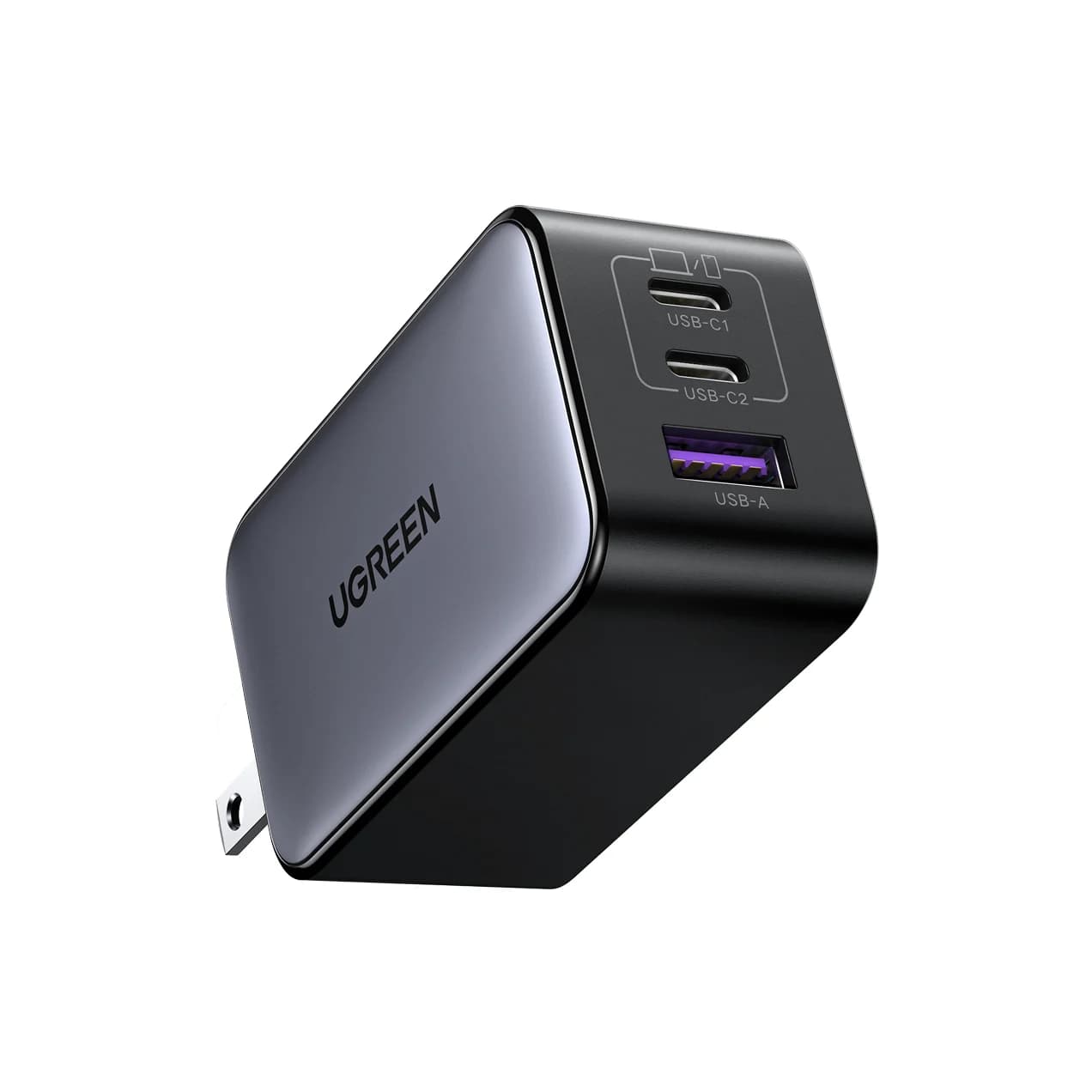
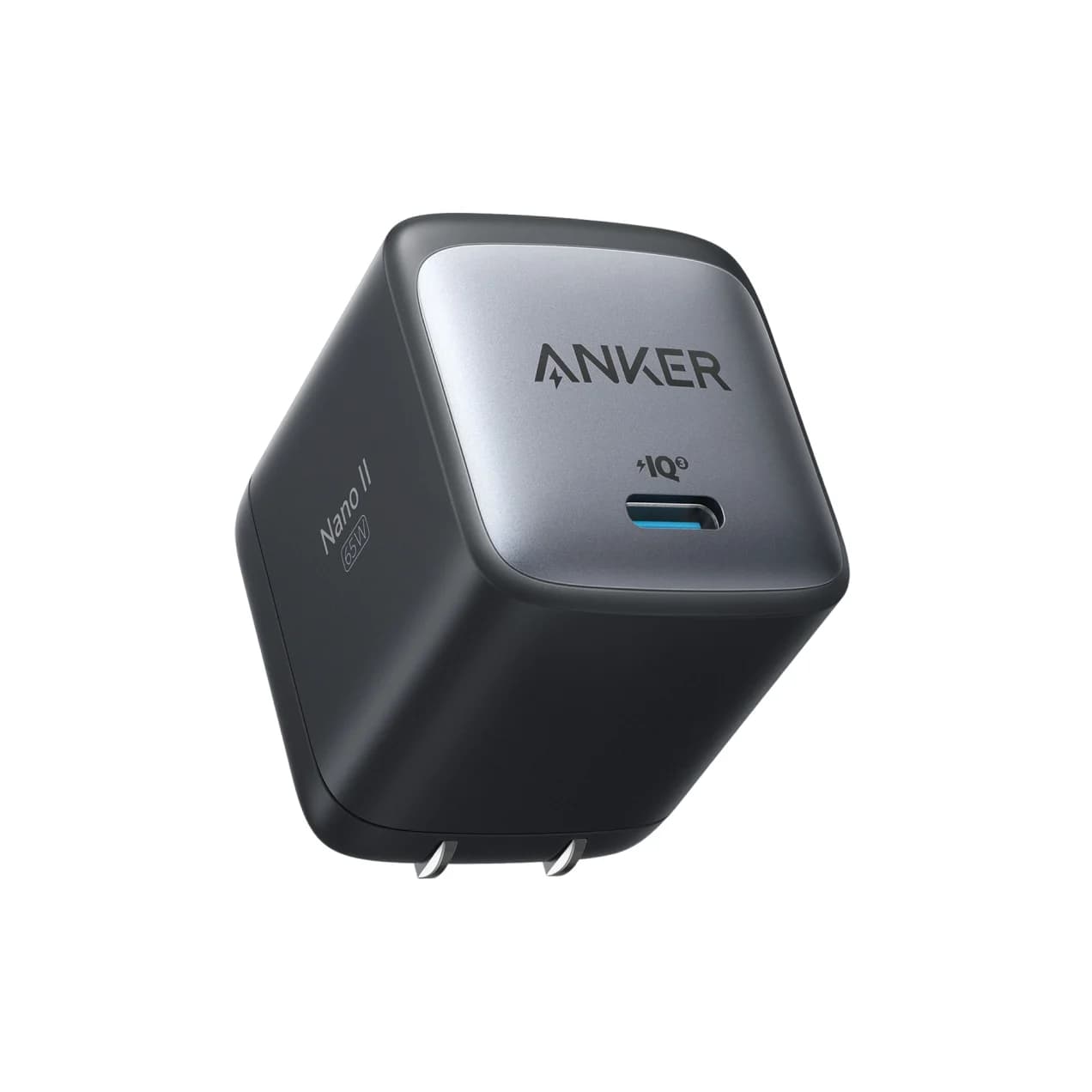
Anker 715 Nano II vs UGREEN Nexode 65W: MacBook Air Picks
Choose Anker 715 for a MacBook Air alone or UGREEN Nexode 65W for a laptop and phone. Compare shared power, exact models, cables and complete charging kits.
Updated November 8, 2026Read