Black Friday: the specs to check before you buy
Best picks
Updated November 3, 2026Credit-Card-Size Power Banks: Thin USB-C Picks and Wallet Fit
Short answer
For a small bag or roomy wallet compartment, Clutch Pro USB-C is our first wired pick: it combines a built-in cable with a 5,000mAh battery at a listed 0.32-inch thickness. Its 3.86 × 2.64-inch footprint exceeds a credit card's, so choose TravelCard Plus only after confirming its connector version if card-slot fit is essential. Nitecore POCKET 5 adds a spare USB-C port, while Anker Nano Slim A1665 is the alternative for charging on a compatible phone's back.
Our picks at a glance
Best phone-mounted wireless alternativeAnker
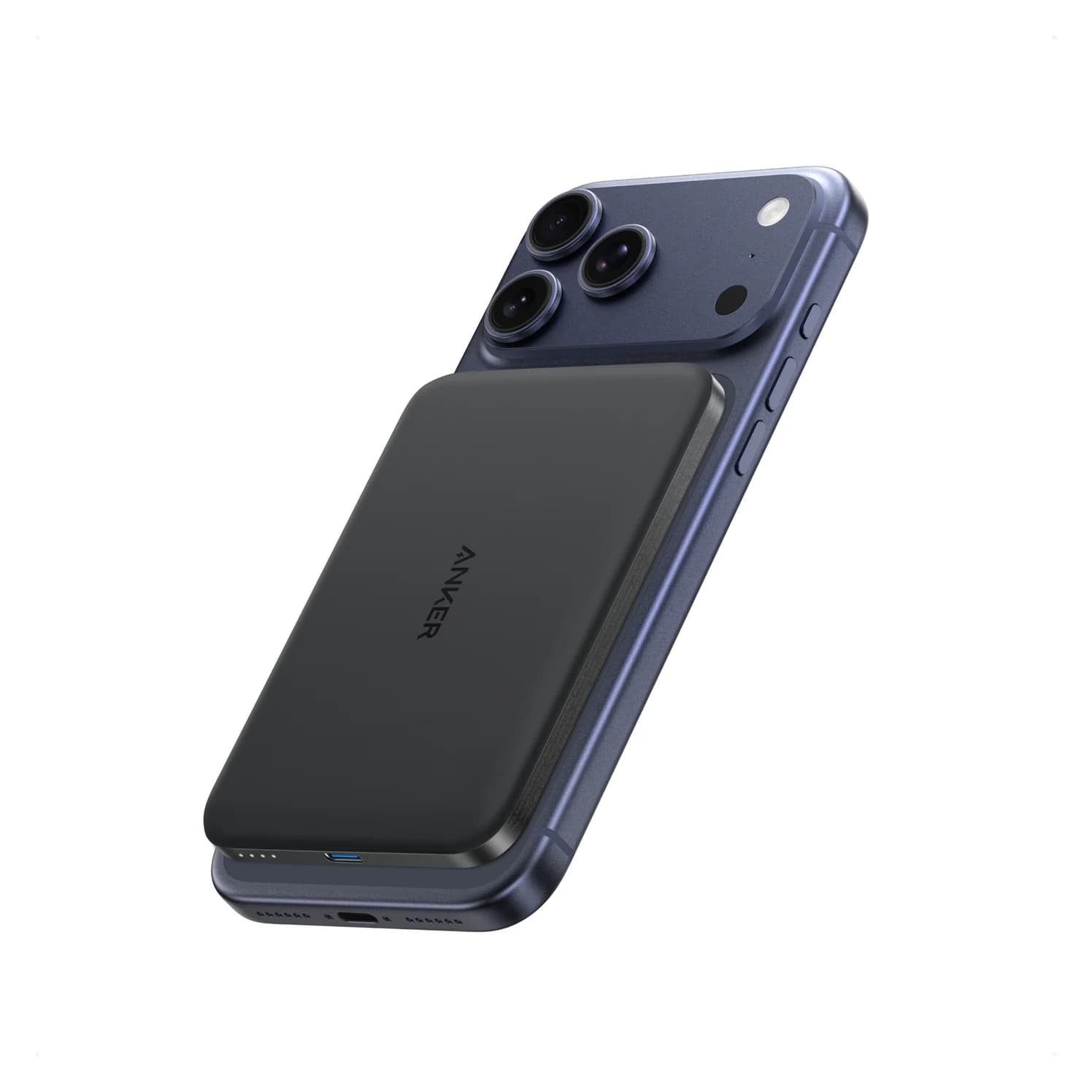
Anker Nano Power Bank (5K, MagGo, Slim)
- max output
- 20W
- port
- 1
- Choose
- The Anker Nano Power Bank (5K, MagGo, Slim), model A1665, offers up to 15W wireless or 20W USB-C charging; its footprint exceeds a credit card's.
- Limit
- 5,000mAh is a top-up, not a full recharge for large phones
Quick picks
| Your carry method | Choose | Why / purchase link |
|---|---|---|
| Small bag or roomy wallet compartment; integrated USB-C cable | Clutch Pro USB-C | Thinner than the other recommended banks here; see the USB-C model at Clutch |
| Pocket or small bag; integrated cable plus another connection | Nitecore POCKET 5 | Built-in USB-C cable and a USB-C port; see POCKET 5 at Nitecore |
| Attached to a compatible phone; wireless charging preferred | Anker Nano Power Bank (5K, MagGo, Slim), A1665 | Up to 15W wireless; check price on Amazon |
TravelCard Plus is a comparison candidate below, rather than an unconditional purchase pick: its connector ordering needs clarification. For more capacity choices, start with our power bank guide; this page concentrates on thin carry.
Compare the actual size, connector and output
All figures below are manufacturer specifications. Dimensions are length × width × thickness in inches. A standard card's footprint is 3.370 × 2.125 inches, also expressed as 85.6 × 53.98mm in the CFPB's card report; Santa Clarita's official transit-card guidance supplies the inch dimensions.
| Exact model | Dimensions, inches | Weight | Maker's battery capacity | Phone connection and maximum output |
|---|---|---|---|---|
| Clutch Pro USB-C | 3.86 × 2.64 × 0.32 | 3.7 oz | 5,000mAh | Built-in USB-C cable; output wattage not stated on its product page |
| Nitecore POCKET 5 | 4.02 × 2.76 × 0.35 | 125g ±5g / 4.41 oz ±0.1 oz | 5,000mAh, 19.35Wh | Built-in USB-C cable and USB-C port; up to 22.5W individually, 15W total when shared |
| Anker Nano Slim A1665 | 4.02 × 2.78 × 0.34 | 122g / 4.3 oz | 5,000mAh | Up to 15W wireless or 20W USB-C; separate cable for wired use |
| TravelCard Plus — confirm version | 3 3⁄8 × 2 1⁄8 × 0.18 | 77g / 2.7 oz | 3,500mAh, about 13Wh | FAQ describes separate built-in USB-C and Lightning versions; output wattage not established by the cited specs |
Sources: Clutch specifications, Nitecore specifications, Anker US specifications, TravelCard specifications and connector FAQ.
Source: TravelCard, Clutch, Anker US, Nitecore
Wallet verdict: TravelCard is closest to the card footprint on paper. The other models exceed both card dimensions; treat them as pocket or small-bag candidates, then check your own compartment. A thin bank can still be too wide for a card slot.
Best for thin wired carry: Clutch Pro USB-C
Choose this for a USB-C phone when avoiding a loose phone cable matters more than a documented fast-charge rating. Clutch specifies a metal case, battery-level LEDs and a built-in cable; it explicitly says the Pro does not charge wirelessly. Magnetic attachment holds the pack in place while the cable supplies power.
The product page lists 3.86 × 2.64 × 0.32 inches, 3.7 oz and 5,000mAh. However, Clutch's own Orlando travel article calls the Pro 6mm slim. Those thickness claims conflict. Its catalog metadata also lists 0.4 lb, rather than the product page's 3.7 oz. Our table uses the product-page figures as manufacturer claims; confirm thickness and weight with Clutch if either is critical.
Order Pro USB-C, rather than relying on the brand name. The official catalog identifies the black USB-C variant as CP-BA-5000. Clutch's Pro Lightning page is a separate option for iPhone 14 and earlier. A recharging connector on the bank is a different question from which plug reaches the phone.
The box list includes a USB-A-to-USB-C cable and magnetic ring, and Clutch estimates roughly two hours to recharge the bank. Check that you have a power source for that recharging cable. We would not choose it specifically for charging speed: its product page does not publish an output wattage.
Best with a built-in cable and spare port: Nitecore POCKET 5
POCKET 5 is the wired alternative if you want both an integrated USB-C cable and a USB-C socket. Nitecore specifies 102 × 70 × 9mm and 125g ±5g. It is a larger footprint than Clutch, so choose it for the extra connection and published electrical ratings, rather than a tighter wallet fit.
Nitecore rates either connection at up to 22.5W output, with 18W input for recharging. The highest output profile is 10V at 2.25A; a 9V at 2.22A profile is also listed. Those are maximum supported profiles, not a promise that every phone will accept the headline wattage. When sharing the outputs, the published total is 15W.
Its manual describes recharging through the built-in cable or the USB-C port. That gives you a useful choice of connection to your existing adapter. The package list includes a magnetic ring; the listed phone-charging methods are wired.
There is also unusually helpful capacity disclosure: 5,000mAh at 3.87V (19.35Wh) for the battery, and 3,400mAh at 5V as rated output. Use those as manufacturer ratings, not a measured phone-recharge result.
Best phone-mounted wireless alternative: Anker Nano Slim A1665
Anker
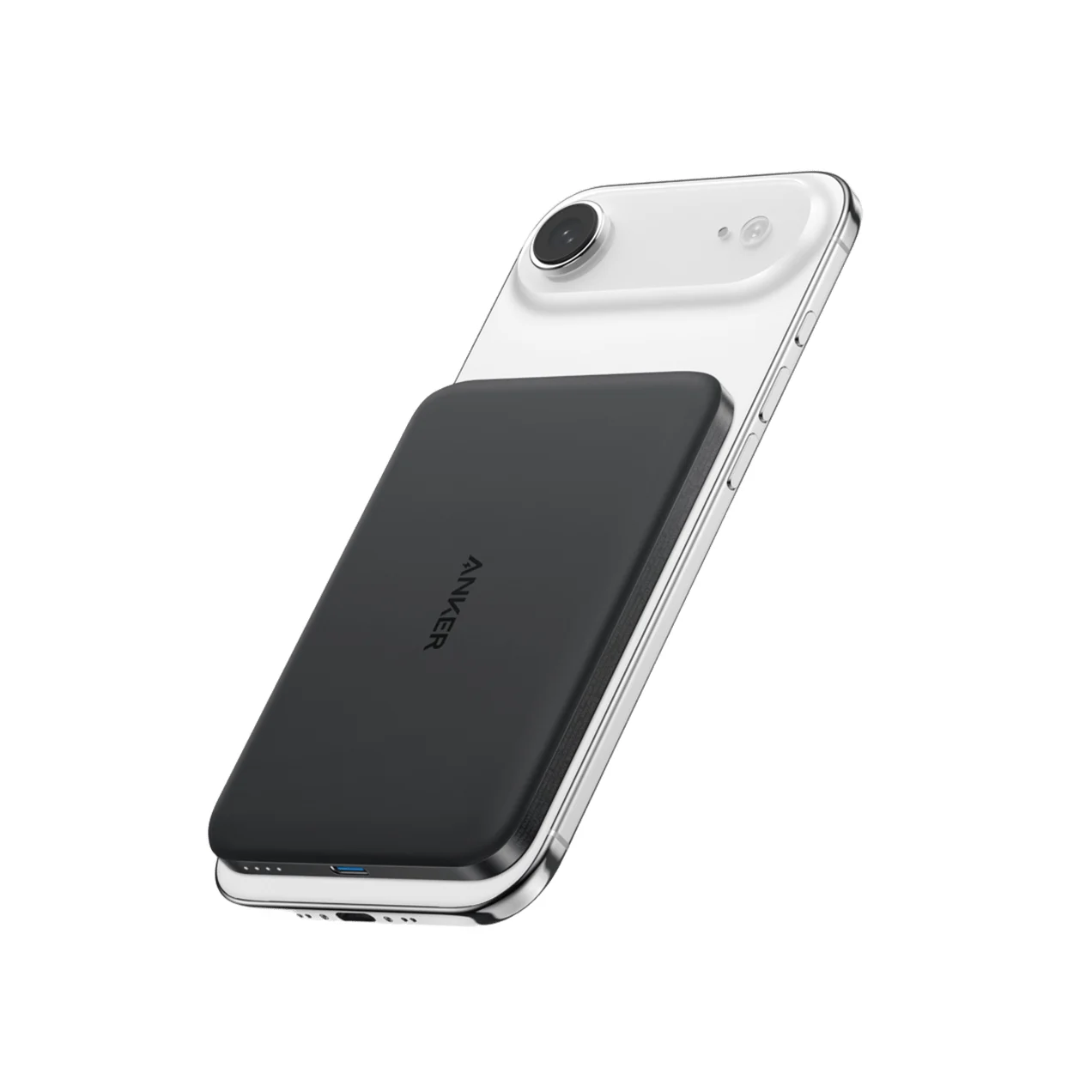
Anker Nano Power Bank (5K, MagGo, Slim)
An 8.6mm-thin 5,000mAh magnetic power bank with Qi2-certified 15W wireless charging and a 20W USB-C port.
- 20W max output
- 1 port
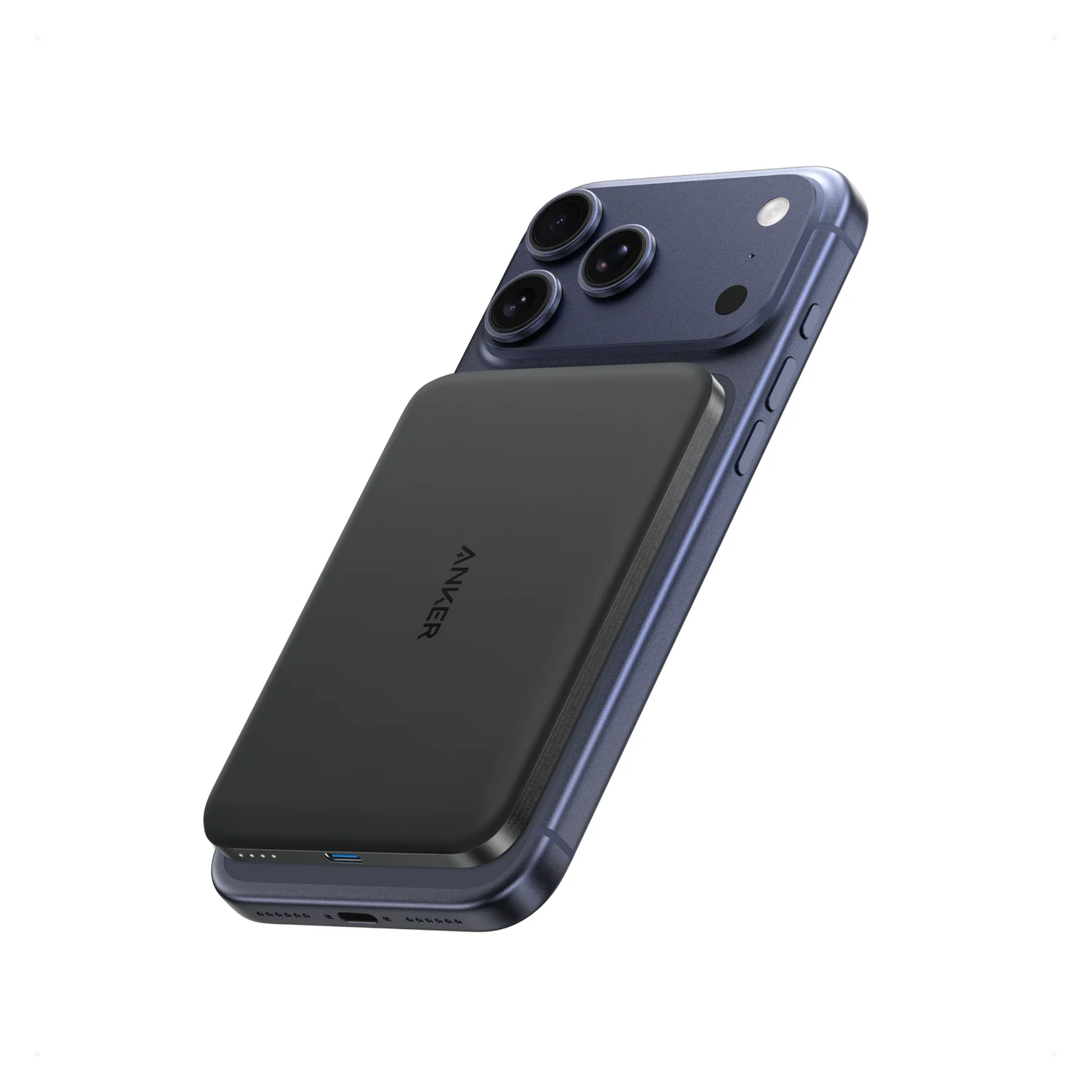
Choose the Anker Nano Power Bank (5K, MagGo, Slim), model A1665, when the pack will ride on a compatible phone. Anker lists 15W maximum wireless and 20W USB-C charging and recharging, with a USB-C-to-USB-C cable included. Our MagSafe power bank guide covers more phone-mounted choices.
The US specifications give 102 × 70.6 × 8.6mm, or 4.02 × 2.78 × 0.34 inches, and 122g. Anker's UK description also says 7.6mm, although its specification table gives 8.6mm. Use the US dimensions for this comparison and resolve that discrepancy before buying for a precise fit.
Check compatibility carefully. Anker's US page names iPhone 17 and Google Pixel 10 support, but also retains an older restriction to MagSafe-capable iPhone 12 through 16. It warns against cases thicker than 2.5mm and says cards and metal attachments interfere with charging. Confirm your exact phone and case if the conflicting lists leave it unclear, and remove a phone wallet before wireless charging.
TravelCard Plus: closest card footprint, unresolved ordering
TravelCard's current product page lists 3 3⁄8 × 2 1⁄8 × 0.18 inches, 2.7 oz (77g) and 3,500mAh (about 13Wh). Its footprint is much closer to a card than the recommended banks above, making it the candidate to investigate for a wallet compartment.
The catch is choosing the connector. Its FAQ describes separate Lightning and USB-C versions, while the storefront's selector lists colors. The specifications' broad “Lightning, USB-C, Micro-USB” compatibility line does not establish that one unit includes every connector. Ask TravelCard for the exact USB-C ordering option, output rating and recharging kit before paying. Until that mapping is clear, we would not substitute a generic marketplace listing for an exact model.
Buying advice: fit, connection and usable capacity
Check the loaded wallet. Make an outline of the published length and width, add a spacer representing thickness, and try it in the compartment with your usual cards. Use the product dimensions, not a photograph of a bank beside a card. If it needs force to close, choose a pocket or small bag instead.
Separate attachment from charging. Clutch explicitly rules out wireless charging; POCKET 5's manual describes wired charging; Anker offers wireless charging. Choose the charging method first, then decide whether magnetic attachment helps your carry routine.
- Yes: Clutch Pro USB-C: built-in cable for a USB-C phone
- Yes: Clutch Pro Lightning: separate model for a Lightning phone
- Yes: Nitecore POCKET 5: built-in USB-C cable or its USB-C port
- Partly: Anker Nano Slim: wireless compatibility depends on phone and case
- No: Magnetic attachment alone: does not establish wireless charging
Budget for a top-up. Anker explains that conversion losses reduce usable capacity; Nitecore's separate battery and output ratings show why simply dividing the printed mAh by a phone's battery label is misleading. Neither figure establishes how much battery percentage you will gain while using the phone. If finishing the day depends on a full recharge, choose a larger bank with a documented allowance for your phone.
Compare the complete kit at checkout. Include any adapter or recharging cable you need, shipping and tax. Clutch lists a USB-A-to-USB-C recharging cable; Anker includes USB-C-to-USB-C and recommends a charger rated 20W or higher with a 3A cable for optimal recharging. For a gift, check the recipient's existing adapter as well as the phone connector.
Identify the exact phone
Match the integrated cable or confirm wireless compatibility.
Check the carry space
Compare length, width and thickness against the loaded compartment.
Confirm the complete order
Verify model, connector, pack quantity, included cables and final checkout total.
How we choose
This is a specification-based comparison, without physical product testing. We prioritize the maker's dimensional tables, exact connector descriptions, manuals, output profiles and box contents. Where official pages conflict, we name the discrepancy instead of turning marketing copy into a precise fit or performance guarantee. Missing output ratings stay unknown, and a manufacturer's battery label is not treated as a phone-recharge measurement.
Verdict
Choose Clutch Pro USB-C for thinner wired carry after checking its footprint; choose Nitecore POCKET 5 for the integrated cable plus spare USB-C port. Choose Anker A1665 for compatible phone-mounted wireless charging. If an ordinary card compartment is the requirement, investigate TravelCard Plus, confirm the connector directly, and check the loaded-wallet fit before ordering.
Frequently asked questions
What is the best credit card sized power bank charger?
For a small bag or roomy wallet compartment, our first wired pick is Clutch Pro USB-C: it has an integrated cable, a 5,000mAh battery and a listed thickness of 0.32 inches. It exceeds a credit card's footprint. TravelCard Plus is closer to a card's length and width, but confirm the connector version before ordering; its FAQ describes separate Lightning and USB-C models.
Will a credit-card-size power bank fit in a normal wallet?
Check the compartment, rather than trusting the description. A standard card footprint is 3.370 by 2.125 inches, while Clutch Pro measures 3.86 by 2.64 inches before considering thickness. TravelCard Plus lists a thickness of 0.18 inches. Make a paper outline and a spacer of the published thickness, and check that your loaded wallet closes without forcing it.
Does a magnetic power bank charge wirelessly?
Check the charging method separately from attachment. Clutch explicitly describes its Pro as a built-in-cable charger without wireless charging. Nitecore POCKET 5 provides magnetic attachment and wired USB-C connections. Anker Nano Slim A1665 is the wireless alternative here, with up to 15W wireless output. Adding an attachment ring does not change which charging connections a bank provides.
Will a 5,000mAh power bank fully charge my phone?
Do not assume a full recharge from the label alone. Nitecore rates POCKET 5's battery at 5,000mAh at 3.87V, but its output rating is 3,400mAh at 5V. Those are different quantities at different voltages. Anker also explains that conversion losses reduce usable capacity. Treat these banks as emergency top-ups unless the maker documents a full recharge for your exact phone and conditions.
Should I buy a USB-C or Lightning credit-card charger?
Match the built-in cable to the phone's charging socket. Clutch lists its Pro USB-C for USB-C devices, including iPhone 15 through 18, and its separate Pro Lightning for iPhone 14 and earlier. TravelCard's FAQ also describes separate connector versions. For a gift, establish the recipient's exact phone model before choosing; a USB-C socket used to recharge a bank does not establish its built-in phone connector.
Related guides
Baseus PicoGo Qi2 5K vs UGREEN MagFlow 5K: The Honest Answer in 2026
No UGREEN MagFlow 5K exists — the real Qi2 5K showdown is Baseus PicoGo vs Belkin BoostCharge Pro 10K. Here are the picks, specs, and gotchas.
Updated November 5, 2026Read
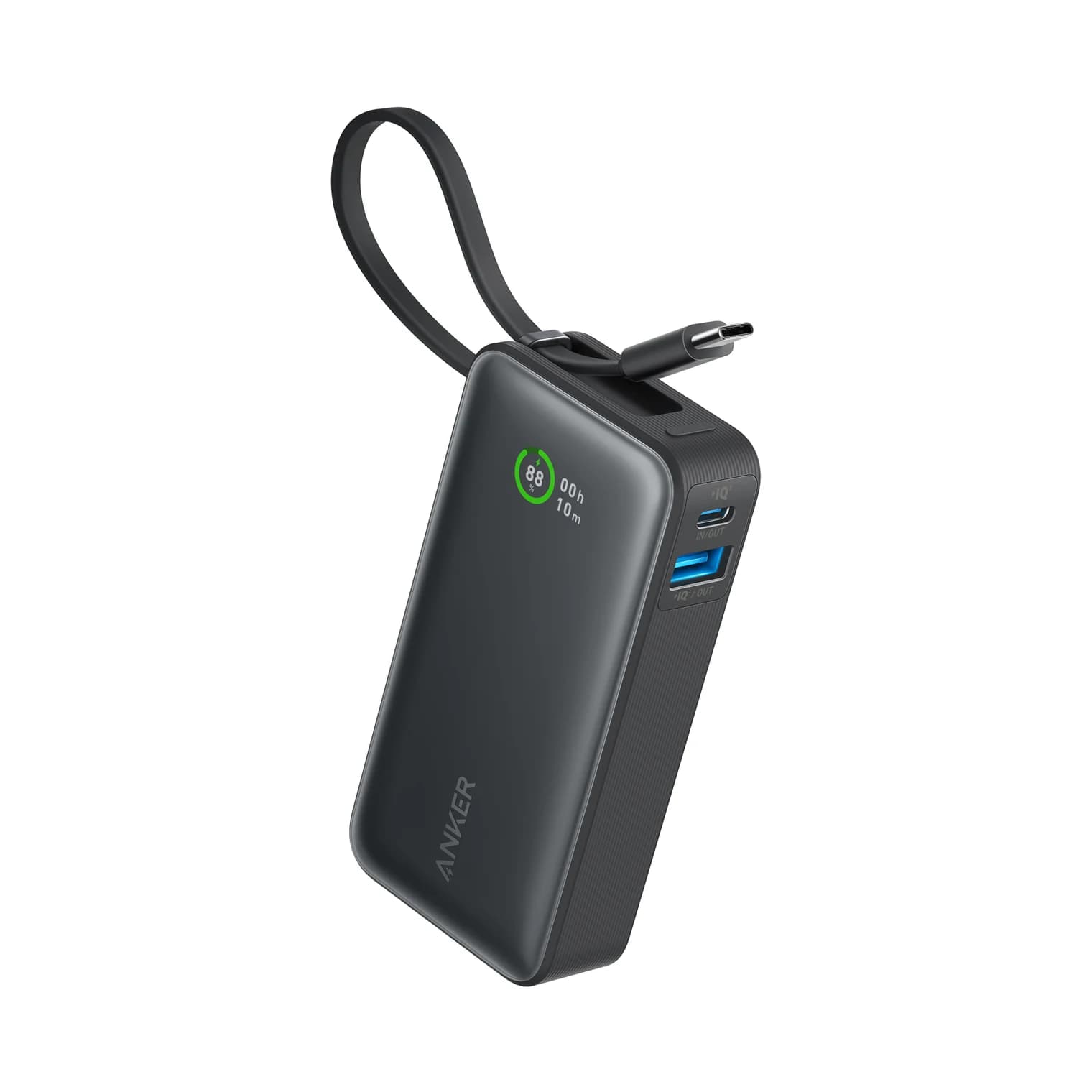
Anker Zolo 10K Power Bank Review: A1688 vs the Nano 10K
Anker Zolo 10K vs Nano 10K: compare built-in cable length, 30W charging, shared output, refill speed and the complete kit, from the makers' own documents.
Updated November 5, 2026Read
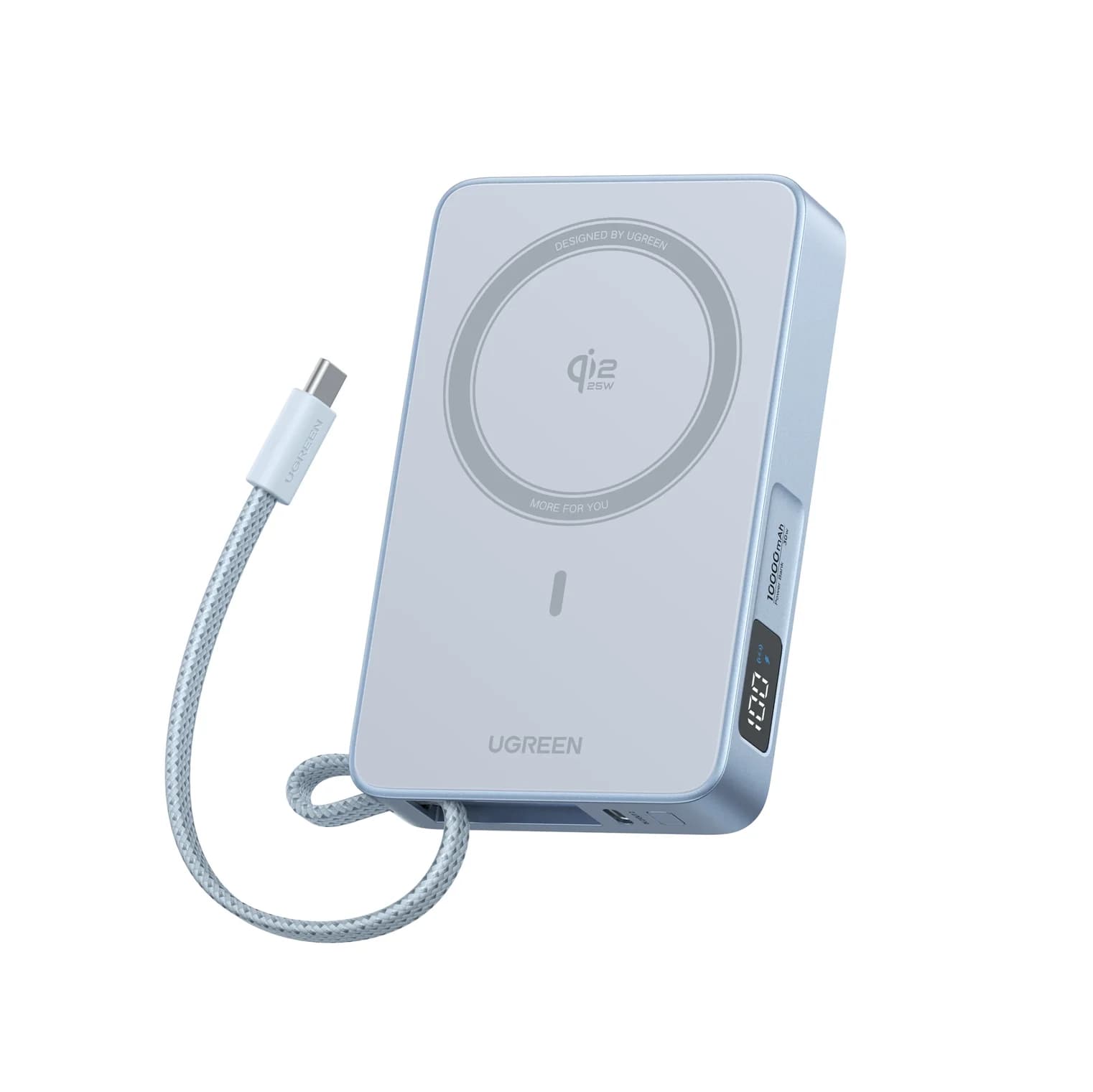
Anker Nano MagGo Slim 5K vs UGREEN MagFlow 10K: Which Magnetic Power Bank?
The Anker MagGo Slim 5K is the 8.6 mm pocket card; the UGREEN MagFlow 10K adds Qi2 25W and a built-in cable. Exact specs, phone fit and honest capacity.
Updated November 5, 2026Read