Black Friday: the specs to check before you buy
Comparison
Updated November 4, 2026Satechi 145W vs Anker Prime 100W: Which Travel Charger to Pack?
Short answer
For travel with a laptop and phone charging together, our pick is the Satechi 145W USB-C 4-Port GaN Travel Charger: its manual specifies 100W + 45W on PD1 + PD3, and its travel kit includes US, EU, UK and AU heads. Choose the Anker Prime 100W A2688 if its 65W + 35W shared USB-C output is enough and you prefer its smaller published dimensions. The deciding number is the laptop allocation while sharing, alongside the plugs and cables you actually need to pack.
Our picks at a glance
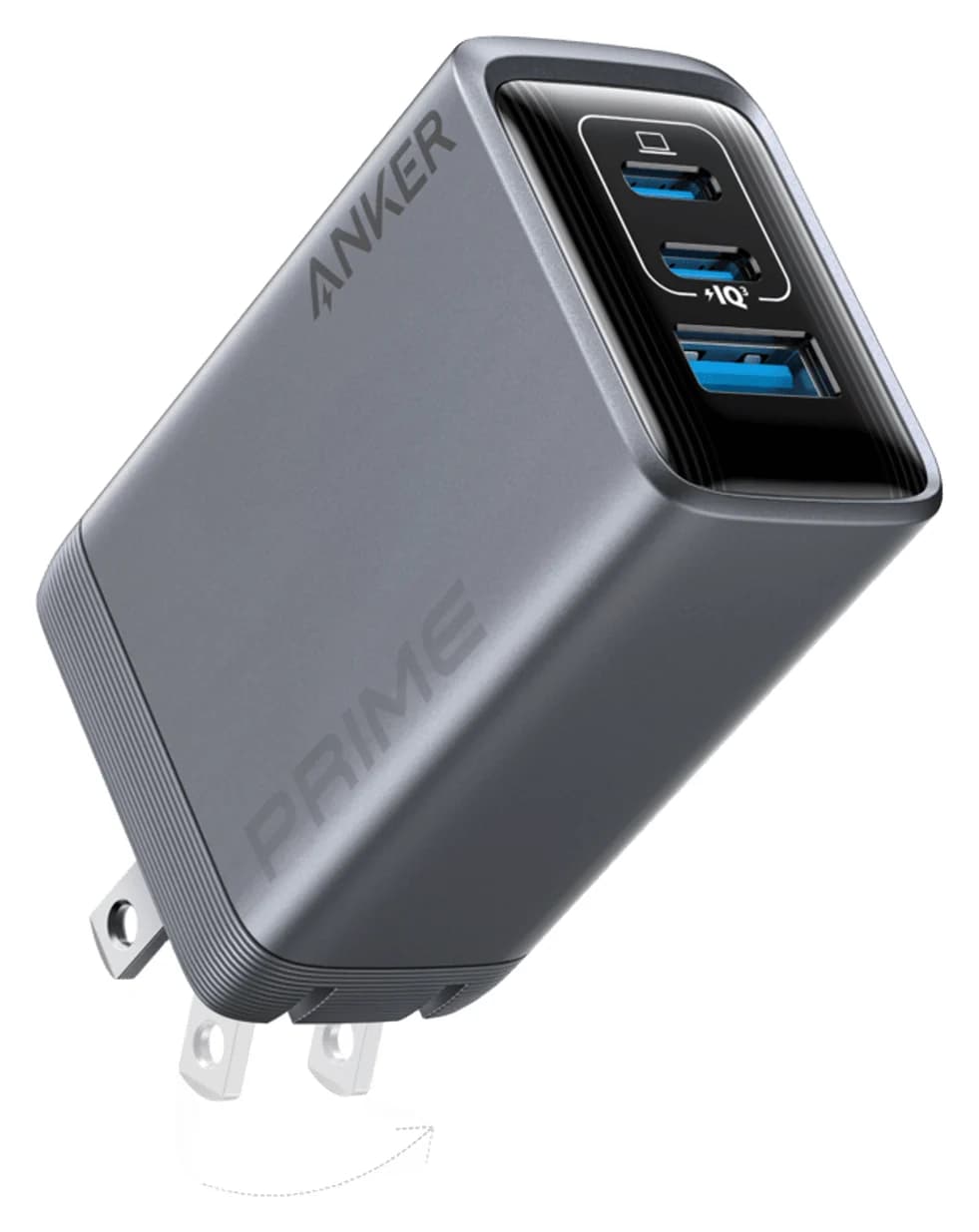
Best compact alternativeAnker
Anker Prime Charger (100W, 3 Ports, GaN)
- max output
- 100W
- ports
- 3
- Choose
- Anker A2688 supplies 65W + 35W across USB-C and has smaller published dimensions than Satechi.
- Limit
- Needs a 5A e-marked cable to deliver more than 60W
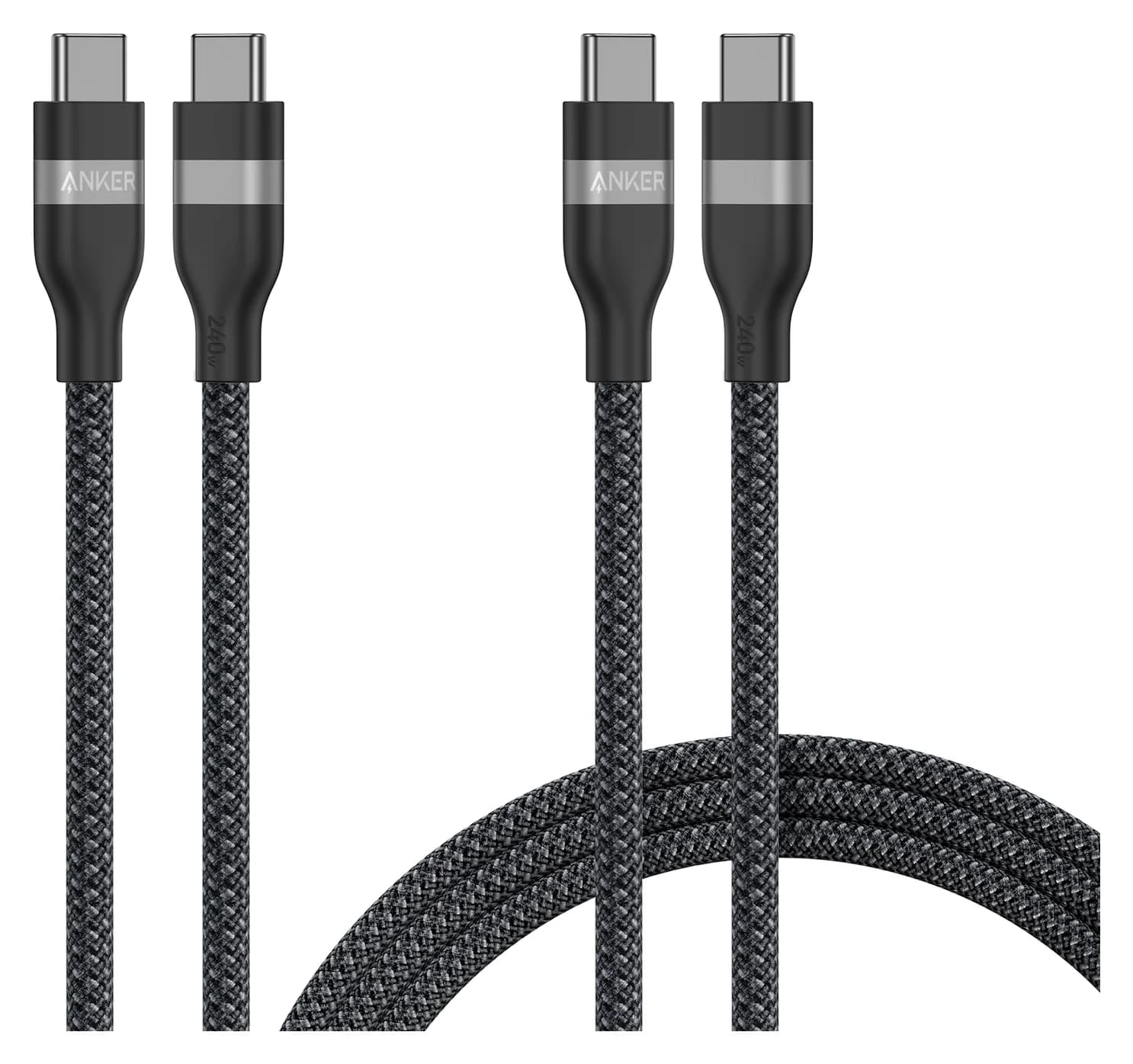
Optional cable pairAnker
Anker USB-C to USB-C Cable (3 ft / 6 ft, 240W, Upcycled-Braided, 2-Pack)
- power rating
- 240W
- data
- 480 Mbps
- ends
- USB-C to USB-C
- Choose
- Anker A82E2 cables are rated for 240W; the mixed two-pack provides 3 ft and 6 ft lengths.
- Limit
- 480Mbps data only; slow for SSDs
Quick picks
| Pick | Choose it for | Buy the correct kit |
|---|---|---|
| Satechi 145W travel charger | A laptop needing more power while a phone charges | Travel heads and pouch included; cables separate |
| Anker Prime 100W A2688 | Smaller published size; modest shared laptop load | Allow for destination plug adapters and cables |
| Anker A82E2 cable pair | Optional charging cables for either basket | Match the mixed-length two-pack |
Satechi vs Anker: the exact comparison
These are the manufacturers’ published figures: Satechi product page and manual, plus Anker’s product page and support specifications.
| What matters | Satechi 145W travel charger | Anker Prime A2688 |
|---|---|---|
| Product identification | Storefront: CT-W145C2; support manual: ST-W145GTM — see caveat below | A2688; standalone charger |
| USB ports | 4× USB-C; no USB-A | 2× USB-C + 1× USB-A |
| One USB-C device | Up to 140W on PD1 or PD2 | Up to 100W on USB-C1 or USB-C2 |
| Laptop + USB-C phone | 100W + 45W on PD1 + PD3 | 65W + 35W on USB-C1 + USB-C2 |
| AC input | 100–240V, 50/60Hz, 2.2A max | 100–240V, 50–60Hz, 2.1A |
| Included travel hardware | US default head, EU, UK, AU heads; mesh pouch | Folding plug; budget destination adapters separately |
| Charging cables | Sold separately | Sold separately |
| Published dimensions | 3.81 × 3.03 × 1.22 in | 1.7 × 1.1 × 2.7 in; excludes prongs |
| Published weight | 346.5 g; kit-weight baseline unclear | 170 g; external adapter and cables additional |
Best for sharing: Satechi 145W travel charger
Buy Satechi when keeping a laptop near its full charging requirement matters more than minimizing the charger’s size. Its useful pairing is a laptop on PD1 and a phone on PD3 or PD4: up to 100W for the laptop and 45W for the phone. Putting both devices on PD1 and PD2 instead gives 65W + 65W.
Check the model code before ordering: Satechi’s storefront lists CT-W145C2, while its linked support manual identifies ST-W145GTM. The storefront also summarizes two-device charging as “up to 100W”; the manual provides the explicit 100W + 45W pairing used here. We cannot confirm a hardware-revision equivalence from those conflicting codes; match the labeled unit, supplied heads and its manual before relying on this port map.
Check the travel kit at Satechi.
Best compact alternative: Anker Prime 100W A2688
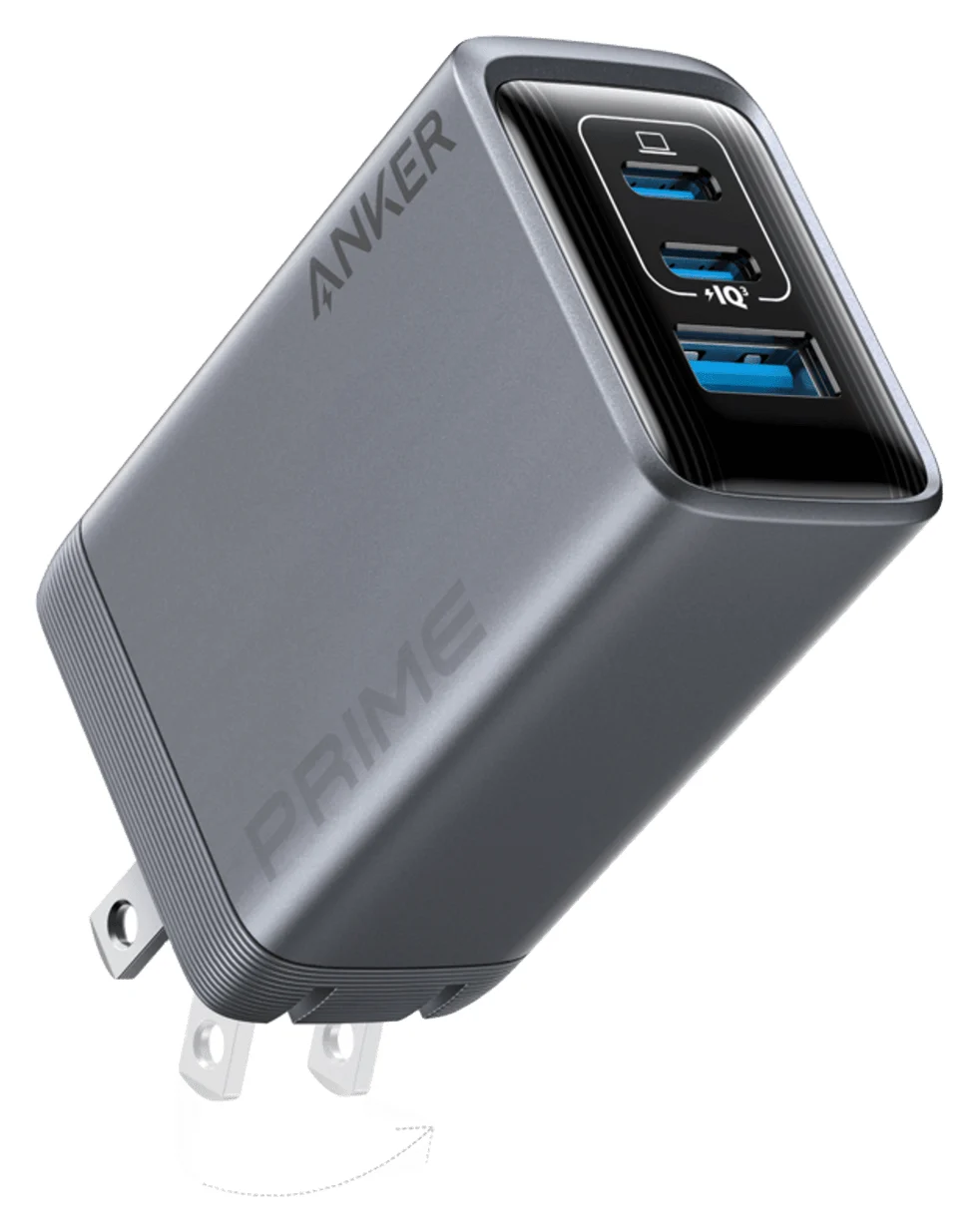
Anker
Anker Prime Charger (100W, 3 Ports, GaN)
A 100W GaN wall charger with two USB-C ports and one USB-A port and a foldable plug.
- 100W max output
- 3 ports
Anker is our choice for a laptop whose shared charging requirement fits within 65W, particularly if you already own the destination adapter. It gives either USB-C port up to 100W alone, but connecting a USB-C phone changes the split to 65W + 35W. Use the upper USB-C1 port for the laptop, as Anker advises.
The A2688 model code matters: Anker also documents an A2343 Prime 100W charger. Use this page’s outputs for A2688, and confirm the regional plug and whether the offer adds cables. The standalone A2688 is sold without charging cables.
Connect the devices to the right ports
For single-port charging, Satechi PD1/PD2 and Anker USB-C1/USB-C2 list 5V, 9V and 15V at up to 3A, plus 20V at up to 5A. Satechi’s larger ports add 28V at 5A for 140W; PD3/PD4 top out at 45W, including 20V at 2.25A. These are available ceilings: USB Power Delivery lets a device take the power it needs, so a 45W allocation does not guarantee a phone charges at 45W.
| Connected load | Satechi port allocation | Anker A2688 port allocation |
|---|---|---|
| Laptop and phone | PD1 + PD3: 100W + 45W | USB-C1 + USB-C2: 65W + 35W |
| Both larger USB-C ports occupied | PD1 + PD2: 65W + 65W | USB-C1 + USB-C2: 65W + 35W |
| Laptop and two accessories | PD1 + PD3 + PD4: 100W + 25W + 20W | All ports: 89W total; one accessory must use USB-A |
| All four USB-C ports | PD1 + PD2 + PD3 + PD4: 65W + 30W + 25W + 20W | Only two USB-C ports available |
| USB-A phone beside laptop | No USB-A port; change cable or charge separately | USB-C1 + USB-A: 65W + 22.5W |
Port allocations come from the Satechi manual and Anker support table. Anker’s USB-C2 + USB-A pairing is only 12W + 12W; keep a laptop off that pair. Its support page also contains loose “100W” multi-device wording, but the explicit all-port specification is 89W; that is the figure used here.
Source: Satechi manual, Anker support
For its 140W MacBook Pro setup, Satechi specifically calls for MagSafe 3. Satechi’s 140W mode requires a single connected device on PD1 or PD2. See its cable note and manual.
Plugs, voltage and what the packed size means
Both chargers accept 100–240V at 50–60Hz. For a US-to-UK-and-continental-Europe itinerary, Satechi supplies UK and EU heads; budget suitable separate destination adapters for the US Anker version. Check the actual destination socket: the “EU” label is not a guarantee of fit at every stop. Electrical Safety First advises checking socket types before travel.
These are USB chargers; neither listed port layout provides an AC outlet for other appliances. Travel plug adapters do not convert voltage or frequency. If you also pack a separate grounded appliance, choose an adapter suitable for its earth connection and power rating.
For packing, Anker’s published dimensions exclude its prongs. Satechi lists adapter and pouch weights separately without clearly defining whether its headline weight includes them, so we do not calculate a complete-kit weight. Compare the charger, required heads or adapters, pouch and cables together; the published charger figures alone leave those kit differences unresolved.
Optional charging cables: Anker A82E2 two-pack
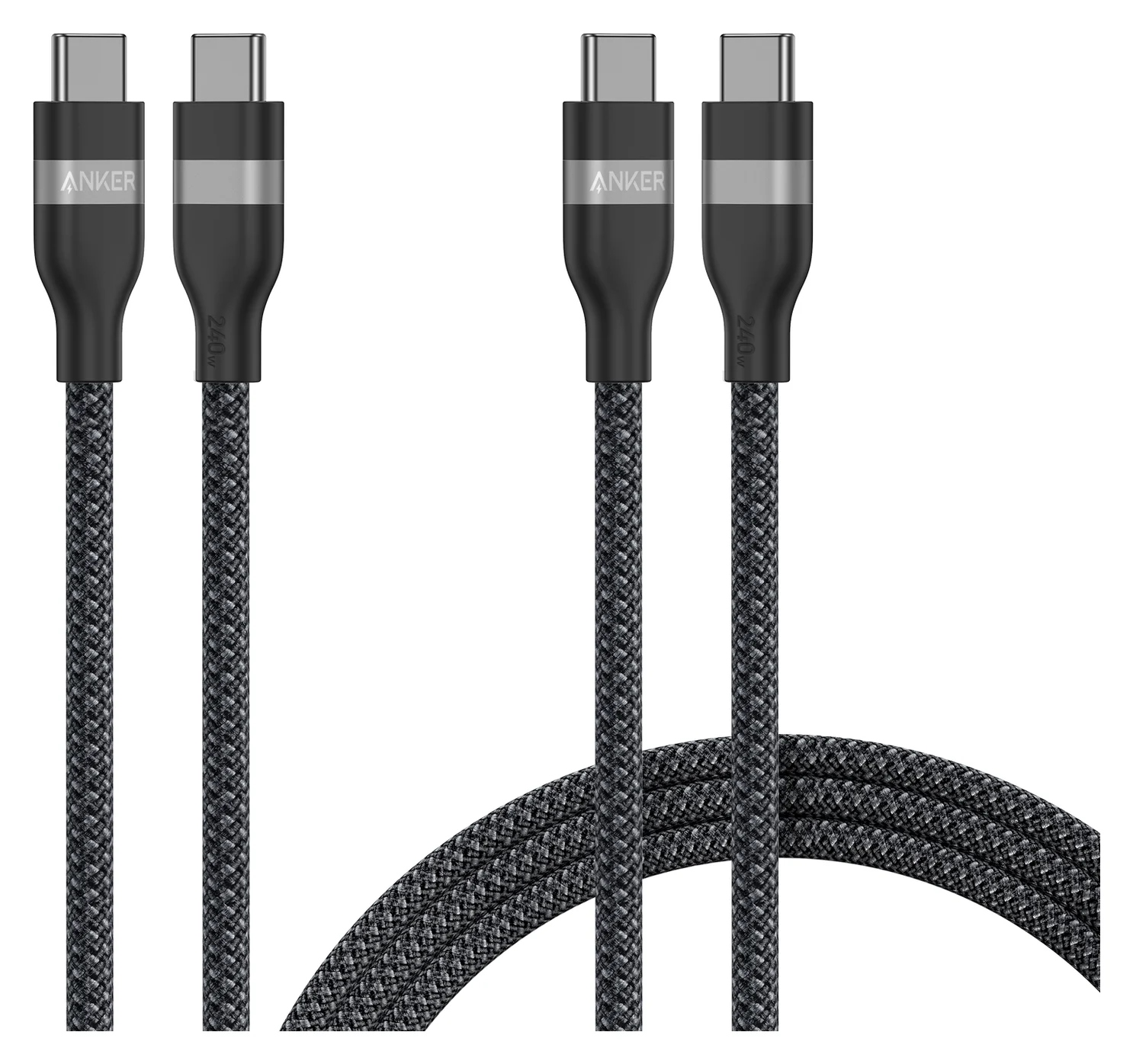
Anker
Anker USB-C to USB-C Cable (3 ft / 6 ft, 240W, Upcycled-Braided, 2-Pack)
A two-pack of braided USB-C to USB-C charging cables (3 ft and 6 ft) rated for up to 240W.
- 240W max output
- 0.48 Gbps data
Neither standalone charger supplies the device cables. For a 100W laptop connection, use a suitable 5A e-marked USB-C cable; a cable rated only for 60W cannot supply 100W. A new 240W-rated USB-C cable is a sensible shared-kit choice, although it cannot increase Anker’s 100W output ceiling.
Anker’s A82E2 is rated for 240W and offers 480Mbps data, with no screen mirroring. The two-pack page offers mixed 3 ft / 6 ft lengths as well as same-length pairs; check the selector against the pack you want. Reuse suitable cables you already own, and add the appropriate device cable or charging puck for accessories that do not connect directly by USB-C.
Compare complete travel kits before buying
For a laptop and USB-C phone connected together, plan two device cables in either basket. The Satechi basket is the charger kit plus any missing cables; the Anker basket adds whichever destination plug adapters you lack.
Our deal threshold: when the load fits Anker’s shared allocation, choose Anker if its complete basket is cheaper and compactness matters most. At equal complete-kit cost, choose Satechi if you value its extra USB-C sockets and supplied travel heads. If the laptop needs more power while sharing, choose by the port table first; a cheaper basket does not make the allocations interchangeable.
Check the live model, seller, regional plug, pack contents and delivered checkout total together; use the same cable requirements on both sides.
Match the sockets
Select the required Satechi heads or Anker destination adapters.
Match the load
Choose the port combination that covers the laptop while the phone charges.
Match the cables
Reuse suitable cables, then add only what the devices require.
How we choose
This is a documentation-based comparison, reviewed on 3 November 2026. We use the manufacturers’ model-specific specifications and manuals, USB-IF guidance and Electrical Safety First’s travel advice. Recommendations are editorial judgments from those limits; they do not establish measured charging times, temperatures or socket grip. Conflicting manufacturer wording is identified above.
For other configurations, start with our best travel chargers. Our USB Power Delivery explainer and USB-C cable types guide explain the standards and cable labels.
Verdict
Pack Satechi for the laptop-and-phone trip where keeping up to 100W available to the laptop while the phone has up to 45W justifies the larger published size. Pack Anker A2688 when 65W + 35W sharing meets your needs and the smaller charger plus your destination adapter makes the better kit. Budget cables for either, and confirm Satechi’s conflicting model codes before ordering.
Frequently asked questions
Which is better for a laptop and phone together?
Choose Satechi if the laptop needs more than 65W while the phone charges: its PD1 + PD3 pairing supplies up to 100W + 45W. Anker A2688 supplies up to 65W + 35W across its USB-C ports. Those are available allocations, not guaranteed device draw. For a lighter load, Anker's smaller published dimensions make it our compact pick.
Can the Satechi 145W charger give one laptop 145W?
No. Satechi specifies up to 140W from PD1 or PD2 when a single device is connected. Its 145W headline is a shared total, achieved by combinations such as 100W + 45W. Connecting all four devices changes the allocation to 65W + 30W + 25W + 20W, with a 140W combined maximum.
Does Anker Prime A2688 need a travel adapter?
If its plug does not fit the destination socket, yes. This comparison budgets a separate destination adapter for the US plug version. A2688 accepts 100–240V at 50–60Hz, so check socket fit and the adapter's ratings. A travel adapter changes the connection; it does not convert voltage or frequency. Satechi includes US, EU, UK and AU heads.
Do either of these chargers come with USB-C cables?
Neither standalone charger includes charging cables, according to the manufacturers. Budget a cable for each device you intend to connect at once. Anker calls for an E-Marker cable for optimal 100W charging, while Satechi also asks for certified eMark cables. Anker A82E2 is an optional 240W USB-C cable; check the pack's lengths before buying.
Is every Anker Prime 100W charger the A2688?
Check the model code, not only the Prime 100W name. Anker documents A2688 and a separate A2343 under similar names. The outputs on this page belong to A2688, including its 65W + 35W USB-C split and 89W total with all ports occupied. Confirm the model, regional plug and bundle contents before checking out.
Related guides
Best Wireless Chargers in 2026: Qi2 Stands, Pads and 3-in-1 Stations
The best Qi2 wireless chargers of 2026, from maker spec sheets: 15W MagGo stands, foldable 3-in-1 stations, a Galaxy pad, and the adapter wattage each one needs.
Updated November 7, 2026Read
Anker Prime A2688 vs Satechi 100W Charger: Which to Buy?
Anker Prime A2688 vs Satechi 100W Compact GaN: exact port splits, sizes, cables and travel plugs from the makers, and which kit fits your laptop.
Updated November 5, 2026Read
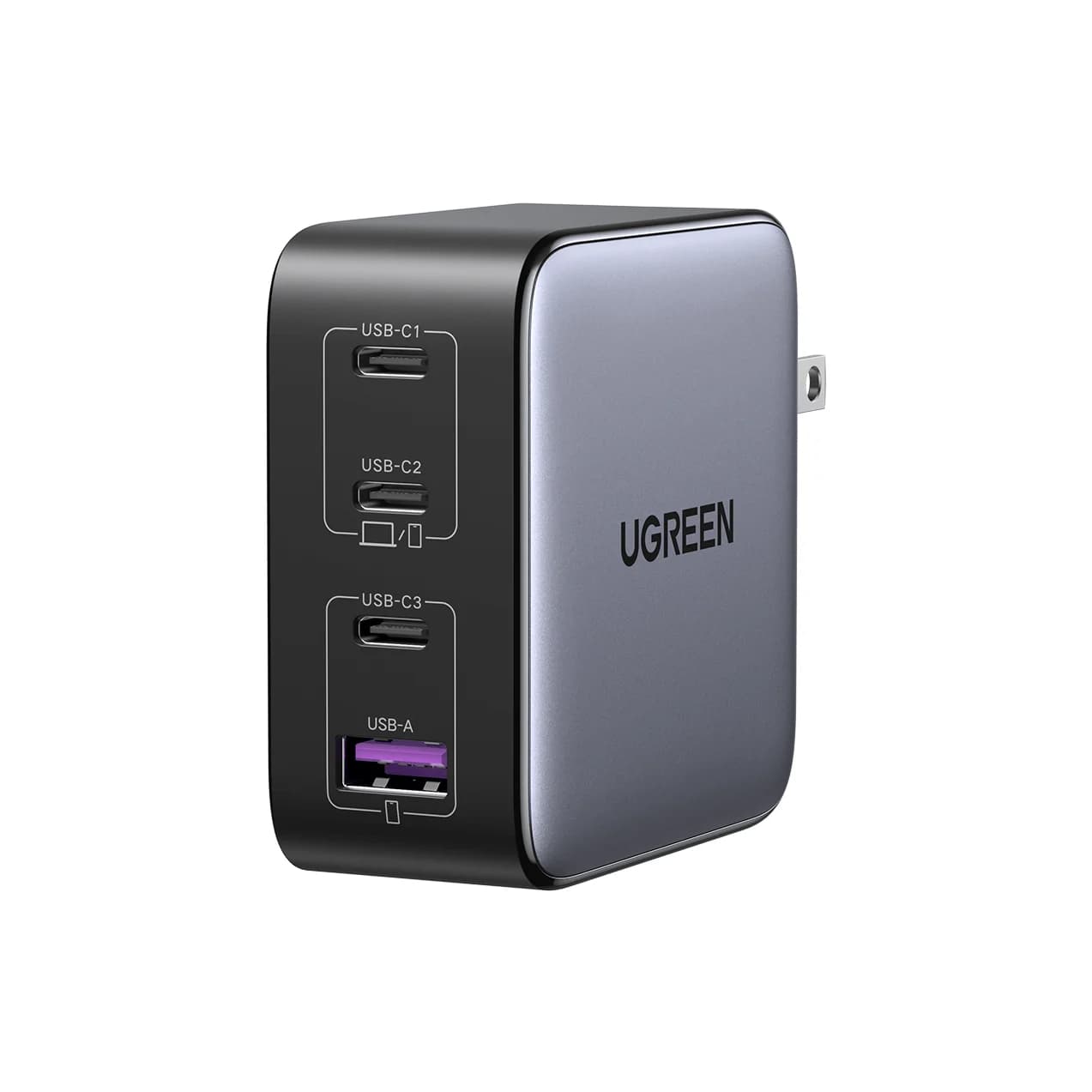
Satechi 145W vs Anker Prime Fusion: The Four-Port Travel Charger Match
Satechi 145W vs the Prime Fusion-class pick: real port splits for one or two laptops plus phones, plug kits, cables and which complete travel kit wins.
Updated November 5, 2026Read