Black Friday: the specs to check before you buy
Comparison
Updated November 5, 2026Solid-State vs Standard Power Banks: Is the Upgrade Worth Buying?
Short answer
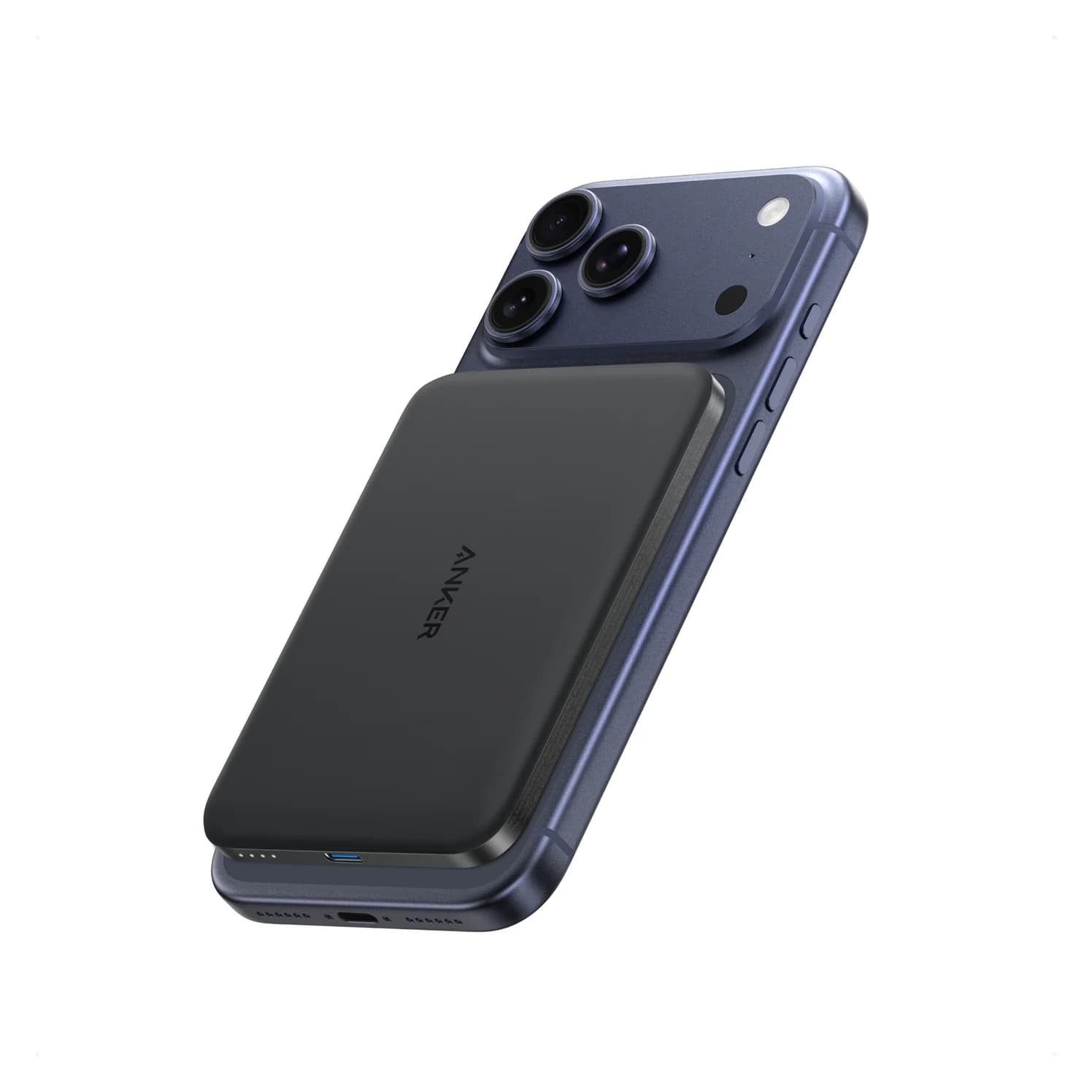
For most phone owners, the Anker Nano Power Bank (5K, MagGo, Slim), A1665, is our default: it matches the original BMX SolidSafe 5K's up-to-15W wireless and 20W USB-C output in a thinner body. Choose the original SolidSafe 5K for its LCD and attached cable, or SolidSafe Air 5K for its thinner edge. BMX describes both as semi-solid-state; that description alone does not establish more delivered charge, a longer lifespan or a quantified safety advantage over this Anker.
Our picks at a glance
Best default 5K choiceAnker
Anker Nano Power Bank (5K, MagGo, Slim)
- max output
- 20W
- port
- 1
- Choose
- Matches the original SolidSafe 5K's 15W wireless and 20W USB-C output in an 8.6mm body.
- Limit
- 5,000mAh is a top-up, not a full recharge for large phones
Battery percentage and live watts
BMX SolidSafe 5K, B939-05. Its LCD and USB-C lanyard are the practical reasons to choose it
Quick picks
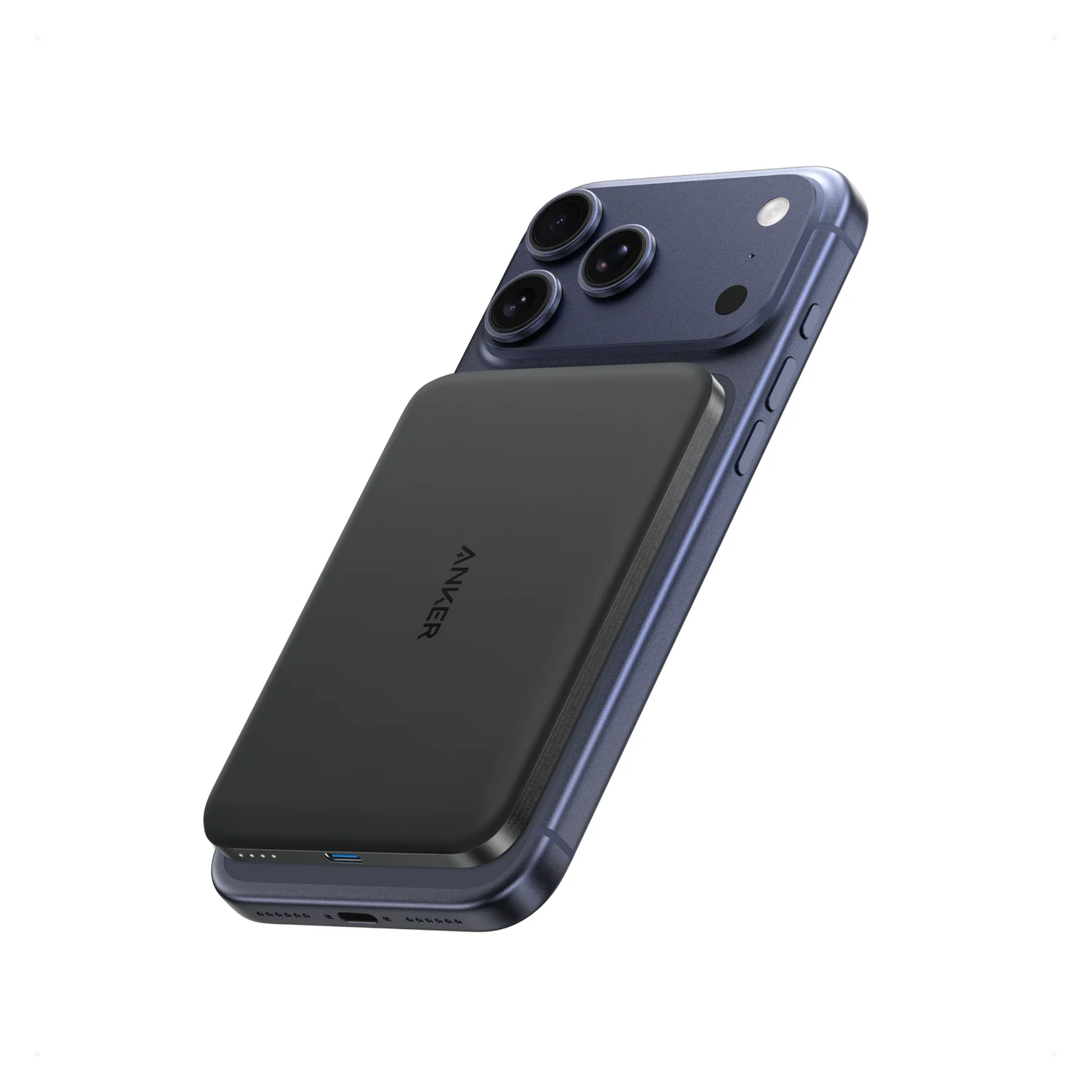
- Most buyers: Anker Nano 5K — check price on Amazon. Choose it when the charging functions matter more than a screen or attached cable.
- Battery percentage and live watts: BMX SolidSafe 5K, B939-05. Its LCD and USB-C lanyard are the practical reasons to choose it.
- Minimum edge thickness: BMX SolidSafe Air 5K, B3-05. Choose the titanium model if its 6.8mm thinnest edge matters more than an LCD or built-in cable.
- Already have a suitable bank? Keep it if its capacity, fit and charging functions meet your needs; the chemistry label alone is not our reason to replace it.
Compare equal capacities first
All three below list 5,000mAh. The figures come from Anker's US specifications, BMX's original 5K page and Air 5K page, with manual qualifications below. These are advertised limits, not measured results.
| What changes | Anker Nano 5K, A1665 | BMX SolidSafe 5K, B939-05 | BMX SolidSafe Air 5K, B3-05 |
|---|---|---|---|
| Nominal capacity | 5,000mAh | 5,000mAh | 5,000mAh |
| Stored energy | Not stated in cited documents | 19Wh in manual | 19.25Wh on product page |
| Wireless output | Up to 15W Qi2 | Up to 15W Qi2 | Up to 15W Qi2 |
| USB-C output, used alone | Up to 20W | Up to 20W | Up to 20W |
| USB-C input | Up to 20W | 15W in current spec table; manual wording conflicts | Up to 15W |
| Dimensions | 102 × 70.6 × 8.6mm | 102.7 × 72.7 × 11.7mm on product page | 103 × 70 × 6.8mm at thinnest edge |
| Weight | 122g | 140g in manual | Not specified in cited spec table |
| Readout | Battery-level LEDs | LCD: battery percentage and charging wattage | Battery-level LEDs and status light |
| Cable supplied | Separate USB-C to USB-C cable | Built-in USB-C lanyard; box list also names a 60W USB-C cable | Separate USB-C cable |
| Published warranty | 24 months | 2-year limited | 2 years |
| Chemistry documentation | Electrolyte recipe not specified in cited documents | Maker describes reduced-liquid semi-solid-state cells | Manual identifies semi-solid-state lithium-polymer battery |
The matching mAh labels do not establish identical stored energy: BMX documents 19Wh for the original and 19.25Wh for Air, while the cited Anker documents do not state watt-hours. Compare the documented charging functions without assuming equal stored or delivered energy.
Anker's cable and warranty are in the product page's embedded “What You Get” description. BMX's original manual supplies its weight and lists width in millimeters as 72, versus 72.7 on the product page; allow for the larger figure when checking clearance. Air's 6.8mm is explicitly an edge measurement, so it is not proof of that thickness across the entire housing.
For the advertised thickness comparison, the original is 11.7mm, Anker is 8.6mm, and Air's thinnest edge is 6.8mm. The standard reference is therefore thinner than the original SolidSafe; the Air changes that comparison.
Source: Anker, BMX original and BMX Air
What does “solid-state power bank” mean here?
The Department of Energy distinguishes generally liquid electrolytes in familiar lithium-ion batteries from solid electrolytes in solid-state designs. BMX's actual description is narrower: significantly less liquid electrolyte than conventional lithium-ion. Its Air manual identifies a semi-solid-state lithium-polymer rechargeable battery.
Do not translate that into “no liquid.” The cited BMX documents do not quantify the electrolyte mixture or establish comparative failure rates and capacity retention against A1665. Anker's cited documents do not specify its electrolyte recipe either, so this comparison does not assign it an invented liquid percentage.
BMX reports internal puncture testing without fire or thermal runaway. That is a manufacturer's test claim, not a statistical comparison of these finished products. The Air manual still says not to puncture, crush or modify the bank and to stop using a damaged unit. Choose the documented design if you value it, without assuming immunity to damage.
Best default: Anker Nano Power Bank (5K, MagGo, Slim)
Anker
Anker Nano Power Bank (5K, MagGo, Slim)
An 8.6mm-thin 5,000mAh magnetic power bank with Qi2-certified 15W wireless charging and a 20W USB-C port.
- 20W max output
- 1 port
The Nano is our default because its 15W wireless and 20W wired output already match both BMX models here. Its 8.6mm US specification and 122g weight give you concrete portability figures without needing a chemistry-based performance promise. A separate USB-C cable and 24-month warranty are listed in Anker's embedded box description.
The trade-off is visibility and cable convenience: its manual describes battery-level LEDs, while the original BMX provides a percentage-and-wattage LCD and attached lanyard. Anker's manual also shows simultaneous charging and recharging, so that function alone is not a reason to pay extra for SolidSafe.
Choose for the LCD and attached cable: BMX SolidSafe 5K
Choose B939-05, with the black product-page SKU B939-05-BL, if you want to see battery percentage and live charging watts rather than interpret LEDs. The USB-C lanyard can charge a device or refill the bank. Those features make a more concrete buying case than an unquantified claim about extra battery life.
The costs in portability are visible: 11.7mm thickness and 140g, versus Anker's 8.6mm and 122g. It does not offer a higher headline wireless or wired output than Anker.
Recharge specification conflict: the manual's feature text says USB-C input/output up to 20W, but its input table lists 5V/3A and 9V/1.67A, and the current product page explicitly specifies 15W maximum input. Plan around the current 15W rating; ask BMX to confirm your revision if recharge speed decides the purchase.
Check the exact SolidSafe 5K at BMX
Choose for the thin edge: BMX SolidSafe Air 5K
The B3-05, black SKU B3-05-BK-V1, makes a different offer: titanium construction and 6.8mm at its thinnest edge. Its 15W wireless, 20W USB-C output and 15W input match the original's current headline ratings. It uses LEDs and a separate cable, so you give up the original's LCD and attached lanyard.
The manual linked by BMX specifies 10W USB-C plus 5W wireless when charging both devices together. Do not buy it expecting its single-device maxima simultaneously. BMX also warns that Air may not reliably refill from a laptop's bidirectional USB-C port; use a USB wall charger if you encounter that issue.
BMX advertises CCC certification on the Air page. Treat that as the maker's certification statement: BMX's published pages do not provide a registration to independently match to this SKU. It does not establish a comparative safety advantage over Anker.
Check the exact SolidSafe Air 5K at BMX
Charging speed, usable capacity and phone fit
Same headline wattage does not establish the same charging time. Anker's manual says power can fall as temperature rises; the Air manual says performance varies with device compatibility, conditions and environment. USB-C also avoids the wireless alignment and heat losses BMX describes. For an urgent top-up, use a cable rather than buying a new chemistry expecting it to fix wireless limitations.
Anker's dual-output specification is 5V/2.4A USB-C plus 5W wireless; the original BMX page confirms dual-device charging but does not state its shared power split. Compare those shared limits if you intend to charge a phone and another device together.
The capacity label is not a promise of a full phone refill. Anker documents conversion losses; BMX explains that cell capacity differs from the charge a phone receives. We do not have matched delivered-energy measurements for these models, so there is no evidence here to rank their usable capacity or lifetime cost per charge.
Check the phone and case together. Anker excludes iPhone 12 mini, 13 mini and 16e from wireless compatibility and cautions against cases thicker than 2.5mm. Its page also contains older copy limited to iPhone 12–16 beside a newer 12–17 compatibility table; the manual says supported series “and later.” Seek model-specific confirmation for an unlisted phone. Check the bank's footprint against your camera area, case lip and grip accessories before ordering.
Variants: original, Air and larger banks are different products
“SolidSafe” alone is not an adequate order description. BMX's collection comparison distinguishes the original 5K and 10K, which have LCDs and built-in cables, from Air 5K and Air 10K, which use LEDs and separate cables. Air 10K advertises Qi2.2 25W, whereas the original 10K lists 15W wireless. That speed difference is a model feature, not a universal solid-state benefit.
Choose capacity in our BMX SolidSafe 5K vs 10K guide. For alternatives beyond this matched comparison, use the MagSafe power bank guide or the broader power bank guide.
How we choose
This is a document-based comparison, without physical testing. We match capacities, distinguish input from output, inspect maker manuals and box lists, and identify conflicts rather than silently resolving them. Recommendations follow those documented features; there are no inferred safety scores, runtime results or cycle-life rankings.
The Wireless Power Consortium describes independent wireless certification tests but says certification does not guarantee product safety. It recommends matching the brand, product and type number to its certificate/database. We have not independently matched these banks to individual WPC registrations; Qi2 statements above are the makers' claims. Wireless certification does not supply the missing comparative chemistry evidence.
Buying advice: what makes a premium worthwhile?
Pay extra only for a feature you will use: the original's LCD and lanyard, or Air's thin edge and titanium enclosure. Do not budget for a promised extra full charge or a quantified longer lifespan from the chemistry label; BMX's published specifications do not establish either advantage over Anker.
Identify the exact model
Distinguish original SolidSafe from Air before comparing offers.
Choose a charging route
Check the phone, case and single-device or shared output you need.
Complete the kit
Count the supplied cable and add a suitable USB-C wall charger if needed.
Compare current offers
Match capacity, SKU, pack quantity, warranty and included equipment; check the final basket.
For holiday offers, record the date you checked and compare the same model and complete kit. A discount on a multipack or an older original is not an equivalent offer on Air. We publish no static prices here.
For flights, follow FAA guidance and your airline: power banks belong in carry-on baggage, including when a bag is gate-checked. BMX's chemistry label and advertised Airplane Mode do not replace those requirements.
Verdict
Choose Anker Nano A1665 by default. Choose original SolidSafe 5K when its LCD and attached cable are worth the extra bulk; choose Air 5K when its thin edge is the feature you want. Keep a suitable existing bank unless one of those practical differences solves a problem for you.
Frequently asked questions
Is a solid-state power bank worth buying?
Buy for an identifiable feature. The original BMX SolidSafe 5K adds an LCD and attached USB-C cable; Air 5K offers a 6.8mm thinnest edge. Anker Nano A1665 already matches their 15W wireless and 20W wired output. Our default is Anker unless those BMX features matter to you. The cited chemistry descriptions do not establish a quantified lifespan or safety advantage over this Anker model.
Are BMX SolidSafe power banks fully solid-state?
BMX describes these products as semi-solid-state, with significantly less liquid electrolyte than conventional lithium-ion cells. Its Air 5K manual calls the battery semi-solid-state lithium-polymer. That wording does not mean there is no liquid, and BMX's own documents do not specify a liquid percentage. Read the detailed chemistry description rather than treating the shorter SolidSafe or solid-state label as a complete cell specification.
Does solid-state mean faster charging?
Not in this capacity-matched comparison. Original SolidSafe 5K, SolidSafe Air 5K and Anker Nano A1665 each list up to 15W wireless and 20W USB-C output. Both BMX models specify 15W input, while Anker advertises 20W input. Those are maximum ratings, not a measured comparison of charging times. Choose the charging specification and exact phone compatibility rather than inferring speed from battery chemistry.
Will a 5,000mAh solid-state power bank fully charge my phone?
Do not assume so from the capacity label. Anker documents conversion losses, and BMX explains that cell capacity differs from the percentage delivered to a phone, with further losses during wireless charging. These three banks have the same nominal capacity, but that does not establish equal delivered energy. Use them as top-up options; choose a larger bank if a guaranteed full refill is essential, then check evidence for your exact phone.
Does Qi2 certification prove the battery cannot catch fire?
No. The Wireless Power Consortium describes independent Qi certification tests for safety, interoperability and energy efficiency, but explicitly says certification does not guarantee product safety. It also recommends matching a product to its certificate or database entry. Treat BMX's reduced-liquid and internal puncture-test statements separately from wireless certification. Its Air manual still warns against puncturing the product and requires stopping use if it is damaged.
Can a semi-solid-state power bank go in checked luggage?
Do not treat the chemistry label as a baggage exemption. FAA guidance requires spare lithium batteries, including power banks, in carry-on baggage and requires removing them if that bag is gate-checked. It also says airlines can impose stricter limits. BMX tells SolidSafe owners to use carry-on baggage and follow airline rules. Check your carrier's current restrictions before departure, including any limits on using or charging a bank aboard.
Related guides
Baseus PicoGo Qi2 5K vs UGREEN MagFlow 5K: The Honest Answer in 2026
No UGREEN MagFlow 5K exists — the real Qi2 5K showdown is Baseus PicoGo vs Belkin BoostCharge Pro 10K. Here are the picks, specs, and gotchas.
Updated November 5, 2026Read
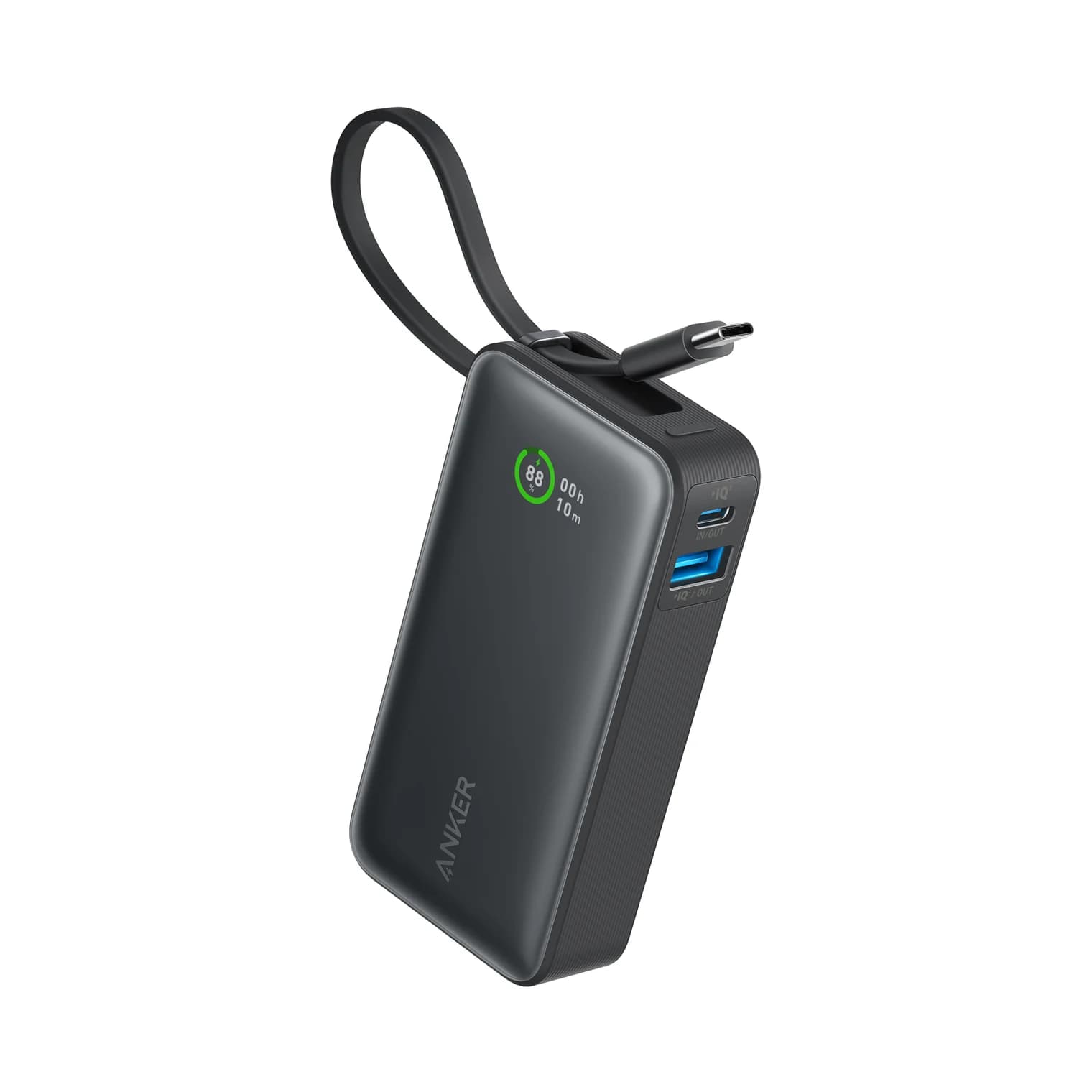
Anker Zolo 10K Power Bank Review: A1688 vs the Nano 10K
Anker Zolo 10K vs Nano 10K: compare built-in cable length, 30W charging, shared output, refill speed and the complete kit, from the makers' own documents.
Updated November 5, 2026Read
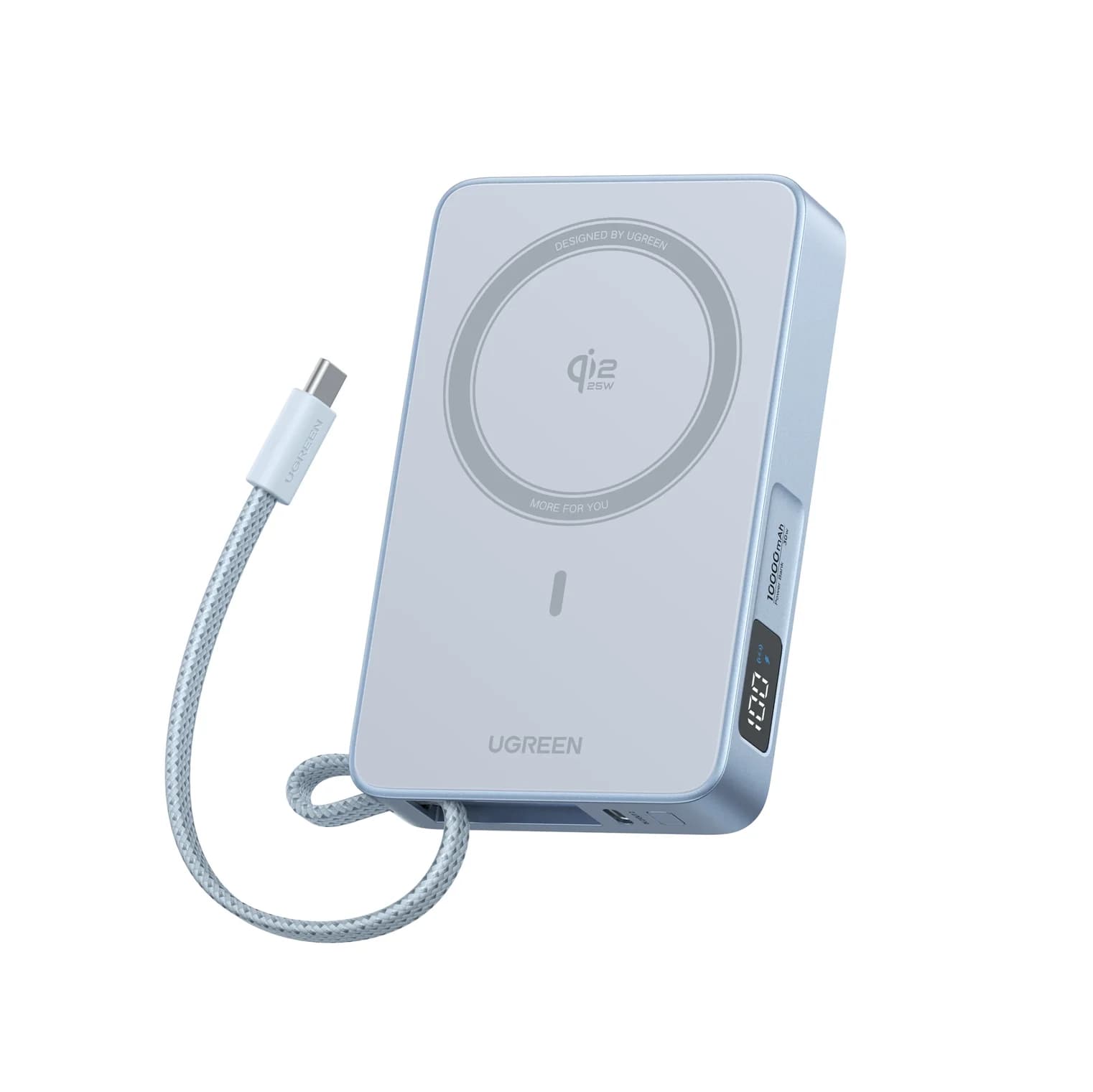
Anker Nano MagGo Slim 5K vs UGREEN MagFlow 10K: Which Magnetic Power Bank?
The Anker MagGo Slim 5K is the 8.6 mm pocket card; the UGREEN MagFlow 10K adds Qi2 25W and a built-in cable. Exact specs, phone fit and honest capacity.
Updated November 5, 2026Read