Black Friday: the specs to check before you buy
Explainer
Updated November 5, 2026Xiaomi Mi 10,000mAh Power Banks: Which USB-C Version to Buy
Short answer
The wired Xiaomi to shortlist is PB1033MI, the 33W Power Bank 10000 (Integrated Cable); choose WPB1007MI only if you want magnetic charging and accept its 7.5W wireless limit. For US buyers who cannot confirm a Xiaomi seller's local support, our practical alternative is the Anker Nano A1259, with a built-in USB-C cable and 30W input and output on Anker's US page. Match the printed model code before buying: the legacy Mi Power Bank Pro is a different product.
Our picks at a glance
Best documented US alternativeAnker
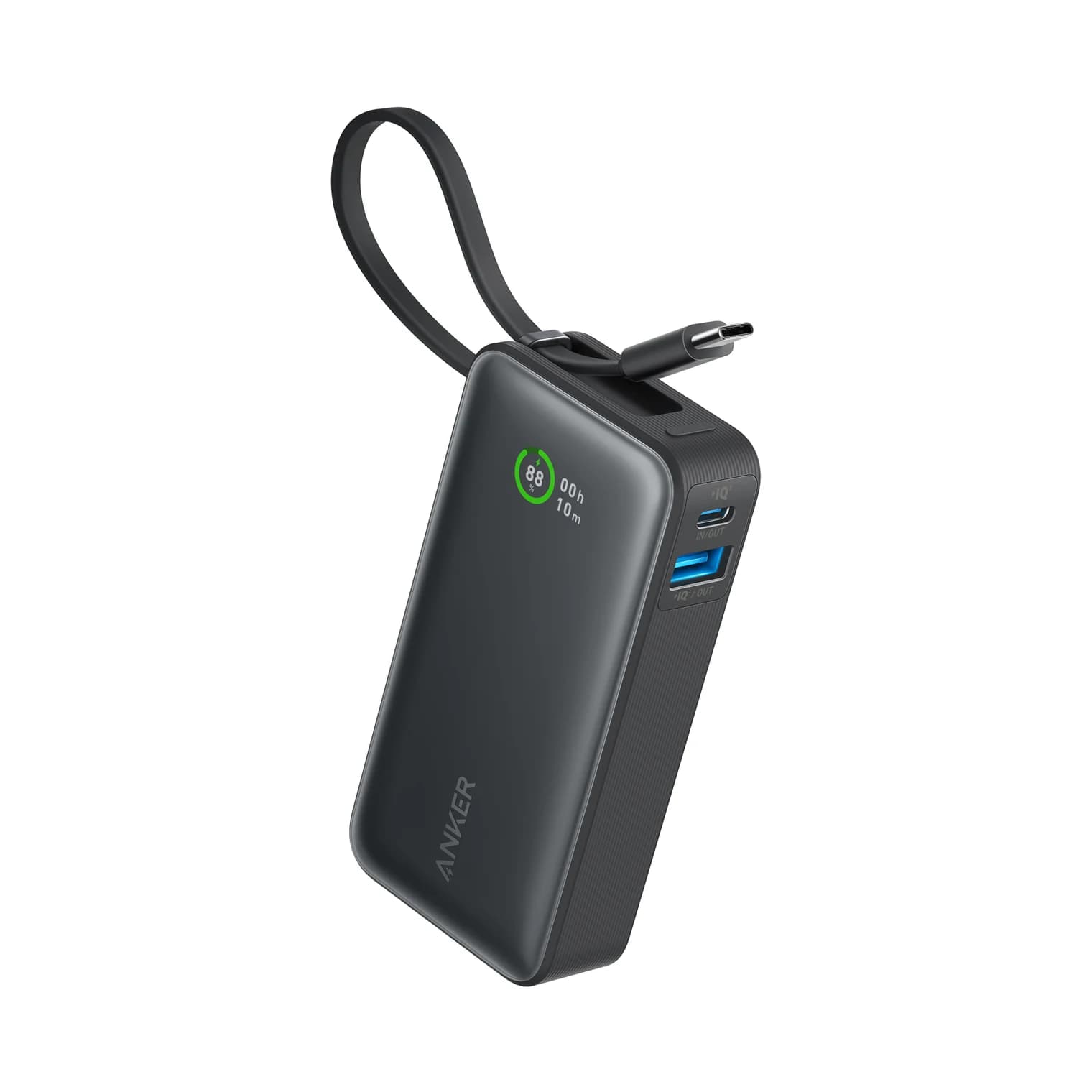
Anker Nano Power Bank (10,000mAh, 30W, Built-In USB-C Cable)
- max output
- 30W
- ports
- 3
- Choose
- Anker documents 30W USB-C input and output plus a built-in cable on its US A1259 product page.
- Limit
- Anker lists a lower total output figure, so expect slower speeds when charging two devices at once
Both 33W Xiaomi models also reduce shared wired output to 15W total: calculated from PB1033MI's listed 5V/3A, and explicitly stated for WPB1007MI. These are maximum ratings, not guaranteed phone charging speeds. See Xiaomi's wired specifications and magnetic specifications.
- 33WMaximum single-connection wired output of the two Xiaomi 33W models
- 7.5WWPB1007MI wireless ceiling
- 15WShared wired output ceiling of both Xiaomi 33W models
Quick picks
- Want a wired Xiaomi for a phone? Shortlist PB1033MI. Its integrated USB-C cable can charge the phone or refill the bank; there are separate USB-C and USB-A connections too.
- Want the Xiaomi that attaches magnetically? Shortlist WPB1007MI. It combines wired USB-C charging with the wireless mode above. Verify your exact phone and case before ordering.
- Want a documented US purchase route? Choose Anker Nano A1259, or buy it directly from Anker if the Amazon seller or bundle is unclear. Check price on Amazon.
The Xiaomi choices are conditional on finding an appropriate regional seller and support. We have not established current Amazon US availability for them. A higher-output Xiaomi, PB1067, is a separate model worth comparing below.
Mi and Xiaomi 10,000mAh versions compared
| Exact model | Charging connections | Maximum wired output to one device | Wireless output | Maximum refill input |
|---|---|---|---|---|
| Legacy Mi Power Bank Pro, PLM01ZM | USB-C input; separate USB output | 18W | — | 18W |
| Xiaomi 33W, PB1033MI | Integrated USB-C cable, USB-C socket, USB-A socket | 33W | — | 30W |
| Xiaomi 33W Magnetic, WPB1007MI | Integrated USB-C cable, USB-C socket, magnetic surface | 33W | 7.5W | 30W |
| Xiaomi 67W, PB1067 | Integrated USB-C cable, USB-C socket, USB-A socket | 67W | — | 65W |
| Anker Nano, A1259 | Built-in USB-C cable, USB-C socket, USB-A socket | 30W | — | 30W |
Sources: Xiaomi's legacy Pro page and PLM01ZM manual, the two 33W specification pages above, its 67W specifications and overview, and Anker's US specifications. A dash means wireless output is not documented in the makers' specification pages. Integrated cables are listed separately from sockets.
Identify the old Mi Power Bank Pro first
The important legacy trap is input versus output. The PLM01ZM manual labels its Type-C connection as input; its separate USB connection is the output. The old page's promise of fast charging in both directions describes charging the bank and charging another device, not a USB-C output. Do not buy it expecting a USB-C-to-USB-C phone connection.
Xiaomi's legacy documents also need separating. The global Pro page names PLM01ZM, while the English Pro manual names PLM03ZM. Even the Spanish PLM01ZM manual and global PLM01ZM page give different cell-capacity figures. We therefore do not combine their battery specifications or use the shared “Pro” name to recommend old stock.
Ask for a readable model-label photo when a listing only says “Mi 10000.” If you already own the legacy bank, use its model's manual; if buying now, use the documented USB-C output models below as your shortlist.
Wired Xiaomi shortlist: PB1033MI
Pick this family when your priority is a phone cable you cannot forget. Xiaomi says the integrated cable works in both directions, and its overview documents PD3.0 and QC3.0 support. Xiaomi's French specifications additionally list PPS for the cable and USB-C socket.
Its shorter body is the reason to choose it over PB1067: 80.9 × 65.9 × 26.0mm, versus 115 × 66 × 26mm for the 67W model. Xiaomi ties the headline 33W output to compatible Xiaomi smartphones with smart fast charging. Connecting several devices reduces the available total to the shared limit above.
There is an omission in the spec sheet worth catching: the short “Output port” field names only USB-C, but the detailed output table explicitly includes USB-A OUT3. Use the detailed table when checking the unit you are buying. See Xiaomi's PB1033MI specifications.
Magnetic Xiaomi shortlist: WPB1007MI
Choose this for attachment convenience, then use its cable when charging speed matters. It has a USB-C socket and integrated USB-C cable; the magnetic surface adds wireless charging. Xiaomi documents 238g weight and 109 × 68.5 × 19.8mm dimensions, useful when deciding whether you want that mass attached to your phone.
Xiaomi's overview targets magnetic charging at compatible iPhones from the iPhone 12 series onward, and warns that Android designs may cause weaker attachment, lower wireless efficiency or errors. Its FAQ recommends an original dedicated MagSafe case when using a case. Check your particular phone's magnetic charging support rather than assuming every later iPhone qualifies.
Another practical detail: using the integrated cable to charge a device disables wireless by default. Press the battery-check button twice to enable wireless again. Xiaomi lists 15W for dual wired use, but that does not establish an additive wired-plus-wireless power budget. For faster wireless alternatives, use our magnetic power-bank guide.
Higher-output Xiaomi to compare: PB1067
The 33W models are not the entire family. Xiaomi documents PB1067 as the 67W Power Bank 10000 (Integrated Cable), with up to 65W input, 39.48Wh stored energy and a digital display. This is a different model, not an upgraded setting on PB1033MI.
The catch remains sharing: Xiaomi's 67W overview limits total theoretical output to 15W when charging multiple devices. Compare it for higher single-device power or quicker refills, subject to device compatibility and regional sourcing; do not pay extra expecting several fast outputs at once.
Best documented US alternative: Anker Nano A1259
Anker
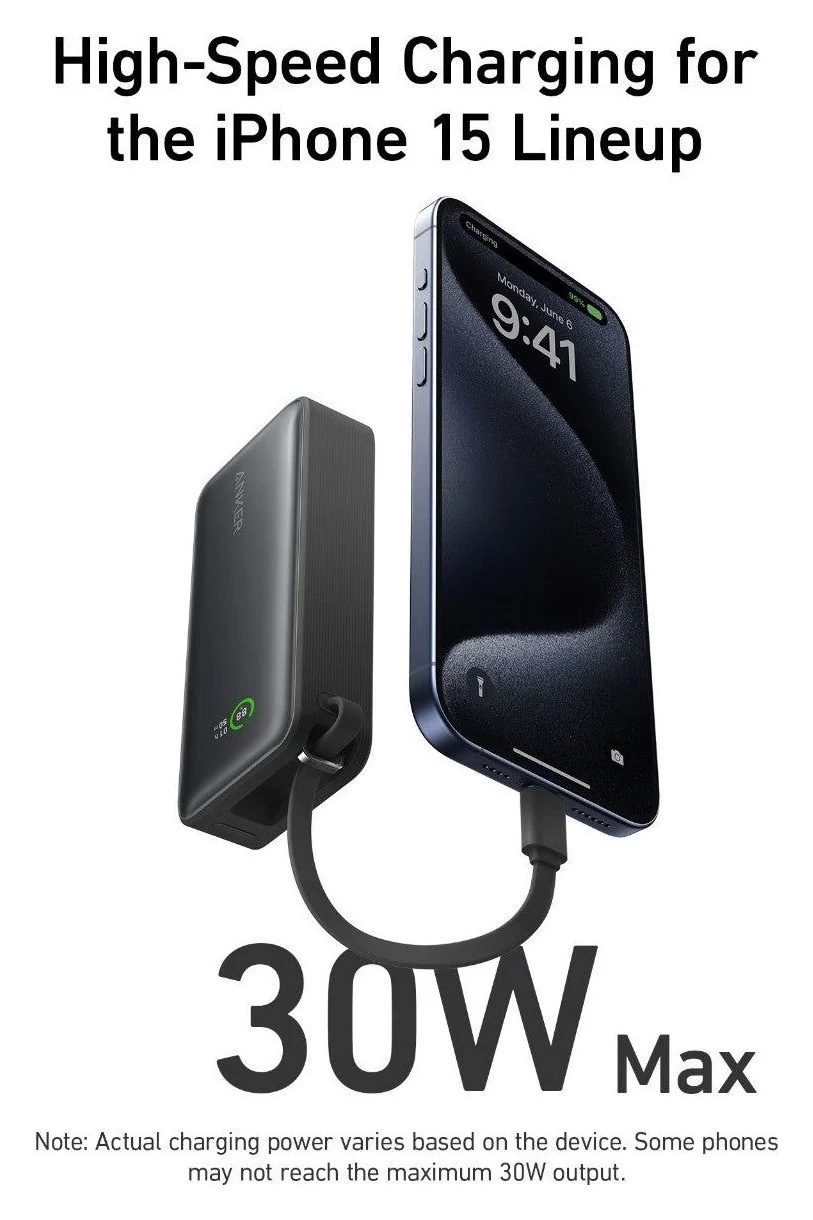
Anker Nano Power Bank (10,000mAh, 30W, Built-In USB-C Cable)
A 10,000mAh power bank with a built-in USB-C cable plus separate USB-C and USB-A ports, rated up to 30W.
- 30W max output
- 3 ports
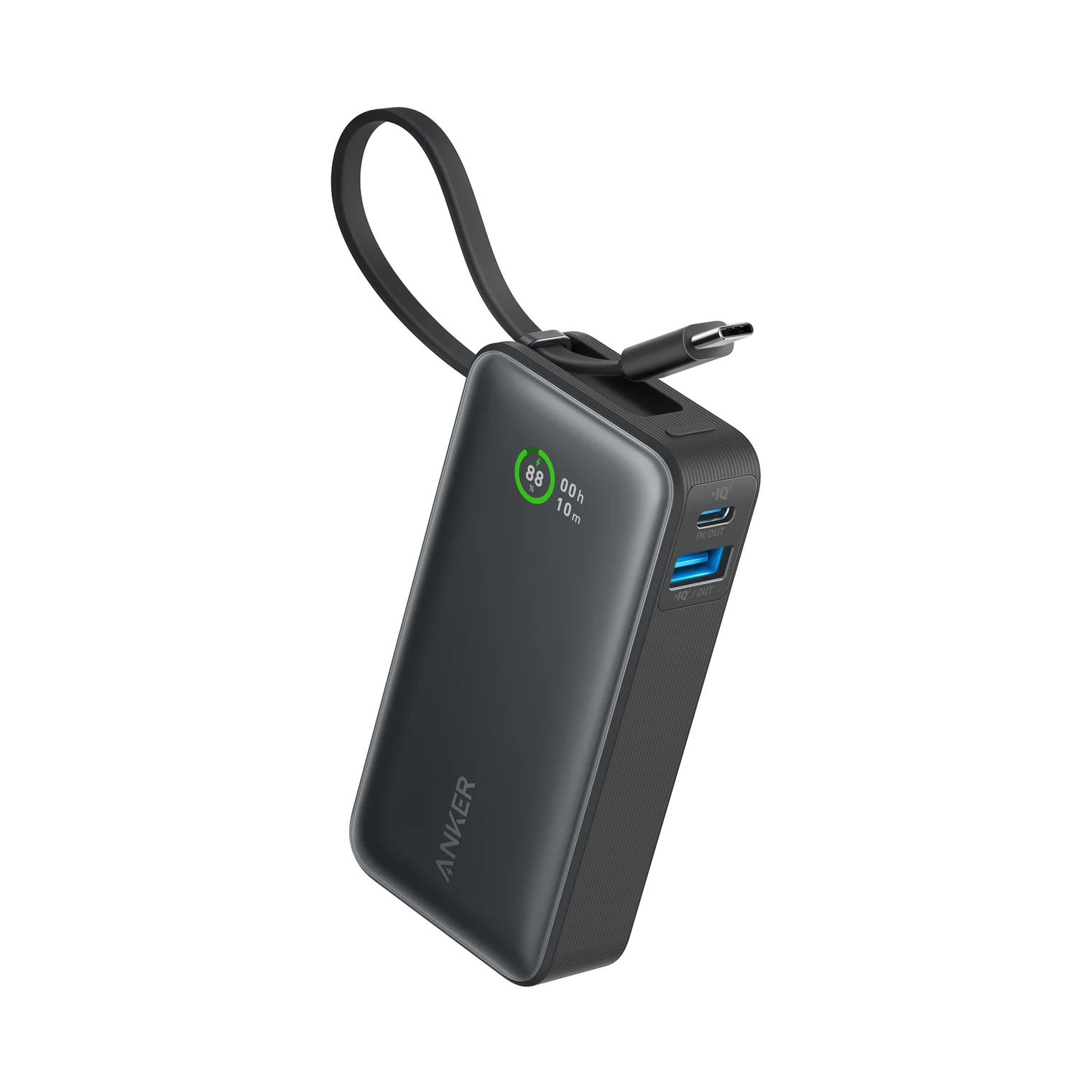
Anker's US page identifies A1259, lists 10,000mAh, and specifies 30W through either the built-in USB-C cable or USB-C socket, plus a 22.5W USB-A output. The cable also refills the bank. That makes it our practical wired alternative when importing a Xiaomi creates uncertainty about returns or support.
Keep its single-device and total figures separate. Anker lists 30W single-port output alongside 24W total output; treat sharing as the lower-output use case. It also lists USB-C PD and PPS support. These specifications do not promise every phone its fastest charging mode.
The US manufacturer page offers a direct purchase route. On Amazon, check that the model is A1259 and confirm the seller, bundle and applicable warranty. Check price on Amazon, or see the exact model at Anker. Our broader power-bank guide covers other sizes and laptop choices.
Match the phone, capacity and refill kit
Check the protocol, not just watts. WPB1007MI's FAQ lists PD3.0 and PPS on its USB-C outputs. PB1033MI's French specifications list those protocols too, but neither fact promises your phone will negotiate the headline wattage. For example, Apple specifies 40W or higher for its quickest wired charge on iPhone 17, 17 Pro and 17 Pro Max, beyond these 33W models. For a Lightning iPhone, add a USB-C-to-Lightning cable to the USB-C socket; Apple's fast-charge guidance distinguishes that from the USB-C cable used by iPhone 15 and later. Our USB Power Delivery explainer covers the terminology.
Do not divide cell mAh by phone mAh. PB1033MI stores 36.5Wh and guarantees at least 5,600mAh at 5V/3A; WPB1007MI stores 37Wh and guarantees 5,900mAh at the same discharge condition. Xiaomi explains their advertised 10,000mAh as equivalent cell capacity. Those output ratings describe specified conditions, not a promise of a particular number of phone charges.
Match the input profiles. Both Xiaomi 33W models list 5V/3A, 9V/3A and 12V/2.5A through the integrated cable or USB-C socket. The last profile gives their 30W input ceiling; check that the charger's output label actually offers it. A large wattage printed on a charger alone does not establish a matching profile. PB1067 instead specifies 20V/3.25A for its 65W refill maximum.
Count the missing pieces. PB1033MI's Singapore package list contains the bank and manual; its Malaysian list adds a warranty notice. WPB1007MI's Malaysian list contains the bank, manual and warranty card. None of those lists includes a wall charger or an extra detachable cable. For Anker, confirm the chosen bundle's box contents rather than assuming a wall charger is supplied. Reuse a suitable charger or include one in your purchase decision.
Buying from the US: seller, warranty and delivered cost
Regional product documentation establishes specifications, not US distribution. Xiaomi's Singapore accessories warranty covers eligible purchases from its Singapore store or authorized resellers and explicitly excludes international warranty service. Do not infer US manufacturer coverage from a Xiaomi logo or “global version” wording.
Compare the delivered bank, any required charger or phone cable, shipping and taxes. Also check who pays return shipping and where a warranty claim must go. If the seller cannot identify the exact model and support arrangement, use the Anker alternative rather than guessing.
Read the model label
Match the actual unit to the official model-specific specifications.
Match your charging kit
Confirm the phone connector, charger output profiles and included items.
Confirm seller and support
Check the seller, return destination, applicable regional warranty and delivered total before paying.
How we choose
This is a document-based comparison, not a physical product evaluation. We use Xiaomi's regional specifications, manuals and support answers, plus Anker's US product page and manual. We separate input from output, single-device from shared ratings, and manufacturer claims from guaranteed results. Conflicting legacy documents and unresolved regional purchase details remain explicit; listing titles do not settle them.
Verdict
Shortlist PB1033MI for wired phone charging and WPB1007MI for magnetic convenience; compare PB1067 if higher single-device output matters. For a US purchase without a clear Xiaomi seller and support route, choose the Anker Nano A1259. Treat the old Mi Power Bank Pro as identification context, and buy by the printed model code.
Frequently asked questions
Which Xiaomi 10,000mAh power bank should I buy?
For a wired phone bank, shortlist PB1033MI, the Xiaomi 33W Power Bank 10000 with integrated USB-C cable. Choose WPB1007MI if you specifically want magnetic attachment and accept its 7.5W wireless ceiling. Both need a seller and warranty check for your country. For a documented US alternative, consider the Anker Nano A1259; its US page specifies 30W USB-C input and output.
Does the old Mi Power Bank Pro charge a phone through USB-C?
The legacy Pro manuals label Type-C as input and show a separate USB output for charging devices. Do not interpret the old phrase 'two-way fast charging' as bidirectional USB-C. Also check the model: Xiaomi's global Pro page identifies PLM01ZM, while its English Pro manual identifies PLM03ZM. Neither name should be substituted for the newer PB1033MI.
Is Xiaomi's 33W magnetic power bank 33W wirelessly?
No. WPB1007MI is rated up to 33W through a USB-C connection and up to 7.5W wirelessly. Xiaomi lists 15W maximum for dual wired output. Its wireless mode is disabled by default when the integrated cable charges another device; press the battery-check button twice to enable it. Those limits describe different modes and should not be added into an assumed simultaneous maximum.
Why does a Xiaomi 10,000mAh power bank say 5,600mAh or 5,900mAh?
Those are Xiaomi's rated output capacities at 5V/3A: a minimum of 5,600mAh for PB1033MI and 5,900mAh for WPB1007MI. The advertised 10,000mAh describes equivalent cell capacity at a different voltage. The corresponding stored-energy figures are 36.5Wh and 37Wh. Use the output rating as a specified discharge-condition reference, rather than dividing the advertised cell mAh by your phone's mAh to promise a charge count.
What charger do the Xiaomi 33W power banks need?
PB1033MI and WPB1007MI list up to 30W input through their integrated USB-C cable or USB-C socket. Their listed input profiles are 5V/3A, 9V/3A and 12V/2.5A. Match the charger's supported profiles as well as its wattage; 30W is the bank's ceiling, not a minimum required for all charging. Their cited package lists contain no wall charger, so budget for one if needed.
Best documented US alternative
Anker Nano Power Bank (10,000mAh, 30W, Built-In USB-C Cable)
Related guides
Baseus PicoGo Qi2 5K vs UGREEN MagFlow 5K: The Honest Answer in 2026
No UGREEN MagFlow 5K exists — the real Qi2 5K showdown is Baseus PicoGo vs Belkin BoostCharge Pro 10K. Here are the picks, specs, and gotchas.
Updated November 5, 2026Read
Anker Zolo 10K Power Bank Review: A1688 vs the Nano 10K
Anker Zolo 10K vs Nano 10K: compare built-in cable length, 30W charging, shared output, refill speed and the complete kit, from the makers' own documents.
Updated November 5, 2026Read
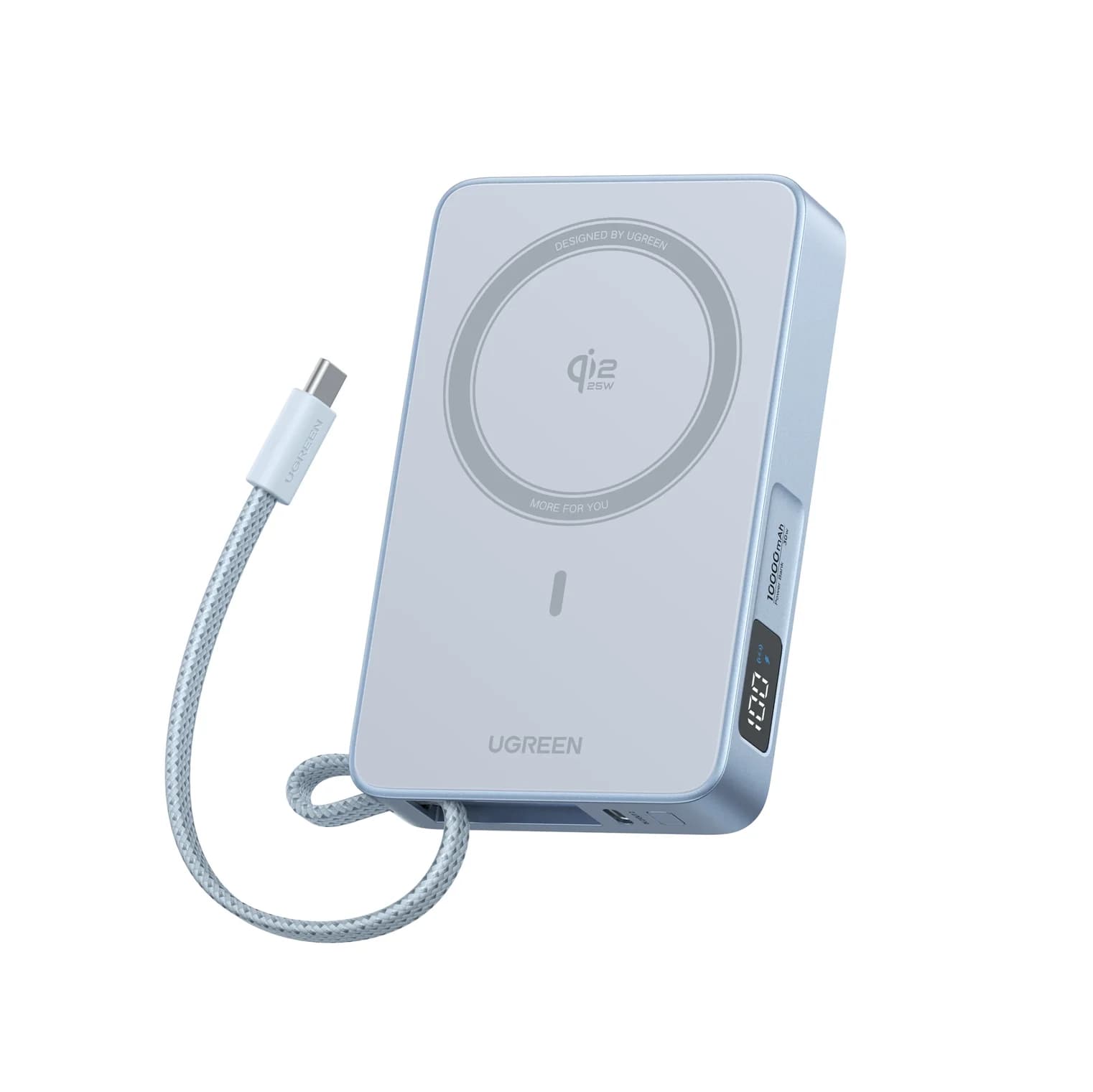
Anker Nano MagGo Slim 5K vs UGREEN MagFlow 10K: Which Magnetic Power Bank?
The Anker MagGo Slim 5K is the 8.6 mm pocket card; the UGREEN MagFlow 10K adds Qi2 25W and a built-in cable. Exact specs, phone fit and honest capacity.
Updated November 5, 2026Read